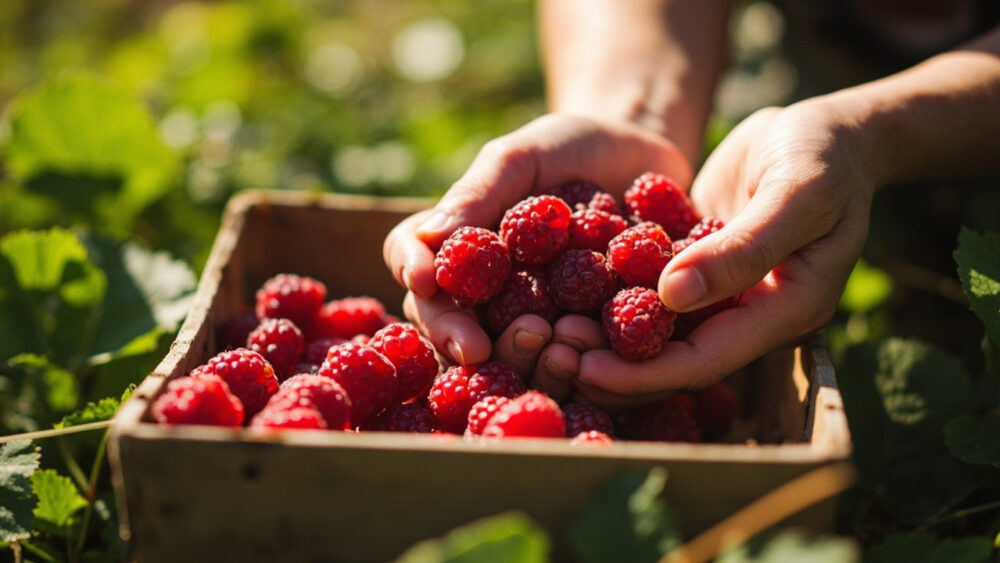
Unwashed, dry, spread in a single layer on a paper-towel-lined container in the fridge, raspberries hold for 2 to 3 days, sometimes 5 if they were rock solid and dry when you picked them. That is the honest window. Freeze them instead and you get 8 to 12 months, and it is the better call for most people since fresh raspberries are living on borrowed time the second they leave the cane.
Most people who click on how to store raspberries have already made the mistake that ruins the batch, and it happened before the berries ever reached the counter. There is a moment in every carton where you can look at it and know, with real confidence, whether you have two days or two hours left. Most people misread that sign completely.
There is also a washing question that trips up almost everyone, a freezing method that beats the bag-in-the-freezer approach by a wide margin, and a full at-a-glance card waiting at the bottom of this page you can screenshot before you forget any of it.
The Best Way to Store Fresh Raspberries
Do not wash them until you’re ready to eat or use them. Water on a raspberry accelerates mold faster than almost anything else you could do to it. Instead, sort through the carton and pull out any berry that’s soft, leaking, or fuzzy before it takes down its neighbors.
Line a shallow container with a paper towel. Spread the good berries in a single layer, or at most two layers deep. Piling raspberries into a deep bowl crushes the bottom ones and traps moisture, which is exactly what turns a fridge full of fruit into fridge full of mush by day two.
Cover loosely, not airtight, and set them toward the back of the fridge where it’s coldest and steadiest, ideally around 32 to 36°F.
That single layer habit is also what determines how many days you actually get.
How Long Raspberries Actually Keep
On the counter, raspberries are done in a matter of hours to a single day, especially in a warm kitchen. They are one of the most fragile fruits you can buy, softer and thinner-skinned than blueberries or blackberries, and heat is not their friend.
In the fridge, dry and unwashed, expect 2 to 3 days as the realistic average, with 5 days possible if the berries were firm, dry, and cold when you bought or picked them. Once you wash them, that window shrinks to a day or so, because trapped surface moisture invites mold almost immediately.
In the freezer, properly frozen raspberries hold their quality for 8 to 12 months. They will technically stay safe to eat well beyond that, but texture and flavor start fading past the year mark.
None of those numbers matter much if you skip the one prep step that decides everything.
The Prep That Makes or Breaks a Batch
If you assumed rinsing raspberries the moment you get home keeps them cleaner and safer, that instinct is backwards and it is the single fastest way to shorten their life. Water left sitting on the skin softens it and feeds mold spores that are already present on the fruit.
The right move is to rinse only right before eating, and even then, a quick pass under cool running water, not a soak. Pat dry gently with a paper towel or let them air dry on one before serving.
For freezing, there is one extra step people skip that costs them a solid block of frozen mush instead of loose, scoopable berries: flash freezing. Spread washed and thoroughly dried raspberries on a baking sheet in a single layer, freeze for 1 to 2 hours until solid, then transfer to a freezer bag or airtight container.
Skip that step and you’ll understand why your frozen berries turned into one giant frozen brick the next time you open the bag.
The Signs a Batch Has Turned
Here is the tell almost everyone misses: it is not really about color, it’s about the juice pooling in the bottom of the carton. If you see liquid collecting under the berries, mold is already active somewhere in that container even if you can’t spot it yet.
Individual berries that have gone soft, dull, or slightly collapsed are past saving. Fuzzy white or gray patches mean mold has taken hold, and at that point the surrounding berries are contaminated too, even the ones that still look fine.
A sour, fermented smell instead of the usual sweet-tart scent is another clear sign. Trust your nose here as much as your eyes.
- Liquid pooling in the container
- Softened, collapsed, or leaking berries
- Visible fuzz or discoloration
- A sour or fermented smell
When you see any of that, don’t try to salvage the good-looking ones sitting next to the bad ones.
Why That Advice Matters More Than You Think
Mold spreads between raspberries touching each other in a container far faster than most people expect, sometimes turning a whole clamshell within 24 hours of the first berry going soft. That’s why sorting immediately after purchase, before you even refrigerate, saves the rest of the batch.
Pick through the carton the moment you get home. Pull anything questionable, and store the survivors separately from where the compromised ones sat.
This five-minute habit is genuinely the difference between eating raspberries for a week and throwing out a moldy carton on day three.
The Mistakes That Ruin a Batch
Beyond washing too early, a few habits quietly destroy raspberries before their time. Storing them in a sealed airtight container traps humidity against the fruit and speeds up rot, which is why a loosely covered container beats a tightly sealed one.
Leaving berries in their original plastic clamshell without checking them is another common one. Those containers are designed for transport, not extended storage, and they often trap condensation.
Freezing berries while they’re still wet from washing is the last major mistake. Wet berries freeze into a solid clump instead of individual pieces, and the extra moisture creates ice crystals that turn the texture mushy once thawed.
- Washing berries before storing them
- Sealing them airtight in the fridge
- Piling them deep instead of in a single layer
- Skipping the flash-freeze step before bagging
- Ignoring one bad berry until it spreads to the rest
Get those five things right and raspberries stop being the fruit that always seems to go bad before you get to them.
Raspberries at a Glance
- Fridge storage: unwashed, single layer, loosely covered, toward the back of the fridge around 32 to 36°F.
- Fridge shelf life: 2 to 3 days typically, up to 5 days if berries were firm and dry when stored.
- Counter shelf life: a few hours to one day, best avoided in warm weather.
- Washing: rinse only right before eating or using, never before storing.
- Freezer method: wash, dry completely, flash freeze on a tray for 1 to 2 hours, then bag.
- Freezer shelf life: 8 to 12 months for best quality, safe longer but softer in texture.
- Biggest mistake: sealing damp berries airtight or piling them deep, both speed up mold.
Sort them the day you bring them home, keep them dry until the moment you eat them, and freeze whatever you won’t finish in three days.
That’s the whole trick, and it works every single time.