Growing cilantro means sowing seed directly where it will grow, about 1/4 to 1/2 inch deep, in cool soil between 50 and 75 F, and accepting upfront that the plant is going to bolt to seed faster than almost anything else you grow. It matures fast, 21 to 28 days to usable leaf, 45 to 70 days to seed. The whole game with cilantro is timing and succession, not fussing over the soil.
Here is the part almost nobody tells you before they plant their first pot: cilantro does not fail because you did something wrong. It fails because you planted it once and expected it to behave like a perennial herb. That single misunderstanding wrecks more cilantro patches than pests, disease, or bad soil combined.
Below you will find exactly when to plant it so it does not bolt in a week, the spacing and depth that actually work, the watering rhythm that slows the bolting clock, and the harvest window that gets you the most usable leaf before it turns to lace and flowers. Save the Cilantro at a Glance card at the bottom for the numbers you will want again next month.
When to Plant Cilantro
Cilantro is a cool-season herb, and soil temperature matters more than the calendar. Sow it when soil temperature sits between 50 and 75 F, which usually lines up with 2 to 3 weeks before your last spring frost through about 4 to 6 weeks after it.
In most zones you get a spring window and a fall window, with a hot middle stretch where cilantro just bolts no matter what you do. In zones 8 through 11, skip summer planting entirely and grow it through fall, winter, and early spring instead.
The mistake here is planting once in May and calling it done. Cilantro planted for a summer harvest is fighting heat from day one, and heat is what triggers bolting, not neglect.
The real fix for a full season of leaf is not one planting date, it is several.
Choosing the Spot and Prepping the Soil
Cilantro wants 4 to 6 hours of sun in spring and fall, but part shade or afternoon shade in warmer weather actually buys you a few extra weeks before it bolts. That is a rare case where less sun helps.
Soil should be loose, well-draining, and moderately fertile, with a pH between 6.2 and 6.8. Work in an inch or two of compost before planting, but skip heavy nitrogen fertilizer at this stage.
Raised beds, containers, and even a deep window box all work fine, since cilantro has a modest root system. A container needs at least 8 inches of depth so the taproot has room to run.
Get the bed ready and you are one step from the part people rush, the actual planting.
Planting Cilantro Step by Step
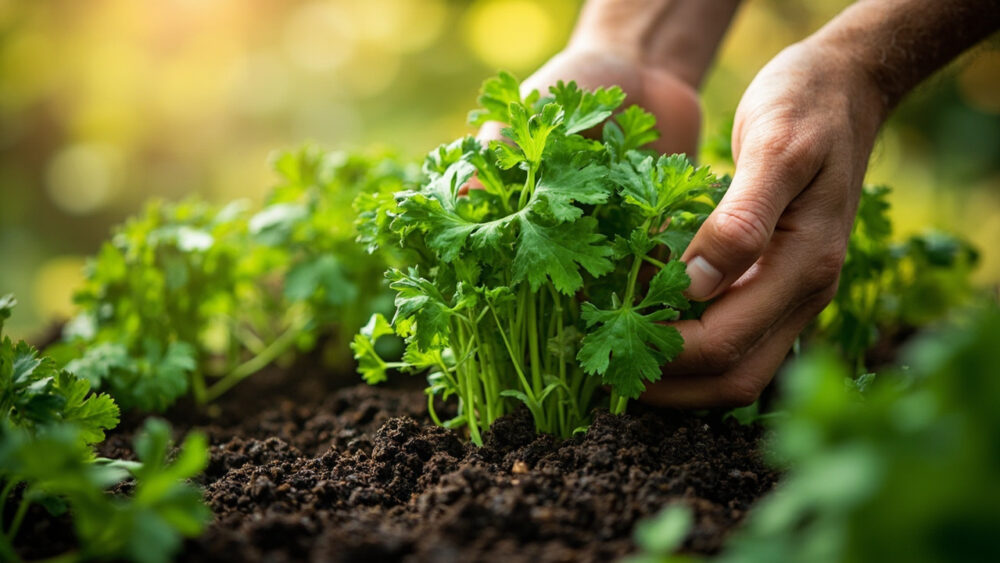
- Sow direct: cilantro resents transplanting because of its taproot, so seed straight into the garden or its final container rather than starting indoors.
- Depth: plant seeds 1/4 to 1/2 inch deep, no deeper.
- Spacing: scatter seed and thin to 6 to 8 inches apart once seedlings have their first true leaves, or sow in rows 12 inches apart for a cutting patch.
- Technique: cilantro seed is actually two seeds fused in one husk, so lightly crushing the husk before sowing improves germination.
- Water in: soak the bed right after sowing and keep it consistently damp until seedlings emerge, usually 7 to 10 days.
Once seedlings are up, the plant’s entire life is a race against warm weather.
Watering and Feeding Through the Season
If you assumed cilantro bolts from too little water, that guess is only half right and it misses the bigger trigger. Bolting is driven mainly by heat and day length, and drought stress just speeds up a process that was already coming.
Water cilantro enough to keep soil evenly moist, about 1 inch per week, more often in containers or during hot stretches. Never let it dry out completely, since drought stress pushes it to flower even sooner.
Skip heavy feeding. A single light dose of balanced fertilizer or an inch of compost worked in at planting is plenty. Too much nitrogen pushes soft, floppy growth that bolts just as fast anyway.
Mulch around the base to keep roots cool, which is the closest thing to a bolting delay tactic that actually works.
Even with perfect watering, cilantro is still going to try to flower, so the next fight is against pests catching it while it’s stressed.
Problems That Actually Show Up
The most common problem is not a bug, it is the plant itself bolting early. Once you see a tall central stem shoot up with feathery, thin leaves that look nothing like the rounder lower leaves, flowering has started and leaf production is basically over.
Aphids cluster on new growth and flower stems, especially once the plant bolts and gets stressed. Knock them off with a strong spray of water or use insecticidal soap according to the label.
Powdery mildew shows up as white, dusty patches on leaves in humid weather with poor airflow. Space plants properly and water at the soil line, not overhead, to keep leaves dry.
Damping off, where seedlings collapse at the base right after emerging, comes from soil staying too wet and too cold at once. Let the surface dry slightly between waterings while seedlings are small.
None of these actually end your harvest, though, if you catch the leaf stage at the right moment, which is the part everyone gets wrong next.
When and How to Harvest Cilantro
Cilantro leaf is ready to harvest as soon as plants are 4 to 6 inches tall with several sets of true leaves, usually 3 to 4 weeks after sowing. Don’t wait for it to look “full,” since that wait is exactly what lets it bolt on you.
Cut outer leaves and stems from the bottom, leaving the center growing point intact, and the plant will keep producing for several more weeks. Never shear the whole plant down to a stub if you want a second cutting.
Once the flower stalk appears, leaf quality drops fast and flavor turns bitter and soapy-sharp. At that point, let it finish flowering and go to seed instead of fighting it, since those seeds are coriander and are just as useful in the kitchen.
Seed is ready to collect when the round seed heads turn tan-brown and dry on the plant, usually 45 to 70 days after sowing depending on your climate.
That flowering stage is not a failure, it is simply cilantro switching jobs, and knowing that changes how you plan the whole bed.
Cilantro at a Glance
- When to plant: when soil hits 50 to 75 F, roughly 2 to 3 weeks before last frost through 4 to 6 weeks after, plus a second sowing in early fall.
- Depth and spacing: 1/4 to 1/2 inch deep, thinned to 6 to 8 inches apart, or rows 12 inches apart for cutting.
- Sun needs: 4 to 6 hours in cool weather, part shade helpful once temperatures climb.
- Watering: about 1 inch per week, kept consistently moist, never fully dry.
- Time to harvest leaf: 3 to 4 weeks after sowing, cutting outer leaves and stems, not the whole plant.
- Time to bolt: often within 4 to 6 weeks in warm weather, much longer in cool spring or fall conditions.
- Best strategy: succession sow every 2 to 3 weeks through the cool season instead of planting once.
Cilantro was never meant to be a one-time planting, it is a short-lived crop you keep reseeding.
Plant it in small batches, every few weeks, and you will have fresh leaf constantly instead of one good harvest and a bolted mess.