The fastest way to grow cilantro indoors is to sow seed directly into a pot at least 8 inches deep, keep it near your brightest window or under a grow light for 10 to 12 hours a day, and expect leaves you can start snipping in 3 to 4 weeks. Cilantro grows fast and finishes fast, so indoors it’s less about babying the plant and more about staying a week ahead of it. That’s how to grow cilantro indoors without ending up with a pot of flowers instead of leaves, which is exactly what happens to most first attempts.
Here’s the mistake that ends more indoor cilantro crops than anything else: starting it from a nursery transplant instead of seed. Cilantro hates having its roots disturbed, and it hates shallow pots even more. There’s also a timing trap almost everyone falls into, a heat problem that has nothing to do with your thermostat, and an honest answer about why your plant might bolt to seed in week three no matter what you do.
Stick around for all of it, including the “Cilantro at a Glance” card at the very bottom you can screenshot and keep on your phone for every future round of seeds.
When to Start Cilantro Indoors
Indoors, frost dates don’t matter, but that doesn’t mean timing is irrelevant. Cilantro can be started any month of the year inside, since you control light and temperature. The real clock is the plant’s own life cycle: it lives fast, bolts to flower once it gets warm or root-bound, and one packet of seed will not give you a plant that lasts all year.
Plan on succession sowing. Start a new small pot every 2 to 3 weeks so a fresh batch is always coming up behind the one you’re harvesting.
That single habit solves the biggest disappointment new indoor herb growers have, which is watching a thriving pot turn to flowers in a month.
Choosing the Spot and Prepping the Soil
Cilantro wants the brightest window you have, ideally south or west facing, for a minimum of 6 hours of direct sun. Most homes don’t actually deliver that much in winter, which is why a simple grow light run 10 to 12 hours a day produces noticeably stockier, less leggy plants than a windowsill alone.
Temperature matters more than people expect. Cilantro grows best between 55 and 75 F. It tolerates cool rooms fine but bolts fast once it sits above 75 F for extended periods, so keep it off the top of a refrigerator or a sunny spot that turns into a hot box by afternoon.
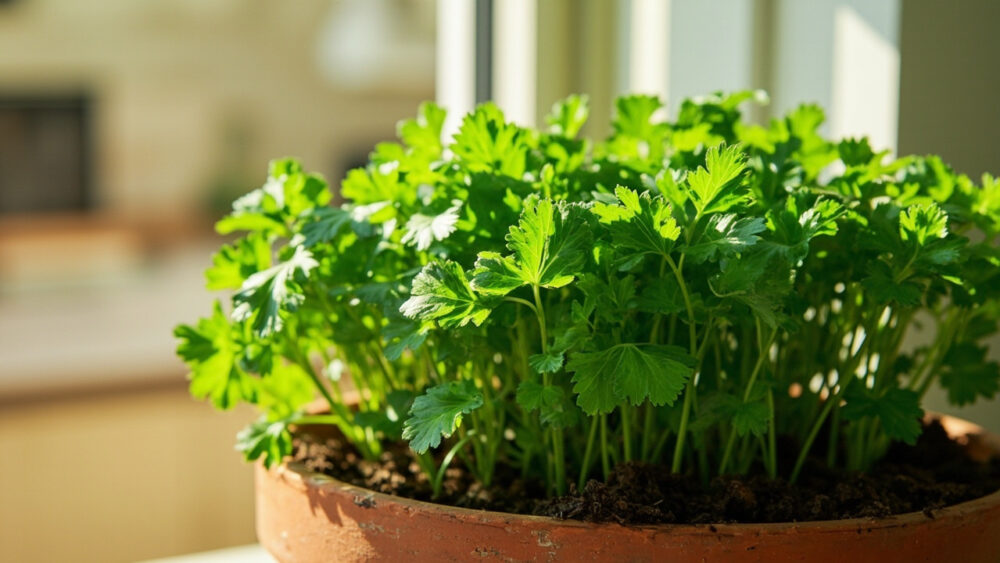
Use a well-draining potting mix, not garden soil, and a container at least 8 inches deep with drainage holes. Cilantro grows a long taproot, and a shallow pot stunts and stresses the whole plant.
Get the pot and light situation right first, because the planting step itself is the easy part.
Planting Cilantro Step by Step
- Fill the pot with moistened potting mix to about half an inch from the rim, and firm it gently without compacting it hard.
- Sow seed directly, a quarter to half inch deep, spacing seeds roughly 1 to 2 inches apart across the pot.
- Cover lightly with soil and water gently until the top inch is evenly moist, not soggy.
- Keep it warm, around 65 to 70 F, until germination, which takes 7 to 14 days. A humidity dome or loosely draped plastic wrap speeds this up.
- Thin seedlings once they have their first true leaves, to about 2 to 3 inches apart, so the remaining plants have room for that taproot to develop.
Once seedlings are up, the routine shifts entirely to keeping them fed and watered on a fast, predictable rhythm.
Watering and Feeding Through the Season
Water when the top inch of soil feels dry to the touch, which indoors is usually every 2 to 4 days depending on your heat and light levels. Cilantro doesn’t like to dry out completely, but it likes soggy roots even less, and constantly wet soil is one of the fastest ways to rot that taproot.
If you assumed more water means faster growth, that guess is actually what stunts a lot of indoor cilantro. Growth speed here is driven far more by light than by water. A pot getting 12 hours of decent light will outgrow a pot getting 4 hours of watering-can attention every time.
Feed lightly with a balanced, diluted liquid fertilizer every 3 to 4 weeks. Cilantro is a light feeder, and pushing it hard with nitrogen mostly grows leaves fast at the expense of flavor, not something you need to chase indoors anyway since you’re already harvesting young.
Get the water and light balance right, and the plant problems that follow become a lot rarer.
Problems That Actually Show Up Indoors
The number one issue is bolting, where the plant sends up a tall central stem and starts flowering instead of growing new leaves. This is triggered by heat, stress, or a root-bound pot, and once it starts, leaf production basically stops for good on that plant. There’s no reversing it, only starting a new pot.
Leggy, pale, stretched growth is the second most common complaint, and it’s almost always a light problem, not a soil problem. If seedlings are reaching sideways toward a window, move them under stronger, closer light rather than adding fertilizer.
Watch for fungus gnats and damping off in overly wet soil, and powdery mildew if airflow is poor and leaves stay damp. A small fan running nearby for an hour or two a day helps more than any product will.
None of these problems are dramatic if you catch them early, which is really just a matter of knowing when to harvest before the plant makes the decision for you.
When and How to Harvest
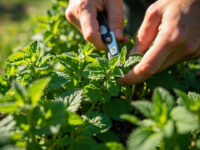
Start snipping outer leaves once the plant has 4 to 6 sets of true leaves, usually 3 to 4 weeks after sowing. Cut stems near the base rather than pinching individual leaves, and never take more than a third of the plant at once.
The honest answer to the question everyone eventually asks is that no indoor cilantro plant produces for months on end. Expect a solid few weeks of good harvest per pot before it bolts, which is exactly why succession sowing every 2 to 3 weeks matters more for cilantro than almost any other herb.
If a plant does bolt and flower, don’t pull it immediately. Let a few flowers dry into seed, and you’ve got coriander seed for the spice rack, plus free seed for your next sowing.
That trade-off, a short productive window in exchange for fast, easy growth, is worth knowing before you plant your first pot.
Cilantro at a Glance
- When to plant: any time indoors, started fresh every 2 to 3 weeks for a continuous supply.
- Light needed: 6 or more hours of direct sun, or 10 to 12 hours under a grow light.
- Ideal temperature: 55 to 75 F, with bolting risk rising fast above 75 F.
- Planting depth and spacing: a quarter to half inch deep, thinned to 2 to 3 inches apart in a pot at least 8 inches deep.
- Germination time: 7 to 14 days at around 65 to 70 F.
- Watering: when the top inch of soil is dry, roughly every 2 to 4 days, never left soggy.
- Harvest window: ready in 3 to 4 weeks, productive for a few weeks before bolting.
Cilantro indoors isn’t a plant you grow once, it’s one you keep restarting on a rolling schedule.
Get that rhythm going and you’ll have fresh leaves in the kitchen far more often than any single pot could ever manage.