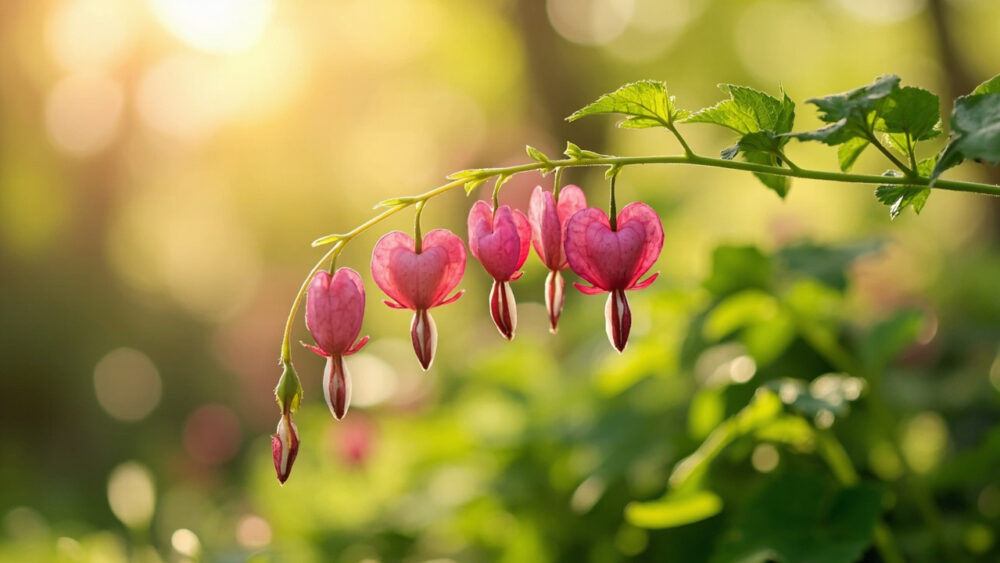
Bleeding hearts bloom in spring, typically from mid-spring through early summer, roughly April through June depending on your climate. That window runs about four to six weeks for the common old-fashioned bleeding heart, and the plant times its show to cool weather rather than a date on the calendar. Once real summer heat arrives, most varieties stop flowering and start thinking about going dormant, whether you want them to or not.
But there is a version of this plant that keeps going most of the season, and a lot of readers standing next to a bleeding heart right now are wondering if theirs is defective because it already quit. It probably is not defective. It is either the wrong type for repeat bloom, or it is reacting to heat and dry soil exactly the way it is supposed to.
Stick around for the part on stretching that bloom window, the honest list of reasons a bleeding heart refuses to flower at all, and the save-able quick-reference card at the bottom that sums up the whole timeline in one place.
The Real Bloom Window, and Why It Feels Short
The classic bleeding heart, Lamprocapnos spectabilis (you may know it as old-fashioned or Japanese bleeding heart), blooms for four to six weeks in spring. In warmer zones that can start as early as March. In colder zones, particularly zone 3 or 4, it may not open until late May.
The foliage often outlasts the flowers by weeksthen yellows and disappears by mid to late summer. That dieback is not the plant dying. It is normal dormancy, and it confuses more first-year growers than almost anything else about this plant.
There is also a fringed-leaf type, often sold as Dicentra formosa or as reblooming hybrids, that flowers on and off from spring into fall instead of one hard spring flush.
Which type you actually planted changes everything else in this article.
What Actually Controls When It Blooms
Bleeding hearts key off soil temperature and day length more than the arrival of “spring” as a season. They push growth and flower buds once soil warms into the high 40s to 50s Fahrenheit, which is why a mild late-winter thaw can pull them into bloom early.
A cold, slow spring delays everything by two to three weeks without hurting the plant at all. A hot, early spring compresses the bloom window and can cut it shorter than usual.
Shade also matters. Bleeding hearts want part shade to full shade, dappled morning sun at most in hot climates, and too much direct afternoon sun pushes them toward dormancy faster, shortening the show.
Your yard’s own microclimate, not the calendar, is setting this plant’s schedule.
How to Get More Flowers, or a Longer Bloom Season
If you want a longer flowering season rather than more flowers packed into the same weeks, plant a reblooming fringed-leaf type alongside or instead of the classic spring-only variety. These genuinely flower in waves through summer if kept cool and moist.
For either type, consistent moisture is the biggest lever you control. Bleeding hearts are woodland plants, not drought performers, and dry soil during bud formation cuts bloom count noticeably.
A 2 to 3 inch layer of mulch keeps roots cool and even, which buys you extra bloom time in a warm spring.
Feeding matters less than people assume. A light application of a balanced, slow-release fertilizer in early spring, applied at label rate, is plenty. Heavy nitrogen pushes leafy growth at the expense of flowers.
Get moisture and shade right first, then worry about everything else.
Why Your Bleeding Heart Isn’t Blooming
Sometimes the honest answer is timing. A bleeding heart planted last fall or this spring may need a full season to establish before it flowers well; do not judge a first-year plant by full performance.
Beyond that, the usual suspects:
- Too much sun: hot, direct afternoon sun stresses the plant and shortens or suppresses bloom.
- Dry soil: even a few days of drought during bud set will reduce flower count.
- Overcrowding or old age: clumps that haven’t been divided in four to five years can bloom less; dividing in early spring or fall often revives them.
- Late, hard frost: a freeze after buds form can damage or abort that year’s flowers, though the plant itself usually survives fine.
- Too much nitrogen fertilizer: lush leaves, few flowers.
None of these mean the plant is dying, just that this particular year’s flower count is taking the hit.
If your plant looks healthy but stubborn, aftercare is where you win the rest of the season back.
Deadheading and Aftercare That Stretch the Show
Deadheading spent stems on reblooming fringed-leaf types genuinely encourages more flowerssince it stops the plant from putting energy into seed production. On the classic spring-only type, deadheading tidies things up but will not trigger a second flush. That variety is done for the year once its window closes, no matter what you do.
Once foliage yellows on the classic type, let it die back naturally rather than cutting it early. The leaves are feeding the roots for next year’s bloom.
Skip watering heavily once the plant goes fully dormant in summer. Established roots prefer to rest dry-ish until fall.
Note that all parts of the bleeding heart are considered toxic if ingested by people or pets, so keep an eye on curious dogs and small children around the foliage and roots. If you suspect a pet or child has eaten part of the plant, contact a veterinarian or doctor rather than waiting to see what happens.
Handle the plant well through its slow exit and it rewards you with a stronger flush next spring.
Bleeding Hearts: Quick Reference
- Bloom season: mid-spring through early summer, roughly April through June depending on climate and variety.
- Bloom duration: four to six weeks for classic spring-blooming types, on and off through summer for reblooming fringed-leaf hybrids.
- What speeds or delays it: soil temperature and spring weather, with cold springs delaying bloom by two to three weeks.
- Light needs: part to full shade, dappled morning sun only in hot climates.
- Water needs: consistent moisture during spring growth and bud set, drier during summer dormancy.
- Common no-bloom causes: too much sun, dry soil during bud formation, overcrowded clumps, late hard frost, excess nitrogen.
- Toxicity note: all parts are toxic if ingested by pets or people, contact a veterinarian or doctor for any suspected ingestion.
Get the shade and moisture right, and the rest of this plant’s schedule takes care of itself.
Most “problem” bleeding hearts are just doing exactly what the species has always done, on its own clock, not yours.