Here’s how to grow thyme without overthinking it: plant it in full sun, in soil that drains fast and stays on the lean side, and then largely leave it alone. Thyme is a Mediterranean herb that thrives on neglect and sulks under attention, which is the opposite of how most people treat new plants. Water it too often, feed it too generously, and you’ll get a floppy, half-dead patch instead of the tight, fragrant mat you were picturing.
Most people who kill thyme kill it with kindness, usually water, and I’ll show you exactly where that mistake happens. There’s also a sign on the plant itself that tells you it’s about to bolt woody and stop producing good leaves, and almost nobody catches it in time. And if you’re wondering whether you can just keep harvesting forever, the honest answer is no, not from the same plant, and I’ll tell you when to start over.
Stick with me through the sections below and you’ll have the whole arc, planting through harvest, plus a save-able Thyme at a Glance card at the bottom with everything worth screenshotting before you head out to the garden.
When to Plant Thyme
Wait until the soil has warmednot just until the frost date has passed. Thyme seedlings and starts want soil temperature around 60 to 70°F, which usually lands two to three weeks after your last spring frost. Zones 7 through 10 can also plant a fall crop about six to eight weeks before the first frost, giving roots time to establish before cold sets in.
If you’re starting from seed, know that it’s slow and a little unreliable. Seeds take two to three weeks to germinate and the resulting plants are small all season. Most gardeners buy nursery starts or divide an existing plant instead, since thyme from seed rarely catches up to transplanted thyme in year one.
Container growers get more slack. If you’re in pots, you can start a few weeks earlier than in-ground and just keep them somewhere protected until nights stay reliably above 40°F.
Timing gets you started right, but the spot you pick decides whether thyme actually survives the summer.
Choosing the Spot and Prepping the Soil
Thyme wants at least 6 hours of direct sun, and full sun all day is better. In weak light it gets leggy, pale, and loses most of its aroma and flavor, which is the whole point of growing it.
Drainage matters more than fertility here. This is a plant that evolved on rocky Mediterranean hillsides, not rich bottomland. Heavy clay or any soil that holds standing water after rain will rot the roots within a season, often before you notice anything wrong above ground.
If your soil is dense, work in coarse sand or fine gravel along with a modest amount of compost, aiming for a mix that feels gritty and loose when you squeeze a handful. Raised beds and containers solve the drainage problem instantly if your native soil is a lost cause. Skip rich, heavily amended garden soil entirely; thyme grown too well fed grows soft, sprawling, and short-lived.
Get the bed right and the actual planting is almost the easy part.
Planting Thyme Step by Step
Whether you’re using nursery starts, divisions, or rooted cuttings, the mechanics are the same.
1. Space plants 12 to 18 inches apart
Thyme spreads wide over a season or two. Crowding plants closer looks fuller at first but invites poor airflow and fungal problems later.
2. Plant at the same depth as the container
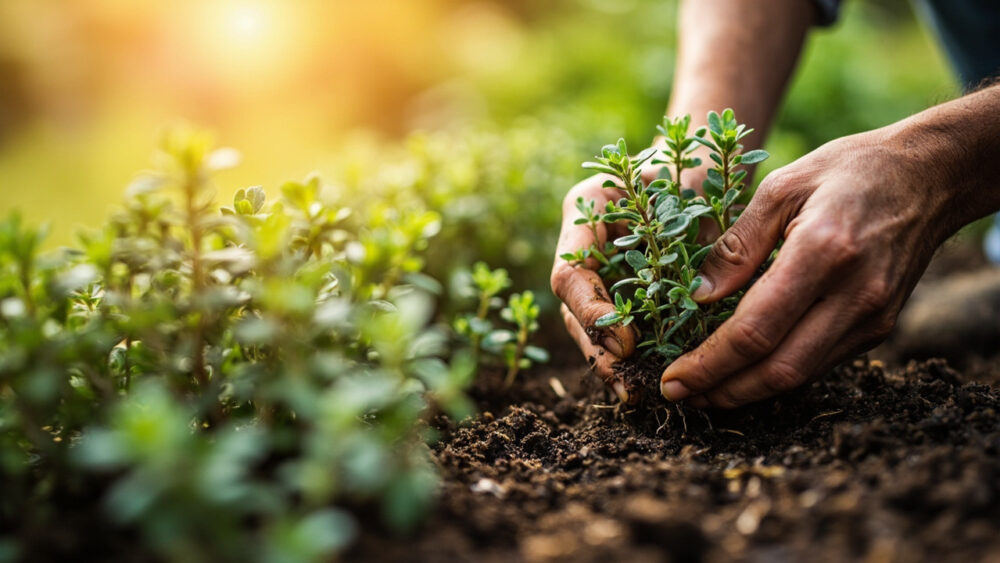
Set the crown, where stems meet roots, right at soil level. Burying it deeper encourages stem rot.
3. Firm the soil gently, then water once to settle it
Press soil around the roots so there are no air pockets, then give one thorough watering. This is the last generous drink it should get for a while.
4. Mulch with gravel or a thin layer of light mulch, not thick organic mulch
A gravel or fine stone mulch keeps the crown dry and reflects heat, which thyme likes. Thick wood mulch traps moisture right where you don’t want it.
Planting takes twenty minutes; what you do with the watering can over the next few months decides whether this works.
Watering and Feeding Through the Season
If you assumed more water means a healthier plant, that habit is exactly what kills thyme faster than drought ever does. Established thyme wants to dry out between waterings and genuinely prefers being on the dry side of neglected.
Check the soil an inch down before watering and only water when it’s dry at that depth, which in summer heat might mean once a week, sometimes less once the plant is established. New transplants need more consistency for the first two to three weeks while roots establish, but after that, ease off deliberately.
Skip fertilizer almost entirely. Thyme grown in average or even poor soil produces the most fragrant, flavorful leaves. One light application of a balanced fertilizer in spring is plenty if your soil is truly depleted. Anything more pushes soft, watery growth with weak flavor and a shorter lifespan.
Get the water right and thyme is nearly indestructible, but a few problems still show up on schedule.
Problems That Actually Show Up, and How to Head Them Off
Root rot is the big one, almost always caused by wet soil, poor drainage, or mulch piled against the crown. The fix is prevention: dry soil, gritty mulch, and resisting the urge to water on a schedule instead of by feel.
Powdery mildew and other fungal issues show up when plants are crowded or when watering wets the foliage in humid weather. Water at the soil line, not overhead, and give plants the full 12 to 18 inch spacing so air actually moves through the patch.
Spider mites can appear in hot, dry stretches, showing up as fine webbing and stippled, dull leaves. A strong spray of water and improved airflow usually knocks them back. For anything more established, an insecticidal soap applied per the product label handles it.
- Yellowing, wilting leaves with damp soil: root rot, cut back watering immediately and improve drainage.
- Fine webbing, speckled leaves: spider mites, hose off and increase airflow.
- White powdery coating on leaves: fungal mildew, water at the base and thin crowded plants.
Head off moisture problems and thyme mostly takes care of itself, which brings us to the part everyone’s actually here for: cutting it.
When and How to Harvest Thyme
Start light harvesting once the plant is 6 to 8 inches tall and established, usually 60 to 90 days after planting a start. Snip individual sprigs any time, but the flavor is most concentrated right before the plant flowers, typically in late spring to early summer depending on your climate.
Here’s the sign almost everyone misreads: once thyme sends up flower buds, people assume it’s ruined and rip it out. It isn’t. Flavor drops slightly during and after bloom, but the real problem is what comes after, when lower stems turn woody and stop producing tender new growth.
Harvest by cutting the top two-thirds of each stem, never all the way to the woody base. This keeps the plant bushy instead of scraggly and encourages fresh growth to keep coming through summer. Cut in the morning after dew dries, when essential oils are most concentrated.
A single thyme plant stays productive for three to five years before it turns permanently woody and sparse at the center. When that happens, take cuttings or divide it in spring rather than trying to revive the old plant, since woody thyme doesn’t bounce back no matter how you prune it.
That five-year lifespan and everything else worth remembering is right here in the card below.
Thyme at a Glance
- When to plant: two to three weeks after your last frost, once soil hits about 60 to 70°F, or six to eight weeks before first fall frost in zones 7 through 10.
- Spacing and depth: 12 to 18 inches apart, crown set level with the soil surface.
- Sun and soil: full sun, at least 6 hours, in gritty, fast-draining, lean soil rather than rich garden soil.
- Watering: let the top inch of soil dry out between waterings, roughly weekly in summer once established.
- Feeding: skip fertilizer unless soil is very poor, then feed lightly once in spring only.
- Harvest window: starts at 6 to 8 inches tall, around 60 to 90 days after planting, best flavor just before flowering.
- Plant lifespan: productive three to five years before turning woody, then divide or take cuttings to restart.
Get the drainage and the sun right, and thyme forgives almost everything else. The plant you’re most likely to lose is the one you loved too hard with a watering can.