Bee balm care comes down to four things it will not tolerate skipping: full sun to light shade, consistently moist soil, good air circulation, and room to spread. Get those right and it is one of the easiest perennials you will ever grow, blooming for weeks and pulling in hummingbirds and bees from across the yard. Get them wrong and you get the plant’s two signature problems, powdery mildew and a patch that either dies out in the middle or takes over the whole bed.
Most of the frustration with bee balm traces back to one guess people make about watering, and it is the opposite of what actually saves the plant. There is also a spacing mistake that looks fine the first year and turns into a mildew disaster by year two, plus a die-back pattern in the center of the clump that panics people into ripping out a plant that was never actually dying.
Stick with me through the sections below and you will know exactly what your plant needs this week, not just in general. The save-able Bee Balm at a Glance card is waiting at the bottom once you have the real picture.
Light, Placement, and Temperature
Bee balm wants full sunat least six hours a day, though in hot southern climates (zone 7 and up) it appreciates afternoon shade so the leaves do not scorch. In light shade it survives but blooms thinner and gets leggier, reaching for light instead of filling out.
Placement matters more than most perennials. Bee balm is a magnet for powdery mildew when air can’t move through the foliage, so give it open space away from walls, fences, and dense shrub lines that block breeze.
It is hardy in zones 3 through 9 and dies back to the ground every winter, returning from the roots once soil warms in spring. Cold is not the threat here, stagnant air is.
Where you plant it decides how much trouble you get later.
Watering: How Much, How Often, and the Guess That Backfires
If you assumed bee balm likes it dry because it is a member of the mint family and tough as nails, that guess is what kills the blooms and invites mildew. Bee balm actually wants consistently moist soilcloser to a hosta’s needs than a sedum’s.
Water enough to keep the top 2 to 3 inches of soil damp, which usually means about 1 inch of water a week from rain or hose, more during heat waves. Check by pushing a finger into the soil; if it comes out dry past the first inch, water.
The real mistake is not skipping water, it’s watering the leaves instead of the soil. Overhead watering in the evening leaves foliage wet overnight, which is exactly what powdery mildew wants.
Water the base in the morning and you sidestep the plant’s biggest disease risk before it starts.
Soil, Feeding, and the Spacing Nobody Respects
Bee balm grows in average to rich soil with good moisture retention, ideally amended with compost at planting time. It tolerates clay better than most perennials but still performs best when the soil drains well enough that it never sits waterlogged for days.
Feeding is light-handed work. A layer of compost worked in each spring is usually enough; a balanced slow-release fertilizer in early spring is fine if your soil is poor, but skip heavy nitrogen feeding, which pushes soft, mildew-prone growth.
Spacing is the mistake that looks harmless the first season. Plant bee balm 18 to 24 inches apart, not the 8 to 10 inches it looks like it needs as a small nursery plant. It spreads by rhizomes and fills that gap fast, and crowded plants with no airflow between them are where mildew takes hold hardest by year two.
Give it room now and you are buying yourself out of a mildew problem later.
Pruning, Dividing, and Seasonal Cleanup
Deadhead spent flower heads through summer to push out a second, smaller bloom flush and to keep the plant from putting all its energy into seed. Snip just below the spent bloom to a healthy leaf set.
Divide bee balm every 2 to 3 yearsin early spring or fall, because it is an aggressive spreader and clumps that go too long get a dead, woody center with all the vigorous growth pushed to the outer ring. Lift the clump, discard the tired center, and replant the vigorous outer sections.
Cut the whole plant back to a few inches once it dies back after frost. Leaving the dead stems standing over winter is fine for pollinator habitat if you want it, but clear them by early spring so old, possibly mildew-carrying foliage isn’t sitting under the new growth.
That dead center you keep finding is not the plant failing, it is the plant telling you it’s overdue for division.
The Problems That Actually Show Up
Powdery mildew is the one you will meet eventually: a gray-white dusty coating on leaves, usually starting on lower foliage in humid weather or crowded plantings. Improve airflow, water at the soil line, and remove badly affected leaves. A sulfur or potassium bicarbonate fungicide labeled for powdery mildew can help if you catch it early, applied exactly per the product label.
Rust shows up as orange-brown pustules on leaf undersides in wet seasons. The fix is the same, better spacing and airflow, plus removing infected leaves.
Wilting in full sun on a hot afternoon looks alarming but is often just the plant’s normal response to heat stress, not a sign of underwatering, so check the soil before you assume you’re behind on watering.
Mint-family plants also attract stem borers and spider mites occasionally, but neither is common if the plant is otherwise healthy and well-spaced.
Most of what people call “bee balm dying” is actually one of these two mildews, and both are manageable, not fatal.
What a Thriving Bee Balm Actually Looks Like
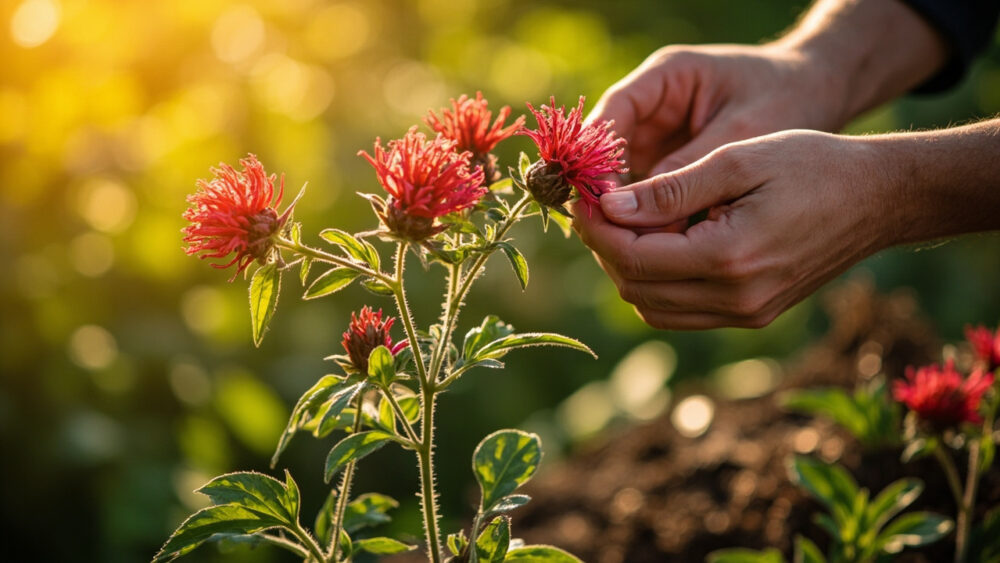
A happy bee balm has dense, upright stems topped with shaggy, tubular flowers in red, pink, purple, or white, blooming for 6 to 8 weeks in mid to late summer. The foliage stays deep green with no dusty coating, and you will see bees and hummingbirds working it within days of the first blooms opening.
New shoots pushing up around the base each spring, spreading outward a little more each year, is a good sign, not a problem, as long as you are staying ahead of it with division.
If your clump is filling in evenly with no bald center and the leaves stay clean through a humid July, you are doing everything right.
Here is the whole plant, boiled down to what you actually need to remember.
Bee Balm at a Glance
- When to plant: spring after your last frost, or in early fall at least 6 weeks before your first hard frost, so roots establish before extreme weather.
- Light: full sun for the best blooms, light afternoon shade in hot climates, zones 7 and up.
- Spacing: 18 to 24 inches apart, no closer, to keep airflow high and mildew low.
- Watering: about 1 inch a week, soil kept consistently moist in the top few inches, watered at the base rather than overhead.
- Soil and feeding: average to rich, well-drained but moisture-retentive soil, compost each spring, light fertilizer only if soil is poor.
- Maintenance: deadhead through summer, cut back after frost, divide every 2 to 3 years in spring or fall.
- Watch for: powdery mildew and rust in humid or crowded conditions, both manageable with airflow and prompt leaf removal.
Give bee balm room, sun, and steady moisture at the roots, and it will outgrow every mistake but crowding.
Divide it before the center dies out, and you will have this patch for decades, not just a few good years.