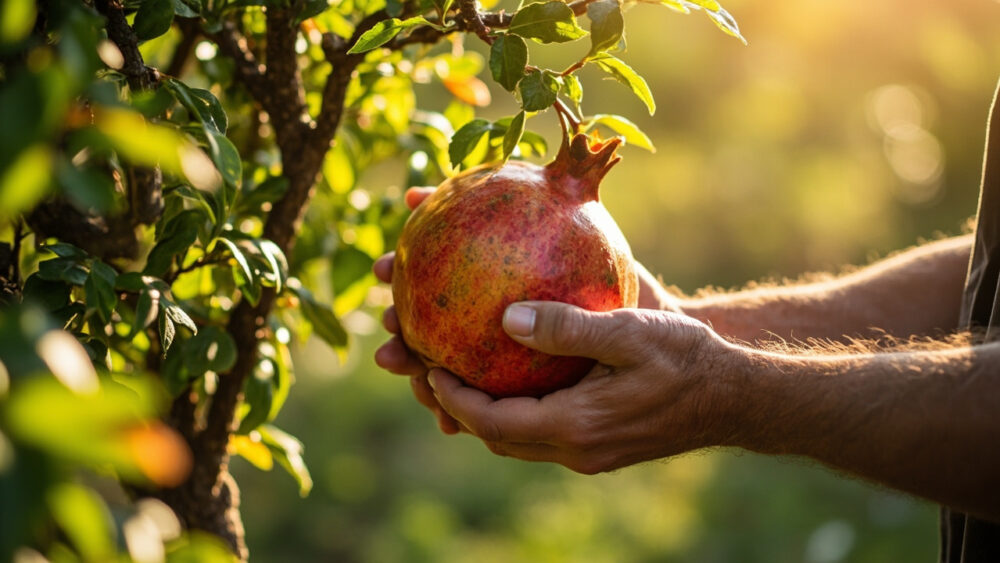
Learning how to grow pomegranates comes down to three things: full sun, soil that drains fast, and patience, since a young tree usually needs two to three years before it fruits seriously. Plant in spring after the last frost once soil has warmed, give it room, and go easy on water once it’s established. That part is simple. What trips people up is everything downstream of planting.
Most failed pomegranate attempts do not fail from cold or from pests. They fail because someone treats the tree like a thirsty ornamental and keeps the soil wet, which is almost the opposite of what this plant wants. There’s also a bloom-drop problem that panics first-year growers for no good reason, and a harvest question nobody answers honestly: the fruit does not ripen after picking, so timing the cut matters more than people expect.
Stick around for all of it, including the mistake that rots more pomegranate roots than any bug or fungus, and the save-able Pomegranates at a Glance card at the bottom with every number in one place.
When to Plant Pomegranates
Plant in springtwo to four weeks after your last frost date, once soil temperature sits reliably above 55°F. Pomegranates handle heat far better than cold, so there is no rush to get them in early. A late start beats a frost-bitten one.
In zones 8 through 11, where pomegranates are genuinely hardy outdoors, fall planting also works if you plant at least six to eight weeks before your first frost. In zones 6 and 7, treat them as marginal: plant in spring only, choose a hardy cultivar, and expect to protect young wood the first couple winters.
Below zone 6, grow one in a large container you can move into an unheated garage or basement for winter.
Next comes the part that decides whether that spring planting actually takes.
Choosing the Spot and Prepping the Soil
Pomegranates want the sunniest spot you have, a full six to eight hours minimum, against a south-facing wall if you’re in a cooler zone since the reflected heat helps ripen fruit. Skip anywhere low-lying or slow to drain after rain.
Drainage is the whole game. These trees tolerate poor, rocky, even mildly alkaline soil far better than they tolerate wet feet. If you dig a hole and it fills with standing water after a storm, that spot will kill a pomegranate slowly no matter how much sun it gets.
Work compost into the native soil rather than replacing it entirely, and skip heavy clay pockets or build a raised mound instead. A soil pH between 5.5 and 7.2 is fine; you do not need to chase a number.
Once the site passes the drainage test, it’s time to get the tree in the ground.
Planting a Pomegranate Step by Step
1. Dig the hole wide, not deep
Go twice the width of the root ball and no deeper than it. Planting too deep is one of the quiet killers here, since a buried trunk collar invites rot.
2. Set the tree at grade
The point where trunk meets roots should sit level with, or very slightly above, the surrounding soil line once you’re done backfilling.
3. Space for the mature size
Give single trees 10 to 15 feet apart. For a hedge, 6 to 8 feet works since pomegranates tolerate crowding better than most fruiting trees.
4. Backfill and water in
Firm the soil gently as you fill, then water deeply once to settle air pockets. Skip fertilizer at planting time; it can burn new roots before they’ve spread.
5. Mulch, but pull it back from the trunk
A 2 to 3 inch layer of mulch out to the drip line holds moisture and blocks weeds. Keep the first few inches around the trunk bare.
Getting it in the ground right is half the job. Keeping it alive through its first summer is the other half.
Watering and Feeding Through the Season
If you assumed more water means a happier pomegranate, that guess is exactly backwards and it’s the single biggest reason young trees decline. These are desert-adapted plants at heart. Overwatering, especially in heavy soil, causes root rot and fungal problems far more often than drought ever hurts them.
For the first yearwater deeply once or twice a week, letting the top 2 to 3 inches of soil dry out between waterings. Check by feel, not by schedule. Once established, mature trees often need supplemental water only during extended dry stretches, especially once fruit is sizing.
Feed lightly. A balanced fertilizer applied once in early spring is plenty for young trees. Established, fruiting trees often need none at all unless growth looks weak or leaves pale. Too much nitrogen buys you lush leaves and disappointing fruit.
Now for the part that scares people every single spring: the flowers that fall off.
Problems That Actually Strike, and the Bloom Drop Nobody Explains
Here’s the honest answer to the question most new growers are about to ask: yes, a healthy pomegranate drops a large share of its flowers, sometimes most of them, and that is completely normal. Not every bloom is meant to set fruit. Panic here causes more overwatering and overfeeding, which makes things worse, not better.
Real problems to watch for instead:
- Fruit splitting: caused by inconsistent watering, especially a dry spell followed by heavy rain or a big drink. Keep moisture even as fruit nears maturity.
- Leaf-footed bugs and aphids: check new growth and developing fruit. Treat with insecticidal soap or a labeled product, following the label exactly.
- Root rot: yellowing leaves and dieback in a tree that’s been kept too wet. Improve drainage. There is no cure once it’s advanced, only prevention.
- Sooty mold on leaves: follows aphid or scale infestations. Controlling the insect clears the mold.
Cold snaps below the mid-teens Fahrenheit can kill young wood in marginal zones, so wrap or mulch heavily around the trunk base going into winter there.
Manage those few things and the tree mostly takes care of itself until it’s time to pick.
When and How to Harvest Pomegranates
Pomegranates ripen roughly 5 to 7 months after bloom, which usually lands in early fall, though exact timing varies by climate and cultivar. Color is a hint, not proof: skin often deepens to a rich red or maroon, but many good varieties stay lighter, so color alone will fool you.
The reliable signs are a sharp metallic sound when you tap the fruit, skin that feels tight and slightly angular rather than smooth and round, and a fruit that feels heavy for its size. Some skins also develop light surface cracking right as they hit peak ripeness.
Cut the fruit off with pruners rather than pulling it, leaving a short stem attached. This matters because pomegranates do not ripen further once picked, unlike a tomato or a banana. Pick too early and that fruit is what you get, permanently.
Once harvested, fruit stores for a month or two in the fridge and considerably longer than that if kept cool and dry.
Everything above compresses into the card below, worth screenshotting before you head back out to the yard.
Pomegranates at a Glance
- When to plant: spring, two to four weeks after last frost once soil is above 55°F, or fall in zones 8 through 11.
- Best zones: 8 through 11 outdoors, 6 and 7 with winter protection, containers below that.
- Sun and spacing: full sun, six to eight hours minimum, 10 to 15 feet apart for single trees, 6 to 8 feet for hedges.
- Planting depth: at grade, trunk collar level with or just above the soil line, hole twice as wide as the root ball.
- Watering: deep and infrequent, letting the top 2 to 3 inches dry between waterings, less once established.
- Time to fruit: two to three years for a young tree, harvest about 5 to 7 months after bloom.
- Ripeness check: a metallic sound when tapped, tight angular skin, heavy for its size, cut rather than pulled.
Get the drainage and the sun right, and a pomegranate mostly grows itself.
Just remember the fruit stops ripening the moment you cut it, so let the sound and feel decide, not the calendar.