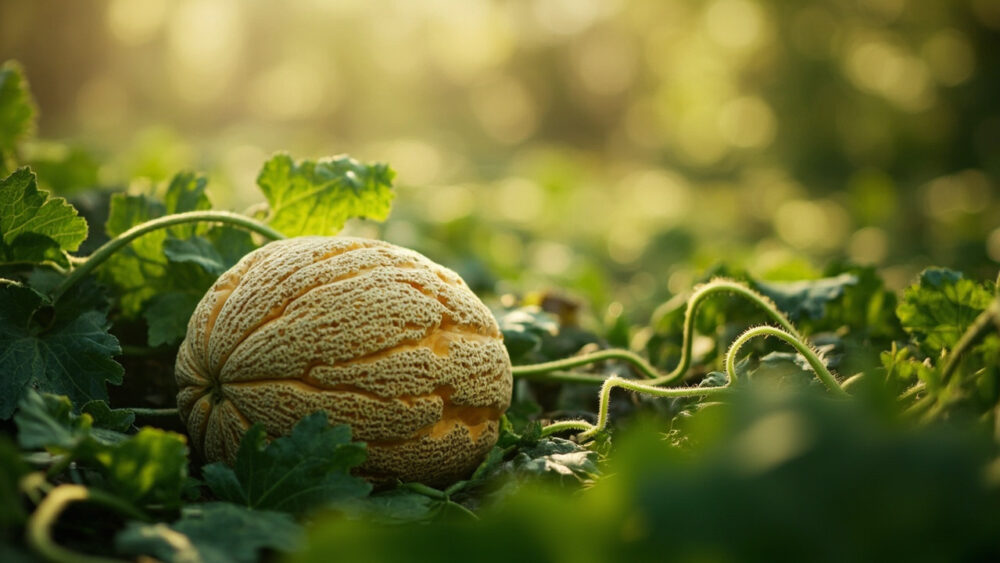
Most cantaloupe varieties take 75 to 90 days from seed to harvest, or about 65 to 80 days if you start with transplants instead of direct-seeding. That is the honest range, and where you land in it depends on things you can actually check in your own yard this week. Answer “how long does it take to grow cantaloupe” and you still have not answered whether your melon will actually ripen before fall shuts you down, which is the real question most people are asking.
There is one mistake that adds two or three weeks to that timeline without the plant ever looking sick, and most gardeners never catch it. There is also a difference between a melon that is running slow because of your climate and one that is stalled because something is actually wrong.
Stick with me through the stage-by-stage breakdown and I will show you how to read your own vine, plus the honest tricks that shave real days off the clock and the ones that just waste your time. Save-able quick-reference card is waiting at the bottom.
The Realistic Timeline, Start to Harvest
Direct-seeded cantaloupe planted after the soil warms typically needs 75 to 90 days to reach ripe fruit. Transplants started indoors and set out after frost risk passes cut that field time to roughly 65 to 80 days, since you skip the slow early germination phase.
Days-to-maturity on the seed packet is measured from that starting point, not from the day you dropped seed in cold soil. A packet that says “80 days” assumes warm soil and steady heat the whole way through.
Cool springs, short summers, or an overcast stretch during flowering can stretch either number by another one to two weeks.
That range is the baseline, but four things push you toward the fast end or the slow end.
What Actually Controls the Speed
Variety matters more than most people expect. Compact, early types can finish in the low 70s, while larger heirloom-type melons or those bred for flavor over speed can run 90 days or more.
Soil temperature is the hidden lever. Cantaloupe seed barely germinates below 65°F and stalls hard below 60°F, so a “warm enough” spring soil test with your finger an inch or two down matters more than the calendar date.
Sun exposure is non-negotiable. Cantaloupe wants a full six to eight hours of direct sun; shade doesn’t just slow growth, it can keep fruit from ripening at all.
Consistent moisture during flowering and early fruit set keeps the plant pushing forward instead of pausing to cope with stress.
Get those four right and you’re working the fast end of the range, not fighting it.
Stage by Stage: What You Should See and When
Germination takes 5 to 10 days in warm soil (75 to 85°F is ideal), longer and less reliable below that.
Vining and leaf growth runs for roughly the next 3 to 4 weeks as the plant builds out its root system and runners before it bothers with flowers.
Flowering starts around week 5 to 6. You will see male flowers first, sometimes for a week or more, before female flowers (the ones with a small swollen bulge at the base) show up.
Once a female flower is pollinated, the fruit itself takes 35 to 45 days to go from marble-sized to full ripe size and sugar content.
That final fruit-fill stage is the one most people underestimate, and it is exactly where patience gets tested.
The Mistake That Adds Two or Three Weeks
If you guessed the timeline killer was underwatering, that is a reasonable guess, but it is not the main one. The real culprit is planting too early in cold soil.
Seed sown into soil still sitting at 55 to 60°F does not die, it just sulks, sitting nearly dormant for a week or two before it finally germinates.
That lost time never gets made up later in the season.
The fix is boring but it works: wait until soil is reliably above 65°F, or start seed indoors 3 to 4 weeks before your last frost and transplant out once nights stay above 50°F.
Transplanting itself needs a light touch, since cantaloupe roots resent disturbance; use biodegradable pots if you can, so you’re not tearing roots apart at planting time.
Skip that early cold-soil trap and you have already banked yourself two or three real weeks.
Legitimate Ways to Speed Things Up (and What Doesn’t Work)
Black plastic mulch warms soil several degrees and can shave 5 to 10 days off early growth, especially in cooler climates. Row covers early in the season do something similar by trapping daytime heat.
Consistent, deep watering rather than sporadic soaking keeps the plant from pausing growth to manage drought stress.
Full sun placement and rich, well-drained soil with steady feeding (nitrogen early, then a shift toward potassium and phosphorus once flowering starts) keeps the plant moving instead of idling.
What doesn’t work: heavy late-season nitrogen, which pushes leafy growth at the expense of fruit ripening. Overwatering right before harvest doesn’t speed anything up either, it just dilutes the sugars you have been waiting on.
Speeding things up is really just removing the things that slow the plant down, nothing more mysterious than that.
Slow Vine or Real Problem? How to Tell the Difference
A slow but healthy vine still has deep green leaves, is actively putting out new growth, and just hasn’t hit its flowering window yet. That is normal, especially in a cool spring.
A vine with a real problem shows yellowing lower leaves, stalled growth for two or more weeks with no new leaves or runners, wilting despite moist soil (often a sign of vine borers or bacterial wilt), or flowers that form but drop without ever setting fruit, which usually points to poor pollination or heat stress.
Cracked or misshapen fruit, or fruit that stays hard and green well past its expected window, often traces back to inconsistent watering rather than variety or bad luck.
If your vine matches the healthy-but-slow list, the answer is patience, not intervention.
Cantaloupe: Quick Reference
- Direct-seeded timeline: 75 to 90 days from seed to ripe fruit, in warm soil with full sun.
- Transplant timeline: 65 to 80 days from transplant date, since germination time is skipped.
- Ideal germination soil temp: 75 to 85°F, with germination stalling badly below 60°F.
- Fruit fill time: 35 to 45 days from pollinated flower to ripe melon, the longest single stage.
- Biggest timeline killer: planting seed into cold soil, which can add 1 to 2 weeks of stalled growth that is never recovered.
- Ripeness cues: the skin under the netting turns from green to tan or gold, the stem end softens, and a ripe melon slips from the vine with light pressure rather than needing to be cut.
That is the full range, honestly stated, with the reasons your particular vine will land where it lands.
Read your soil temperature and your vine’s own signals, and you will know your real harvest date better than any packet ever could.