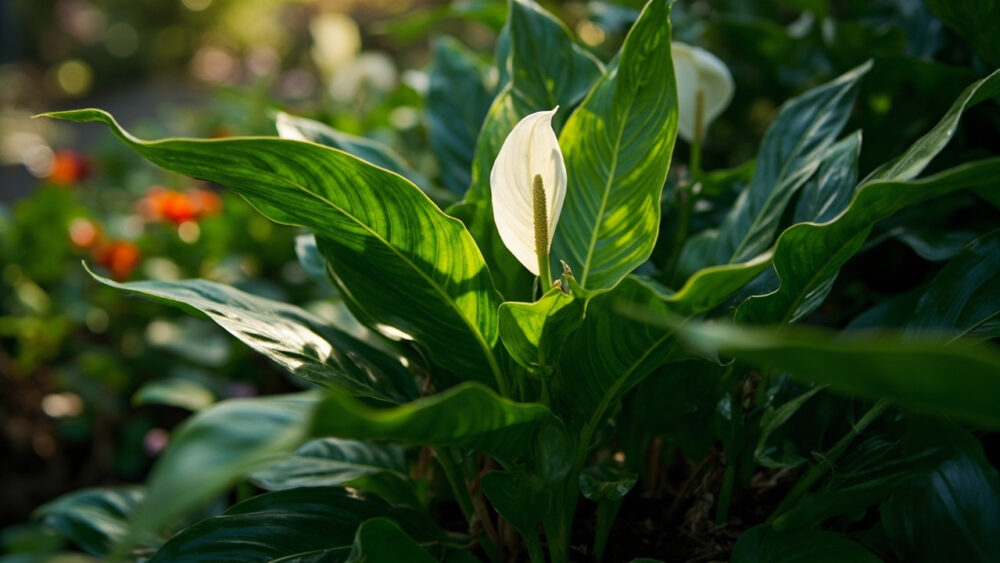
Nine times out of ten, a peace lily that will not bloom is simply not getting enough light. It can survive in a dim hallway or windowless bathroom, but survival and flowering are two different jobs, and blooming takes more light than staying alive does. Move it within a few feet of a bright window (not direct sun) and that alone fixes most cases within six to ten weeks.
But that is not always it, and here is where most people go wrong first: they assume the plant needs fertilizer. It almost never does. Overfeeding is actually one of the top reasons a healthy, dark-green peace lily refuses to flower at all.
There is also a tell on the plant itself that narrows this down fast, once you know where to look, and an honest answer about whether a peace lily that has skipped blooming for a year or more will ever catch back up. Stick with this to the end and you will find a two-minute diagnosis checklist you can run right now, standing next to the pot.
Causes, Ranked Most to Least Likely
1. Not Enough Light
Confirm it: check where the pot actually sits, not where you think it sits. If it is more than 6 to 8 feet from the nearest window, or the only light it gets is overhead fluorescent, this is almost certainly it. Leaves will look fine, even glossy, because peace lilies tolerate low light beautifully. They just will not flower in it.
Fix it: move the plant to bright, indirect light, a spot near an east or north window, or a few feet back from a south or west one. Direct midday sun will scorch the leaves, so avoid that extreme too.
Get the light right and everything else gets easier to fix.
2. Too Much Nitrogen Fertilizer
Confirm it: think back on your feeding habit. If you fertilize monthly (or more) with a general leafy houseplant food, or the plant has pushed a lot of new dark green leaves but zero flower stalks in the last six months, excess nitrogen is pushing all the plant’s energy into foliage instead of blooms.
Fix it: stop feeding for two to three months, then resume at half strength, no more than once every six to eight weeks, using a bloom-supportive fertilizer with a lower nitrogen number relative to phosphorus and potassium.
An overfed peace lily looks perfectly healthy right up until you notice it never blooms.
3. The Plant Is Too Young or Was Just Repotted
Confirm it: is this a plant you grew from a small division, or one you repotted into a noticeably bigger pot in the last two to three months? Immature plants and recently disturbed root systems both redirect energy to root and leaf growth before they’ll spend it on flowers.
Fix it: nothing to fix here except patience. A young peace lily typically needs a full year or more of steady growth before it flowers reliably, and a freshly repotted one usually pauses blooming for one growing cycle while roots settle in.
If this is your situation, the diagnosis is simple: give it time, not intervention.
4. Rootbound or Way Oversized Pot
Confirm it: slide the plant out of its pot. Roots circling tightly with almost no visible soil means rootbound; the opposite problem, a huge pot with a small root mass and soil that stays wet for a week or more, means it is oversized and the roots are sitting cold and soggy instead of working.
Fix it: rootbound plants need to go up one pot size, not five. Oversized pots need the plant moved down to something that actually fits the root ball, usually 1 to 2 inches of space around the roots at most.
Pot size problems are easy to miss because the leaves usually still look green and fine.
5. Temperature Stress or Cold Drafts
Confirm it: is the plant near an exterior door, a drafty single-pane window, or an air conditioning vent? Peace lilies bloom best between roughly 65 and 80°F and stall out in flowering below about 60°F for extended stretches, even if they don’t die.
Fix it: relocate away from the draft or vent. No other change needed, this one resolves as soon as the temperature swing stops.
Some causes on this list overlap, and the next section untangles which one is actually yours.
6. Chronic Underwatering or Drought Stress
Confirm it: peace lilies famously droop dramatically when thirsty, then perk back up within hours of a good drink. If yours droops on a near-weekly cycle and you’re always the one rescuing it, repeated drought stress is likely suppressing flower formation even though the plant survives.
Fix it: water on a consistent schedule, when the top inch or two of soil feels dry, rather than waiting for the visible droop every time. Consistency matters more than exact frequency.
How to Tell the Causes Apart
Light problems show up as an otherwise healthy, uniformly green plant with zero flower stalks ever, regardless of season, and leaves that lean or stretch toward whatever light source exists.
Overfertilizing shows a plant that is unusually lush, with lots of new leaf growth, dark color, sometimes leaf tips that look slightly burnt or crispy from salt buildup, but again, no flower stalks.
Youth or recent repotting shows a plant putting out new leaves at a normal, healthy pace with no other stress symptoms at all. It’s just quiet on the flowering front.
Pot problems show inconsistent watering results, either drying out in a day or two (rootbound) or staying wet for a week or more (oversized), regardless of your watering habits.
Cold stress and drought stress both show physical distress, drooping or curling leaves, rather than the “healthy but flowerless” look of the light and fertilizer causes.
Once you match the tell to your plant, the fix is usually a one-step change, and the next question is how fast it actually works.
Will It Recover?
Light fixes are the fastest and most reliable. Move a peace lily into proper bright indirect light and you can expect flower stalks within six to ten weeks, sometimes longer in winter when light levels drop everywhere.
Fertilizer corrections take a bit longer, often eight to twelve weeks, since the plant has to work through the excess nitrogen already in the soil and in its tissue before it shifts back toward blooming.
Pot size corrections usually show results in one full growing season, spring through fall, not weeks.
Cold and drought stress fixes are the quickest of all once the stress source is removed, often just one full healthy growth cycle, a few weeks.
The honest bad news: a peace lily that is otherwise healthy but has never once bloomed since you got it is not dying and does not need to be replaced. It needs one of the fixes above, and time. Cut your losses only if the plant is also declining, yellowing across the board, rotting at the base, or losing leaves steadily, because that points to a root or watering problem serious enough that blooming is the least of its worries.
Fix the actual cause and patience does most of the remaining work, which brings us to keeping it from happening again.
How to Keep It From Happening Again
Light is the one thing worth being strict about. Keep the plant in consistently bright, indirect light year-round, not just during an active push to get it blooming.
Feed lightly and rarely, a diluted balanced or bloom-formulated fertilizer every six to eight weeks during spring and summer, and not at all in fall and winter when growth naturally slows.
Repot only when genuinely rootbound, roughly every 18 to 24 months for a mature plant, and always size up modestly rather than jumping to a much bigger pot.
Keep it away from cold drafts, heating vents, and exterior doors, and water on a steady schedule based on soil feel rather than a rigid calendar.
A peace lily also blooms best when it’s had a genuine rest period, cooler and drier over winter, followed by a warmer, brighter spring, so avoid running it hard and identical year round.
None of this is complicated once you’ve matched your plant to its actual cause, and that’s exactly what the checklist below walks you through.
Diagnosis Checklist
- Check the distance from the nearest bright window: if it’s more than 6 to 8 feet, or the only light is artificial overhead, treat low light as your primary cause and move the plant first.
- Recall your feeding habit over the last six months: if you’ve fed monthly or more with a leafy houseplant fertilizer, stop feeding for two to three months before trying anything else.
- Check the plant’s age and repot history: if it’s under a year old or was repotted within the last two to three months, the answer is patience, not a fix.
- Slide the root ball partway out of the pot: tightly circling roots with no visible soil means rootbound, size up one pot size.
- Check if soil stays wet for a week or more after watering: if so, and the pot looks oversized for the root mass, size down to something that actually fits.
- Note the plant’s location: if it sits near a drafty door, single-pane window, or air vent, relocate it regardless of any other symptom.
- Watch the leaves for a full week: dramatic drooping followed by recovery after watering points to inconsistent watering, switch to a schedule based on soil feel.
- Rule out decline: if leaves are yellowing broadly, the base looks soft or rotted, or leaves are dropping steadily, treat this as a root or water problem first, blooming is secondary.
Match your plant to one line on that list and you have your real answer, not a guess.
Fix that one thing, give it the weeks it needs, and the blooms follow on their own schedule, not yours.