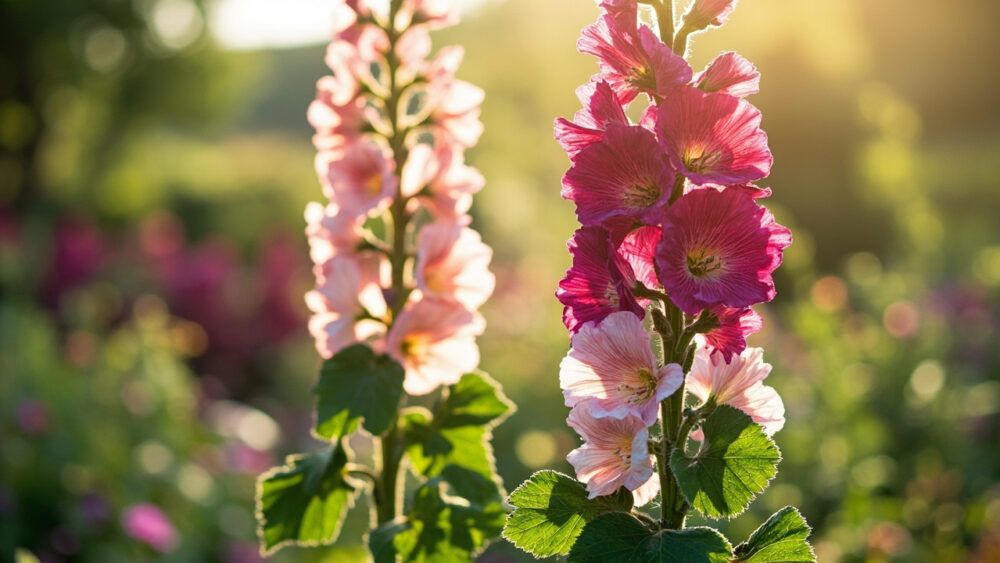
Most hollyhocks are biennial, not perennial or annual, which means the plant you grow this year mostly builds leaves, then flowers and often dies back the following summer. Some varieties and some lucky yards get a true third or fourth year out of the same crown. If you’re asking do hollyhocks come back every year, the honest answer is “sort of, but not the way you think.”
What actually comes back is usually not the original plant. It’s the seedlings it dropped, which is why an established hollyhock patch looks permanent even though no single plant is old.
There’s a mistake worth flagging early: gardeners see bare stalks in late summer, assume the plant died for good, and yank it out. Sometimes that stalk was about to send up a fresh rosette of leaves at its base that would have wintered over just fine. Keep reading, because the quick-reference card at the bottom lays out exactly what to look for before you make that call, plus the zone breakdown and the one thing you can do this fall to get more blooms next year.
The Plain Answer: Biennial, With Exceptions
Classic hollyhocks (Alcea rosea) are biennial. Year one, from seed, you get a low rosette of big round leaves and no flowers. Year two, that rosette sends up the tall flower spike you’re picturing, often 5 to 8 feet, and after it blooms and sets seed the main stalk dies.
Some named strains and some individual plants behave more like short-lived perennials, throwing up a second or even third bloom stalk from the same root crown. This is genetics as much as care, and you won’t know which you have until year three arrives or doesn’t.
Zone matters less than you’d expect for whether they survive winter at all. Hollyhocks handle cold down to roughly zone 3 with no trouble, root and all. What zone changes is whether the plant reblooms versus needs replacing, and whether reseeding happens on its own schedule or needs your help.
So the root system’s toughness was never really the question, blooming again was.
What Happens Over Winter
After the first bloom season, the flower stalk browns and looks finished by late summer or early fall. Cut it down or leave it, either is fine, but look at the base before you decide the plant is done.
A live hollyhock crown shows a fresh rosette of green leaves low to the ground, right where the dead stalk meets the soil. That rosette is next year’s plant getting a head start. No rosette by the time hard frost arrives usually means that particular crown won’t return.
Through winter the rosette sits mostly dormant, sometimes flattened by snow, and looks rough. That’s normal. It greens back up and starts pushing height once soil warms in spring.
The rosette is your honest preview of next season, not the dead-looking stalk above it.
How to Help One Return
Leave the base rosette alone and don’t mulch heavily over the crown itself, since hollyhocks rot faster from wet, smothered centers than they die from cold. A light mulch a few inches out from the stem is fine.
Let some seed heads dry and drop naturally if you want volunteers filling in around the original plant. This is the real secret behind hollyhocks that “come back every year” for decades in the same spot: it’s a rolling population of self-sown seedlings, not one immortal plant.
Good drainage matters more than fertilizer here. Hollyhocks in heavy, soggy clay lose their crowns to rot over winter far more often than ones in average, well-drained soil.
Rust disease on the leaves is common and mostly cosmetic, but stripping badly infected foliage in fall reduces spores overwintering near the crown.
Get drainage and that rosette right, and the rest of the return trip mostly takes care of itself.
When Treating Them as Annuals Is the Smarter Move
If you want guaranteed flowers every single summer with zero gaps, plant hollyhocks like an annual: start new seed or transplants each spring alongside whatever biennial plants are already established. This sidesteps the classic biennial gap year where a bed planted from scratch shows all leaves and no blooms its first summer.
Gardeners in short-season or very wet-winter climates often get better results treating hollyhocks as reliably annual or biennial-and-done rather than counting on perennial return. Fighting rot-prone soil every winter for a plant that might rebloom anyway is a bad trade for a lot of yards.
Succession planting is the practical fix: sow or set out new plants every year rather than betting on old crowns. That way something is always in its flowering year.
Staggering ages in the same bed is how experienced hollyhock growers avoid ever having an empty year.
Reading Your Own Yard
Check your specific plant before writing it off. Scratch the base stem lightly with a thumbnail in early spring; green and moist underneath means it’s alive even if nothing shows above ground yet.
No rosette, a black or mushy crown, and a stalk that pulls up with almost no resistance means that plant is finished. Don’t wait past mid spring hoping it changes.
If you’ve had hollyhocks in the same bed for years without ever replanting, you almost certainly have a self-seeding population, not one long-lived original. That’s worth knowing before you go hunting for a “secret” to longevity that isn’t really there.
Now here’s the part worth saving, the short version of everything above in one place.
Hollyhocks: Quick Reference
- Life cycle: most hollyhocks are biennial, leaves only in year one, tall bloom stalk in year two, then that stalk usually dies.
- Do they come back: the same exact plant sometimes reblooms a second or third year, but ongoing patches are usually self-sown seedlings replacing the original.
- Hardiness: roots survive cold reliably to about zone 3, so winter kill is more often rot from wet soil than freezing.
- What to check in fall: a fresh green rosette at the base of the dead stalk means that crown is alive and coming back next year.
- How to help them return: keep the crown well drained, avoid piling mulch directly over it, and let some seed heads drop for volunteers.
- When to treat as annual: wet-winter or short-season climates, or anyone who wants guaranteed blooms every year without gap years.
- Common issue: leaf rust is common and mostly cosmetic; stripping bad foliage in fall reduces spores near the crown.
Hollyhocks reward patience more than perfect care, and the patch that looks eternal is really just good succession.
Plant a few new ones every year or two and you’ll never notice which category any single stalk belonged to.