Lantana care comes down to three things: give it at least six hours of direct sun, water it deeply but infrequently, and resist the urge to baby it with rich soil or heavy fertilizer. This is a tough, heat-loving plant that actually performs worse with too much attention. Get those three things right and lantana will bloom nonstop from late spring until frost with almost no help from you.
Most lantana problems trace back to one habit: treating it like a delicate annual flat instead of the drought-tough shrub it actually is. There is also a sign of trouble that new growers almost always misread as the plant dying when it is usually the opposite. And if you are wondering whether that die-back after a cold snap means the plant is finished, the honest answer surprises most people.
All of that gets sorted out below, section by section, and at the very bottom you will find a save-able Lantana at a Glance card with the numbers worth keeping on your phone.
Light, Placement, and Temperature
Lantana wants full sun, at least six hours a day, and it genuinely gets better with more. Plants tucked into partial shade survive but bloom thin and stretch toward the light instead of filling out. This is not a plant that needs protection from afternoon heat.
It thrives in temperatures from the mid 70s well into the upper 90s Fahrenheit and shrugs off the kind of blazing exposure that fries other bedding plants. Cold is the real limit. Frost kills the top growth, and in USDA zones 8 and colder, a hard freeze usually takes the whole plant.
In zones 9 through 11, lantana is a woody perennial that comes back from the roots year after year. Farther north, grow it as an annual or plan to bring potted plants indoors before the first frost.
Next comes the part gardeners get wrong more than almost anything else with this plant.
Watering: Less Is More, and This Is Where Most People Overdo It
If you assumed a plant covered in flowers all summer must be thirsty, that guess is what kills most lantana. This plant is drought-tolerant once established, and constantly wet soil rots the roots faster than heat or neglect ever will.
Water deeply, then let the top 2 inches of soil dry out before watering again. For an in-ground plant, that usually means once a week in normal heat, maybe twice during a real dry stretch. Potted lantana dries faster and may need water every 3 to 5 days in summer.
Check by pushing a finger into the soil. If it is still damp an inch or two down, wait. Wilted, slightly droopy leaves in the heat of the afternoon that perk back up by evening are normal and not a sign you need to water more.
Get the water right and the soil underneath matters less than you would think, but it still matters.
Soil, Containers, and Feeding: Why Rich Soil Backfires
Lantana actually prefers lean, fast-draining soil. A sandy or gritty mix that would starve a petunia is exactly what this plant wants. Heavy, rich garden soil or a container mix loaded with compost holds too much water around the roots and invites rot.
In containers, use a standard potting mix cut with some perlite or coarse sand, and make sure the pot has real drainage holes. In the ground, work a little grit into heavy clay before planting rather than piling on compost.
Feed lightly, if at all. A diluted balanced fertilizer once a month during the growing season is plenty. Overfeeding pushes soft, leafy growth at the expense of flowers, which is the opposite of what most people planting lantana actually want.
Now for the maintenance rhythm that keeps a lantana looking full instead of leggy.
Pruning, Deadheading, and the Seasonal Reset
Lantana blooms on new growth, so regular trimming through the season keeps flowers coming instead of tapering off. Pinch or shear back leggy stems by a few inches every few weeks in summer to keep the plant bushy rather than sprawling and bare at the base.
Deadheading spent flower clusters is optional since lantana usually self-cleans, but removing them tidies the plant and can nudge along the next flush.
The bigger prune comes at the seasonal edges. In warm climates where lantana comes back as a perennial, cut it back hard, down to 6 to 12 inches, in late winter before new growth starts. This is also when to repot container plants that have outgrown their pots, sizing up by 2 to 4 inches in diameter.
That hard cutback in late winter is exactly where the die-back confusion below comes from.
The Frost Die-Back Everyone Panics Over, and the Pests That Actually Matter
After a freeze, lantana foliage turns black and mushy almost overnight, and it looks dead. In zones 9 through 11, it usually is not. Wait until new growth appears at the base in spring before you give up on it, then cut back the blackened stems to make room.
Pest-wise, lantana is unusually clean, but whiteflies and spider mites show up when plants are stressed or crowded with poor airflow. Look for stippled, faded leaves or a fine webbing on the undersides. Lace bugs can also bother lantana in some regions, showing up as pale speckling on the leaf surface.
For any of these, a strong blast of water followed by insecticidal soap handles most outbreaks; if it persists, follow the label instructions on a labeled miticide or insecticide exactly rather than guessing at a mix.
Lantana is toxic to dogs, cats, and horses if the leaves or unripe berries are eaten, and can cause vomiting, diarrhea, lethargy, or skin sensitivity to sun. If you suspect a pet has eaten any part of the plant, call your veterinarian rather than waiting to see what happens.
Once you know what to watch for, the good news is that a healthy lantana is easy to recognize from across the yard.
How to Tell It Is Actually Thriving
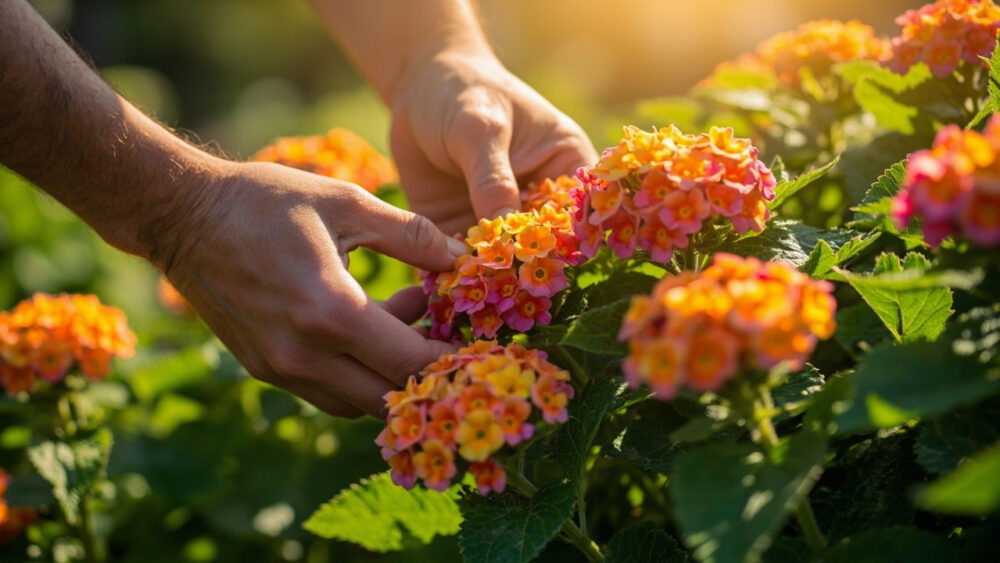
A thriving lantana is covered edge to edge in small clustered flowers, in shades of yellow, orange, pink, red, or white depending on the variety, with almost no bare stem visible through the foliage. New buds should be forming constantly, not just at the tips.
Leaves should be a deep, slightly rough green. Pale or yellowing leaves usually mean too much water or soil that is holding moisture too long, not a lack of fertilizer.
A lantana that is happy will also attract a steady stream of butterflies and bees, which is one of the most reliable thriving signals there is, since pollinators skip over stressed plants with thin, low-nectar blooms.
Here is the whole thing distilled into what is worth saving to your phone.
Lantana at a Glance
- When to plant: after all frost danger has passed and soil has warmed, since lantana sulks in cold, wet spring soil.
- Light needed: full sun, at least 6 hours of direct light daily, more is better.
- Watering: deeply, then let the top 2 inches of soil dry before watering again, roughly weekly in the ground, every 3 to 5 days in containers.
- Soil: lean and fast-draining, sandy or gritty, never rich or constantly wet.
- Feeding: light, a diluted balanced fertilizer once a month in the growing season, no more.
- Hardiness: perennial in zones 9 through 11, grown as an annual and killed by hard frost elsewhere.
- Pruning: trim lightly through summer to keep it bushy, cut back hard to 6 to 12 inches in late winter where it overwinters.
Get the sun and the watering right and lantana forgives almost everything else. When in doubt, water less, not more.