The best time to plant coneflowers is two to three weeks after your last frost date, once soil temperature holds above 55 to 60 F, or in late summer to early fall about six weeks before your first hard frost. Both windows work. Most people pick the wrong one anyway, or nail the timing and blow it with depth or spacing instead.
Coneflowers are tough plants, which is exactly why so many gardeners get careless with them. They forgive a lot, but not everything, and the mistakes that cost you a season are quieter than you’d think.
Before you grab the trowel, there are a couple of things worth knowing: the sign that tells you your soil is actually ready even when the calendar says go, and why a plant that survives a bad planting date can still limp along for a year without ever telling you what went wrong. Stick around for the Coneflowers at a Glance card at the bottom. It is built to save to your phone before you walk back outside.
The Real Planting Window, Spring and Fall
Spring planting starts once nighttime lows stay reliably above the mid 40s and soil temperature has climbed past 55 F. That is usually two to three weeks after your last average frost date, not the day of it. Coneflowers do not care about frost tenderness the way tomatoes do, but cold, wet soil rots young roots before top growth ever gets going.
Fall planting is the window a lot of gardeners skip, and it is often the better one. Aim for six to eight weeks before your first expected hard frost, giving roots time to establish before the ground freezes. In much of zone 5 and warmer, that lands in late August through September.
Either window produces a strong plant. What ruins it is planting in the gap between them, deep summer heat, where transplant stress and drought stack up fast.
Your actual planting day depends less on the calendar than on what the soil is doing right now.
How to Read Your Own Yard, Not the Calendar
Here is the mistake almost everyone makes: they plant by date instead of by soil. If you assumed “last frost date” means the soil is ready, that guess is what leaves coneflowers sitting stalled for three weeks doing nothing visible above ground.
Check soil temperature with a simple probe thermometer four inches down, mid-morning, for two or three consecutive days. You want a steady 55 F or higher for spring planting.
Check soil moisture too. Squeeze a handful from four inches down. It should hold a loose clump and crumble with light pressure, not drip water or crack apart dust dry.
If your soil passes both checks, you’re clear to plant regardless of what the date on the seed packet suggested.
That still leaves the question of what actually happens if you jump the gun or drag your feet.
Planting Too Early or Too Late: What Actually Goes Wrong
Plant too early and coneflowers rarely die outright. That is the trap. Cold, soggy soil slows root development so much that the plant sits in a holding pattern for weeks, vulnerable to root rot and slow to size up before summer heat arrives and demands more from roots than they’ve built.
Plant too late in spring, deep into summer heat, and you’re fighting transplant stress and drought stress at the same time. The plant may survive but bloom weakly its first year, sulking instead of spreading.
Fall planted too late is the riskier error. Roots need four to six weeks of decent growing conditions before hard frost locks the ground. Cut that short and winter heaving can pop a shallow-rooted plant right out of the soil.
None of these mistakes are usually fatal on their own, which is exactly why they get repeated the next year too.
Prep That Matters More Than the Date
Coneflowers want full sun, at least six hours daily, and soil that drains well. They tolerate poor, lean soil better than rich, heavy, moisture-retentive soil, which is the opposite of what most new gardeners assume.
Work the planting area two to three weeks before you intend to plant. Loosen soil eight to ten inches deep and skip heavy compost or fertilizer amendments. Rich soil grows floppy, weak-stemmed plants that flop over by midsummer.
Space plants 18 to 24 inches apart. Crowding them tighter looks fuller the first year and turns into a powdery mildew problem by year two or three, once airflow between plants disappears.
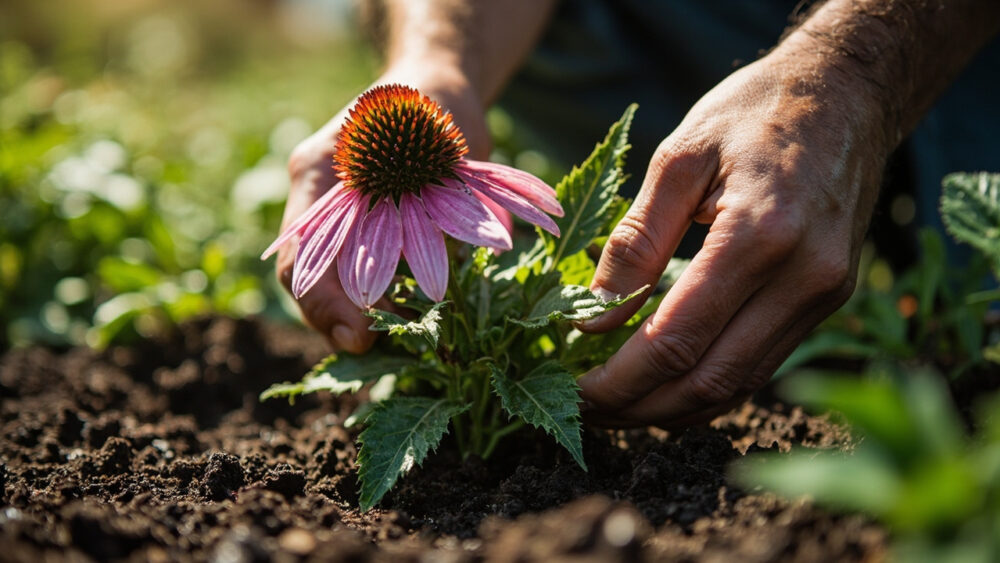
Plant at the same depth the nursery pot shows, crown at soil level, not buried. Set them too deep and the crown rots before it ever gets a chance to establish.
Get the bed ready before the window opens and planting day itself takes ten minutes per plant.
Zone and Region Notes Worth Knowing
Zones 3 and 4 should lean toward spring planting. Fall windows are tight, and plants set too late risk not establishing before a hard freeze locks them in.
Zones 5 through 7 get the most flexibility, with strong results either spring or fall, and fall often produces the better first bloom season the following summer.
Zones 8 and warmer should avoid summer planting entirely. Heat and humidity stress roots hard, so fall through early spring is the better call, with actual summer heat as the one time to hold off.
Wherever you garden, the same rule holds underneath all of it.
Coneflowers at a Glance
- When to plant: two to three weeks after last frost in spring, or six to eight weeks before first hard frost in fall.
- Soil temperature target: at least 55 to 60 F, checked four inches deep for two to three consecutive days.
- Spacing: 18 to 24 inches apart to keep airflow good and prevent powdery mildew.
- Planting depth: crown level with the soil surface, never buried deeper than the nursery pot.
- Sun and soil: full sun, at least six hours daily, lean well-draining soil rather than rich amended beds.
- Biggest mistake to avoid: planting into cold, wet soil, which stalls roots without killing the plant outright.
- Zone note: zones 3 and 4 favor spring, zones 5 through 7 do well either season, zones 8 and up should skip summer planting.
Get the soil right and the calendar mostly takes care of itself.
Coneflowers reward patience with roots more than they reward speed with top growth.