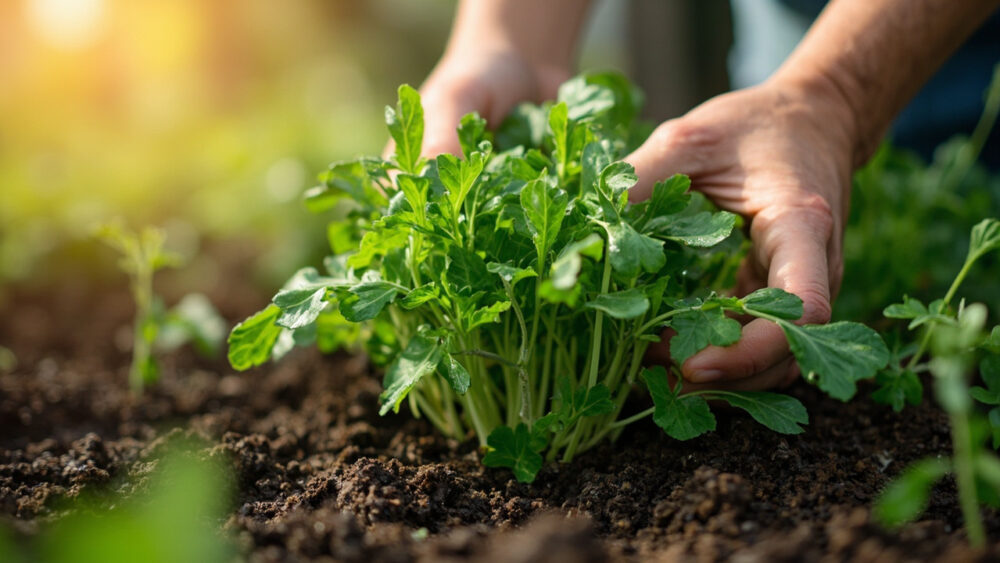
Arugula grows fastest of almost any salad green you can plant. Sow the seed a quarter to half an inch deep, thin to about 4 to 6 inches apart, keep the soil evenly moist, and you’ll be cutting baby leaves in 21 to 30 days. Learning how to grow arugula well is less about skill and more about timing, because this plant bolts and turns hot and bitter the moment it decides summer has arrived.
That’s really the whole story with arugula: it wants to grow fast in cool weather, and everything that goes wrong traces back to fighting that instinct. There’s one mistake that wrecks more crops than pests ever do, and it isn’t watering or soil, it’s planting at the wrong moment and then wondering why every leaf tastes like horseradish by June.
There’s also a sign most people misread completely, a stretch of stem right before flowering that looks like trouble but actually means something else. Stick with me through this and you’ll get the honest answer on why your arugula went bitter last time, plus a full Arugula at a Glance card at the bottom you can save to your phone before you even walk back outside.
When to Plant Arugula
Arugula is a cool-season crop through and through. Direct-sow it as soon as soil can be worked in spring, generally 2 to 3 weeks before your last frost date, once soil temperature sits around 40 to 55°F. It germinates in cool soil far better than most greens, and light frost won’t touch established plants.
You get a second, often better window in late summer for a fall crop. Sow again about 6 to 8 weeks before your first fall frost, when daytime highs have started dropping back into the 70s.
In zones 8 and warmer, arugula behaves almost like a winter annual, growing right through the cooler months with little slowdown. In zones 3 to 7, treat it strictly as a spring and fall crop and expect it to struggle or bolt if you push it into real summer heat.
Get the timing right and the rest of this gets a lot easier.
Choosing the Spot and Prepping the Soil
Arugula wants full sun in spring and fall, but in the sneakiest part of the season, it actually does better with a little afternoon shade. If you’re planting late spring or want to stretch the harvest, tuck it where taller plants will eventually cast some shadow by midday.
Soil should be loose, well-drained, and moderately fertile. Work a couple inches of compost into the top 6 inches before planting. Heavy clay or compacted soil slows germination and gives you tough, stunted leaves instead of the tender ones you’re after.
Aim for a soil pH between 6.0 and 7.0. Arugula isn’t picky about this the way some vegetables are, but very acidic soil will hold back growth.
Skip raised beds and containers if you want, arugula does fine in either, as long as drainage is solid and the container gets at least 6 inches of soil depth.
Once the bed is ready, the actual planting takes five minutes.
Planting Arugula Step by Step
1. Sow the seed
Scatter seed thinly or sow in rows, at a depth of a quarter to half an inch. Arugula seed is tiny, so resist the urge to bury it deep.
2. Space it out
Leave 6 to 10 inches between rows if row planting. Within the row, seed can go every inch or two at first since you’ll thin later.
3. Water it in gently
Water immediately after sowing with a light, even spray. A hard blast of water displaces the tiny seed and gives you bare patches.
4. Thin the seedlings
Once seedlings have their first true leaves, thin to 4 to 6 inches apart. Crowded arugula bolts faster and produces smaller, tougher leaves.
5. Succession sow
Plant a new short row every 10 to 14 days through your cool window. This is the actual trick to a steady harvest instead of one big flush that all bolts at once.
That succession habit solves a problem most people don’t know they have until it’s too late.
Watering and Feeding Through the Season
Arugula has shallow roots and grows fast, which means it’s thirsty. Keep the top inch or two of soil consistently moist, watering every 2 to 3 days in mild weather and daily in warm, dry stretches. Let it dry out repeatedly and the plant reads that as stress, which pushes it toward bolting early.
A 1 to 2 inch layer of mulch around plants helps hold moisture and keeps soil temperature from spiking, which matters more for arugula than for most greens.
Feeding needs are light. One application of a balanced, diluted liquid fertilizer or a top-dressing of compost about 3 weeks after sowing is usually enough for the whole cycle. Heavy nitrogen feeding pushes fast, floppy leaf growth with less flavor, and it doesn’t slow bolting the way people hope it will.
Water and mulch will carry you most of the way, but a few pests still have opinions about your arugula.
Problems That Actually Show Up
Flea beetles are the number one issue, leaving small round shot holes across the leaves. They love warm, dry conditions and hit hardest as spring turns to summer. Floating row cover laid down at planting time is the most reliable fix, since it physically blocks the beetles before they find the crop.
Aphids can cluster on the undersides of leaves in cool, humid weather. A strong water spray knocks most of them off, and insecticidal soap applied per the label handles heavier infestations.
Slugs go after seedlings in damp, shaded beds, leaving ragged holes and slime trails. Reduce mulch right against the stems and water in the morning instead of evening to cut down on the damp conditions they love.
Downy mildew shows up as yellow patches on top of leaves with fuzzy gray growth underneath, usually in cool, wet, poorly ventilated beds. Space plants properly and water at the soil line, not overhead, to keep it from taking hold.
None of these problems are the real reason most arugula crops fail, though.
The Real Reason Arugula Turns Bitter
If you assumed hot weather alone ruins arugula, that’s close but not quite the full picture. Heat is the trigger, but the actual event is bolting, when the plant shifts from making leaves to making a flower stalk and seed, and it happens fastest once daytime temperatures push past the mid-70s for several days running.
Here’s the sign almost everyone misreads: a stretch of bare-looking stem shooting up from the center of the plant, sometimes with a slightly thicker, paler look than the leaf stems around it. Most people think this means disease or a nutrient problem. It’s neither. That’s the bolt stalk starting, and once you see it, leaf flavor is already changing.
You can still eat arugula in early bolt, and the small white flowers that follow are edible and genuinely tasty in a salad, sharp and a little sweet. But the leaves themselves get noticeably hotter and tougher day by day after that stalk appears.
The honest fix isn’t a product or a trick, it’s succession planting and harvest timing, which is exactly why that step matters so much earlier in the season.
When and How to Harvest
Start harvesting baby leaves at 21 to 30 days, once they reach 2 to 3 inches long. For mature leaves with more bite, wait 35 to 40 days, when leaves are 4 to 6 inches long.
Cut individual leaves with scissors, or shear the whole plant back to about an inch above the soil line for a cut-and-come-again harvest. Arugula regrows readily after a light shearing, often giving you two or three cuttings before it bolts.
Harvest in the cool of morning when leaves are crisp and less prone to wilting. Leaves picked in the heat of the afternoon go limp fast and taste harsher.
Once flower stalks appear, harvest promptly rather than waiting, since flavor only gets sharper from there. Pull the whole plant once it’s clearly bolted and use that space for your next succession sowing.
Everything above boils down to a handful of numbers worth keeping on hand.
Arugula at a Glance
- When to plant: 2 to 3 weeks before last frost in spring, and 6 to 8 weeks before first fall frost, in soil around 40 to 55°F.
- Depth and spacing: sow a quarter to half an inch deep, thin to 4 to 6 inches apart, rows 6 to 10 inches apart.
- Sun and soil: full sun in cool weather, light afternoon shade in warmer stretches, loose fertile soil with pH 6.0 to 7.0.
- Watering: keep the top 1 to 2 inches of soil consistently moist, watering every 2 to 3 days in mild weather.
- Feeding: one light feeding of balanced fertilizer or compost about 3 weeks after sowing, nothing heavier.
- Watch for: flea beetles, aphids, slugs, and downy mildew, with row cover as your best all-around defense.
- Harvest: baby leaves at 21 to 30 days, mature leaves at 35 to 40 days, cut in the morning for best flavor and texture.
Plant it cool, harvest it young, and keep new seed going into the ground every couple of weeks. That rhythm, more than any single trick, is what keeps arugula tender instead of turning it into a hot, bitter mess by midsummer.