A cured, uncut spaghetti squash keeps for one to three months in a cool, dry spot around 50 to 60 degrees Fahrenheit, out of direct sun. Cut it, and you are on a five to seven day fridge clock instead. If you want to learn how to store spaghetti squash so it actually lasts instead of turning soft and sad in the back of your pantry, the whole answer depends on whether the squash is whole, cut, or cooked.
Most people ruin their squash in the first ten minutes after harvest, not weeks later in storage. There is one drying step almost everyone skips, and it is the difference between a squash that lasts through January and one that rots by Thanksgiving.
There is also a soft spot that shows up on the bottom of a stored squash that people mistake for a bruise. It is not a bruise, and by the time you see it, the inside is already going. Stick around for the full breakdown, including the Spaghetti Squash at a Glance card at the bottom, worth saving to your phone before you head to the kitchen or the garden.
Curing: The Step Everyone Skips
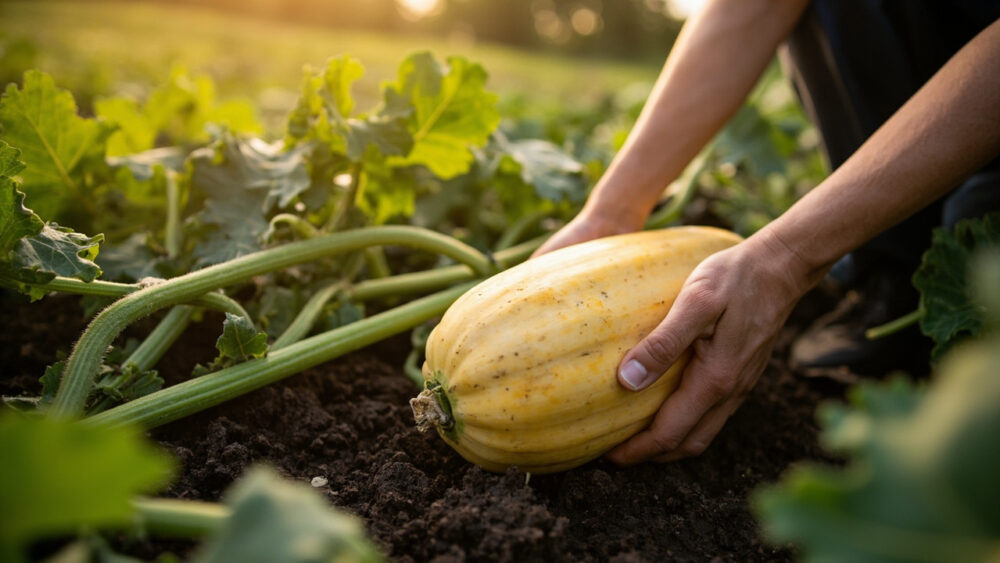
Curing is the single biggest factor in how long a whole spaghetti squash lasts, and it happens before storage even starts. Cure it by keeping the freshly harvested squash somewhere warm, around 80 to 85 degrees Fahrenheit, with decent airflow, for 10 to 14 days. A sunny porch, a warm garage, or near a heat vent all work.
Curing hardens the rind and heals over the stem scar, which is exactly what keeps rot and mold from working their way in during long-term storage. Skip it, and you are storing a squash with an open wound.
If you bought your squash at a store or farmers market, it was almost certainly cured already, so you can skip straight to storage.
Curing is free insurance, and most spoiled squash never got it.
The Best Way to Store a Whole Spaghetti Squash
Once cured, store whole spaghetti squash in a cool, dry, dark place between 50 and 60 degrees Fahrenheit. A pantry, an unheated closet, a basement shelf, or a cool garage all work well. Do not refrigerate a whole uncut squash; it is too cold and too humid, and the flesh turns mealy and starts breaking down faster than it would at room temperature.
Set each squash on a shelf, cardboard, or a slatted crate rather than directly on concrete, and give them space so air moves around them. Squashes touching each other is how one soft spot becomes three.
Check them every couple of weeks. A squash stored this way, cured and kept cool, commonly holds for one to three months, sometimes longer for a dense, thick-skinned specimen.
That timeline changes fast the moment you cut into one, and that is where most kitchens go wrong.
Storing It Cut, Cooked, or Frozen
A raw, cut spaghetti squash goes in the fridge, wrapped tightly in plastic wrap or in a sealed container, and it is good for about 5 to 7 days. Scoop out the seeds and stringy pulp first; leaving them in speeds up spoilage.
Cooked spaghetti squash keeps 3 to 5 days in the fridge in a sealed container. Let it cool before sealing it up, since trapped steam invites bacteria and turns the strands mushy faster.
For the freezer, cook it first. Raw spaghetti squash freezes poorly and turns to watery mush when thawed. Roast or steam it, pull the flesh into strands, let it cool completely, then freeze in portioned bags with the air pressed out. Cooked and frozen this way, it holds for 8 to 12 months.
Thaw frozen squash in the fridge overnight, and expect it to release water. Drain and pat it dry before reheating if you want texture back.
Freezing solves the long-term problem, but only if you skip the one shortcut that ruins texture.
Prep Mistakes That Cost You the Whole Squash
If you assumed washing a squash before storage keeps it cleaner and safer, that instinct backfires. Washing before storage adds moisture to the rind right when you want it bone dry, and damp skin is an open invitation for mold. Wipe off garden dirt with a dry cloth instead, and save the washing for right before you cook it.
The next mistake is handling squash by the stem. A snapped-off or loose stem is a direct path for rot to enter, so lift and carry squash by cradling the body, not the neck.
Bruised or nicked squash should be used first, not stored long-term. Any broken skin is a fast track to soft spots within a week or two.
Get the prep right and the squash mostly takes care of itself, but you still need to know what spoilage actually looks like.
The Signs It Has Turned
A soft spot on the bottom of a stored whole squash is not a bruise from setting it down. It is usually the first visible sign of internal rot, often starting from moisture that collected underneath. Press gently. If it gives like a ripe tomato instead of staying firm, that squash is done.
Other signs to watch for include a sour or fermented smell, dark wet patches on the rind, mold at the stem end, and a shriveled, wrinkled skin that means it is drying out and losing quality even if it has not rotted yet.
Cut or cooked squash that has turned will look slimy, smell sour, or develop fuzzy mold, and any of those means the whole container goes, not just the moldy bit.
Catch a soft spot early and you can still salvage most of the squash by cutting well around it and cooking it that day.
Once you know what ruins a squash, the rest is just habits, and those are easy to lock in for good.
Spaghetti Squash at a Glance
- Curing: 10 to 14 days at 80 to 85 degrees Fahrenheit with airflow, before any long-term storage.
- Whole, cured squash: stores 1 to 3 months at 50 to 60 degrees Fahrenheit, cool, dry, and dark.
- Never refrigerate whole: too cold and humid, causes mealy flesh and faster breakdown.
- Cut raw squash: wrap tightly, refrigerate, use within 5 to 7 days.
- Cooked squash: sealed container, refrigerate, use within 3 to 5 days.
- Frozen, cooked squash: cool completely, freeze in sealed portions, good for 8 to 12 months.
- Spoilage signs: soft spots that give under pressure, sour smell, mold at the stem, slimy or wet patches.
Cure it, keep it cool and dry, and only refrigerate once you have cut into it.
Get that order right and one squash can feed you well past the season it grew in.