Learning how to grow agave comes down to three things: brutal drainage, full sun, and the discipline to leave it alone. Plant it in loose, gritty soil that dries out fast, give it six or more hours of direct sun, and water it far less than your instincts tell you to. Get those three right and an agave will sit there looking sculptural for years with almost no work from you.
Here is the part most people get wrong before they even plant: they treat agave like a regular garden succulent and give it rich soil and regular water, and it rots from the inside before it ever gets going. That single mistake kills more agaves than cold ever does.
There is also a bigger, stranger question waiting for anyone who grows one long enough: what actually happens when it blooms, and why some agave owners describe that moment as bittersweet. Stick with me through the growing details and I will get you there, plus a save-able Agave at a Glance card at the very bottom with the numbers worth keeping on your phone.
When to Plant Agave
Plant agave after all frost danger has passed and the soil has warmed, typically mid spring in most zones, though in true desert climates fall planting works well too because the roots establish in cooler weather before summer heat hits. Agave is hardy roughly in zones 8 through 11 depending on species, with a few like Agave parryi tolerating brief dips into the low 20s F. Anything colder than that and you are growing it in a pot you bring indoors, not in the ground.
Soil temperature matters more than the calendar. Wait until the ground has dried out from spring rains and feels warm to the touch a few inches down, not damp and cold.
Planting into cold, wet spring soil is the fastest way to lose a new agave to rot before it ever roots in.
Choosing the Spot and Prepping the Soil
Agave wants full sun, at least six hours, more in mild coastal climates. In brutally hot inland deserts, a little afternoon shade prevents scorch on pale-leaved varieties, but most agaves want as much sun as you can give them.
Drainage is the whole game. If water sits in a hole you dig after a good rain, that spot will kill an agave eventually no matter how careful you are with the hose. Raised beds, slopes, and berms all work better than flat, low ground.
Improve heavy clay by working in coarse sand, decomposed granite, or pumice, not compost. Agave does not want fertility, it wants grit. If you are planting in a container, use a cactus and succulent mix, never standard potting soil, and make sure the pot has a real drainage hole.
Once the site drains fast and bakes in sun most of the day, you are ready to actually put the plant in the ground.
Planting Agave Step by Step
- Depth: plant at the same depth it sat in its nursery pot. Burying the base of the leaves invites rot at the crown.
- Spacing: small species need 12 to 18 inches between plants, large ones like Agave americana need 4 to 6 feet, since mature rosettes can spread 6 feet across or more.
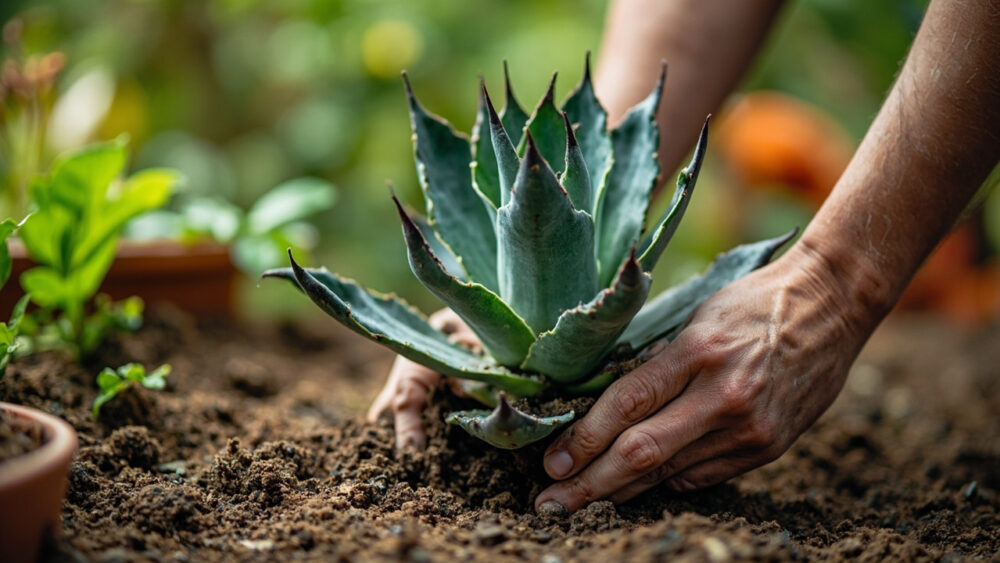
- Technique: dig a hole slightly wider than the root ball, set the plant so the crown sits just above grade, backfill with your amended gritty mix, and firm the soil gently around the roots without packing it hard.
- Mulch: skip organic mulch against the stem. A top-dressing of gravel or decomposed granite keeps the crown dry and looks right for the plant.
- First watering: water in once at planting to settle the soil, then stop and let the roots establish before watering again.
Handle established agave with thick gloves and long sleeves, since most species carry sharp marginal teeth and a rigid terminal spine that can puncture skin easily.
Getting it in the ground correctly is half the job, and how you water it afterward decides the rest.
Watering and Feeding Through the Season
If you assumed a desert plant wants frequent light watering to mimic little desert showers, that guess is backwards and it is exactly what causes crown rot. Agave wants infrequent, deep watering with long dry stretches between.
For the first two to three months after planting, water once every 10 to 14 days, soaking the root zone and then letting the top several inches of soil go completely dry before the next drink. Once established, most agaves in the ground need water only during real drought, sometimes once a month in summer and not at all through a rainy winter.
Feeding is almost unnecessary. A light application of a low-nitrogen cactus fertilizer once in spring is plenty for potted agave. In-ground plants in decent soil rarely need feeding at all, and pushing growth with rich fertilizer only makes the plant soft and more rot prone.
The plants that struggle most were almost never underwatered, they were drowned by good intentions.
Problems That Actually Strike Agave
The number one killer is crown rot from overwatering or poor drainage, showing up as a soft, mushy, discolored base with leaves that pull away easily. There is no fixing advanced crown rot, so if you catch it early, stop watering entirely, cut away obviously mushy tissue with a clean blade, and let the wound dry in open air.
Agave snout weevil is the other major threat in many regions, a beetle that lays eggs at the base of the plant. The larvae hollow out the core, and the first visible sign is often a rosette that suddenly collapses or leans as if the center has disappeared.
There is no home cure once larvae are established, so a badly collapsed plant usually needs to be removed and the site should not be replanted with agave right away.
Scale insects show up as small waxy bumps along the leaves and are treated with insecticidal soap or a labeled horticultural oil, following the product label exactly.
Most of these problems trace back to one root cause, which is more moisture sitting around the plant than it can handle.
Agave is toxic to dogs and cats, and the sap can also irritate skin on both pets and people. If a pet chews on one and you notice drooling, mouth irritation, or vomiting, call your veterinarian rather than waiting to see if it passes.
Once you have the plant healthy and problem free, the question everyone eventually asks is when, if ever, it actually does something dramatic.
When Agave Matures and Blooms
Here is the honest answer to the question hanging over every agave owner: most species are monocarpic, meaning they bloom exactly once in their life, then die. Depending on species and growing conditions, that takes anywhere from 8 to 25 years, with some large species pushing past 30.
The sign is a thick flower stalk rising from the center of the rosette, sometimes growing several inches a day and eventually reaching anywhere from 6 to 20 feet or more depending on species. Once it flowers and sets seed, the mother rosette declines and dies over the following months.
That is not a failure, it is the plant’s entire life cycle working as intended. Most agaves leave behind offsets, called pups, that form around the base and can be separated and replanted once they have their own roots, usually when they are a few inches across with several leaves.
Harvesting, if you are growing agave for pups rather than ornament, simply means slicing a well-rooted pup away from the base with a clean knife once it is a self-sufficient size, letting the cut callus over for a day or two, then potting it in the same gritty mix.
That bloom is the payoff of everything above, and the numbers worth remembering are collected right below.
Agave at a Glance
- When to plant: mid spring after frost danger passes and soil has warmed, or fall in mild desert climates.
- Sun and hardiness: full sun, at least six hours, hardy roughly zones 8 through 11 depending on species.
- Spacing and depth: 12 to 18 inches for small species, 4 to 6 feet for large ones, planted at the same depth as the nursery pot.
- Soil: gritty, fast draining cactus or succulent mix, no rich compost, no standing water after rain.
- Watering: deep and infrequent, every 10 to 14 days while establishing, then only during real drought once mature.
- Main risks: crown rot from overwatering, agave snout weevil causing sudden rosette collapse, scale insects.
- Bloom cycle: most species flower once after 8 to 25 or more years, then the rosette dies, leaving pups behind.
If you remember one thing, remember that agave dies from too much care far more often than too little.
Plant it dry, leave it alone, and let it do what it was always going to do.