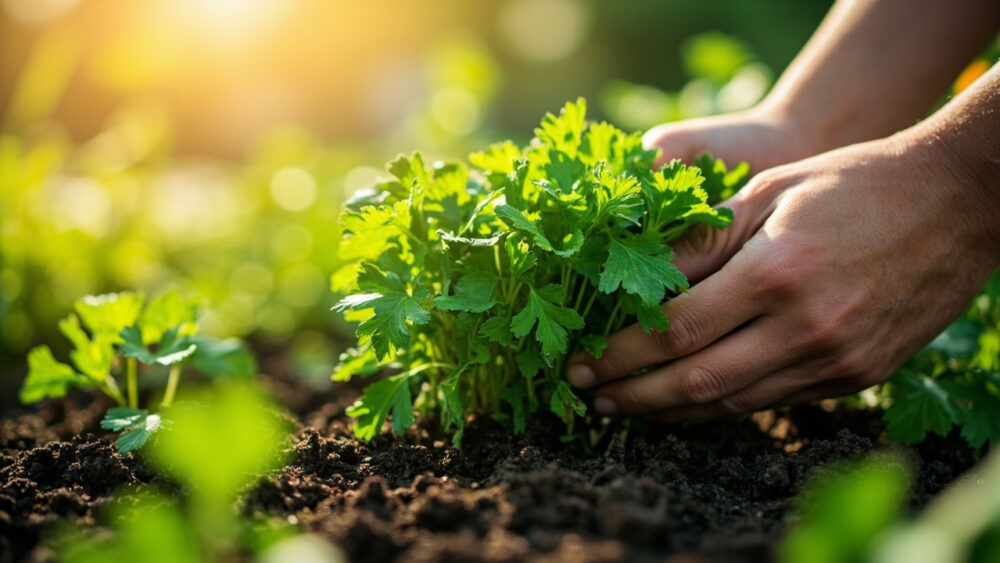
Caring for cilantro means giving it cool weather, full sun that doesn’t cook it, evenly moist but never soggy soil, and a fast harvest schedule before it bolts to seed. It’s an herb that lives fast and dies young by design, and most of the frustration with it comes from fighting that instead of working with it. Get the timing and water right and you’ll have a steady cut of leaves for six to eight weeks.
Here’s what trips people up. Most cilantro “failures” aren’t disease or bad luck, they’re heat, and the plant bolting to flower is not a sign of neglect, it’s a sign the plant is doing exactly what it evolved to do. There’s also a watering mistake almost everyone makes in the first two weeks that has nothing to do with drought.
And if you’re wondering whether you can save a plant that’s already flowering, the honest answer isn’t the one you want to hear, but there’s a workaround.
Stick around for the Cilantro at a Glance card at the bottom. It’s the save-to-your-phone version of everything below, spacing, depth, water, the whole routine, in one place.
Light, Placement, and Temperature
Cilantro wants full sun in cool weather and partial shade once temperatures climb. Six hours of direct sun is ideal in spring and fall. Once daytime highs push past 75 to 80°F, give it afternoon shade or it will bolt within days.
This is the plant’s real personality: it’s a cool-season annual pretending to be a summer herb. It grows best when soil temperatures sit between 50 and 70°F. Above that, the plant reads heat as a signal to stop making leaves and start making seed, fast.
If you’re growing indoors, a south or west windowsill works in spring and fall, but a hot summer windowsill behind glass can push it over the bolt threshold just as fast as an outdoor bed.
Get the temperature right and the next question is almost always about water.
Watering: How Much, How Often, and How to Tell
Water cilantro when the top inch of soil feels dry to the touch, usually every two to four days depending on heat and pot size. It wants consistent moisture, not a swamp and not a desert in between.
Here’s the mistake almost nobody expects: overwatering right after seeding kills more starts than drought ever does. Cilantro seeds and young roots rot fast in waterlogged soil, so that first two weeks calls for damp, never wet.
Established plants are more forgiving but still don’t like to dry out completely. Wilting leaves that perk back up an hour after watering mean you were just a little late, not that you did damage. Leaves that stay crispy and pale even after a good soak usually mean heat stress, not thirst, and more water won’t fix that one.
Water solves some problems and disguises others, which is exactly why soil matters just as much.
Soil, Potting Mix, and Feeding
Cilantro wants loose, well-draining soil with a pH between 6.2 and 6.8. Heavy clay that holds water is the fastest route to rotted roots and a sulky plant.
In containers, use a standard potting mix with a handful of perlite or coarse sand worked in.
Feeding stays light. A balanced liquid fertilizer at half strength every three to four weeks is plenty. Cilantro grown in soil that’s too rich in nitrogen puts out leggy, floppy growth and can actually bolt sooner, not later, which surprises people who assume more food always means more plant.
Skip fertilizer entirely in the first two weeks after seeding. Young roots don’t need it and it just adds another way to burn a seedling that hasn’t found its feet yet.
Feeding is the easy part, the routine tasks are where cilantro asks for real attention.
Pruning, Harvesting, and the Reseeding Trick
Start harvesting once the plant has five or six true leaves, usually three to four weeks after sprouting. Cut outer, older stems first, about an inch above the soil line, and leave the young inner growth to keep developing.
Regular cutting is basically your pruning routine, there’s no separate step.
Never take more than a third of the plant at once. Cilantro doesn’t regrow from a hard shear the way basil does, and an overharvested plant just stalls.
Because the whole plant lives only six to eight weeks before bolting, the real routine task is succession planting. Sow a fresh batch every two to three weeks through the cool months so a new round is always coming up behind the one you’re cutting.
That successive sowing habit is also your best defense against the problem covered next.
The Bolting Problem, and Why You Can’t Really “Fix” It
If you assumed a flowering cilantro plant just needs more water or shade to snap back to leaf production, that guess is understandable but wrong. Once cilantro sends up a central flower stalk, it has committed to seed production and there’s no pruning it back into a leafy plant.
The honest answer is you let it finish or you pull it.
What you can do is get ahead of it. Plant in the coolest stretch of your season, cool-tolerant varieties bolt slower than others, and succession sowing every couple of weeks means a bolting plant is never your only plant.
There’s an upside to a bolted plant too. The flowers draw pollinators, and the seeds it produces are coriander, which you can collect once the seed heads turn tan and dry.
Bolting is a timing problem more than a care problem, but a few actual pests and diseases can still show up along the way.
Pests and Diseases Worth Watching For
Aphids are the most common visitor, clustering on the undersides of leaves and new growth. A strong blast of water knocks most colonies down, and insecticidal soap applied per the product label handles the rest.
Powdery mildew shows up as a white, dusty coating on leaves, usually in humid conditions with poor air circulation. Space plants 6 to 8 inches apart to keep air moving, and remove badly affected leaves.
Damping off, a fungal issue that collapses seedlings right at the soil line, is almost always caused by overwatering seed trays. It ties straight back to that first-two-weeks mistake: keep new sowings damp, not drenched, and use containers with real drainage holes.
Cilantro is genuinely low-drama on pests when the growing conditions are right, which brings up the real question: how do you know it’s actually thriving?
Signs Your Cilantro Is Actually Thriving
A thriving cilantro plant has deep green, feathery leaves held upright, not flopped over, with new growth emerging steadily from the center. The stems stay a healthy medium green rather than turning woody or pale at the base.
You’ll be cutting usable leaves every few days once it’s established, not waiting weeks between harvests.
Slow, steady leaf production without a rush toward a central stalk is the real marker of a happy plant, more than size. A short, leafy, frequently-harvested plant is doing better than a tall one racing to flower.
If you’re getting that steady cut for several weeks running, you’ve got the timing and water right, and that’s genuinely most of the battle with this herb.
Cilantro at a Glance
- When to plant: as soon as soil can be worked in early spring, or six to eight weeks before your first fall frost, once soil sits around 50 to 70°F.
- Spacing and depth: sow seeds a quarter inch deep, thin seedlings to 6 to 8 inches apart.
- Light: full sun in cool weather, afternoon shade once highs pass 75 to 80°F.
- Water: keep soil evenly moist, water when the top inch feels dry, roughly every two to four days.
- Soil: loose, well-draining, pH 6.2 to 6.8, amended with perlite or sand in containers.
- Feeding: balanced liquid fertilizer at half strength every three to four weeks, none in the first two weeks.
- Harvest: start at five or six true leaves, cut outer stems first, never remove more than a third at once.
Cilantro rewards timing more than fuss. Plant it cool, keep it evenly damp, cut it often, and keep a fresh round coming up behind it.