The fastest way to attract owls to your yard is to give them what they actually hunt for: a mounted nest box or roosting box sized for the species in your area, cover near open ground, and a rodent population they can hear moving. Bird feeders will not do it. Owls do not come for seed, suet, or sugar water, they come for real estate and food.
Most people who try this fail for one specific reason, and it has nothing to do with the box they bought. It is where they put it.
There is also a sign most yards already have that tells you an owl is checking the place out, and almost everyone misses it because they are watching the wrong time of day. We will get to that, along with the honest answer to the question you are probably about to ask next: how long this actually takes. Stick around for the Wildlife at a Glance card at the bottom, it is the version of this you will actually want saved on your phone before you go buy a box.
Why Owls Show Up (or Never Do)
Owls choose territory based on three things: hunting ground, safe cover, and a place to nest or roost that is not already claimed. A tidy, mowed-to-the-fence-line yard offers almost none of that. Rodents are the actual draw, since mice and voles are what most North American owl species hunt most nights, and a yard with zero rough edges has nowhere for rodents to live either. No prey, no owls, no matter how nice your nest box is.
Tall grass margins, brush piles, and a few dead or dying trees left standing (where safe to do so) do more to attract owls than any product you can buy. So does simply turning off unnecessary outdoor lighting, since owls hunt by sound and low light, and a floodlit yard reads as unsafe, not welcoming.
The box matters, but it is the second decision, not the first.
Setting Up the Box: Species, Height, and Placement
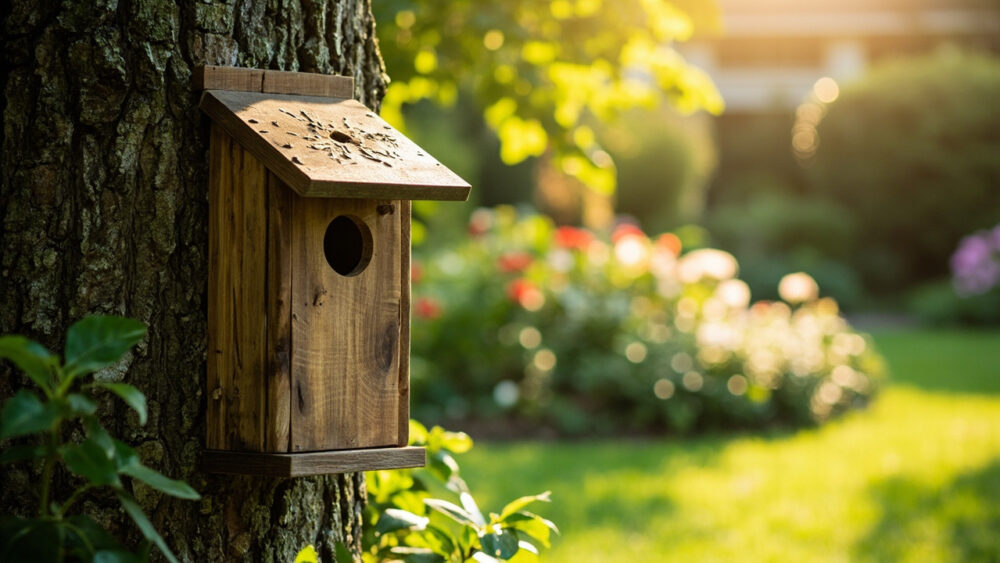
Match the box to the owl you actually have in your area, because a Barn Owl box and a Screech Owl box are not interchangeable. Barn Owl boxes run roughly 24 to 36 inches deep with a wide interior, mounted 12 to 20 feet up on a pole or barn wall facing open field. Screech Owl and Saw-whet boxes are much smaller, roughly 8 by 8 inches at the base and 12 to 15 inches tall, mounted 10 to 15 feet up a tree trunk with the entrance hole facing away from prevailing wind and afternoon sun.
Mount it before nesting season starts in your region, which for most of the continental US falls in late winter, roughly January through early March. Face the entrance toward open cover, not a wall or another tree canopy blocking flight approach. Leave a few inches of wood shavings in the bottom, owls do not build nests the way songbirds do.
Get the box up early enough and the entrance clear, and you have done the hard part.
Timing: When Owls Actually Scout and Move In
If you assumed spring is when owls start looking for a home, that guess is close but backwards for most species. Great Horned Owls and Barn Owls scout territory and begin nesting in late winter, often while there is still snow on the ground, well before robins show up. A box installed in April has already missed the first and best window for that year.
The sign almost everyone misses happens at dusk, not midday. A hooting exchange between two owls in late winter, roughly 30 to 60 minutes after sunset, is a pair establishing or defending territory, and it is the strongest evidence you will get that owls are already considering your area before you ever see one.
Miss that window and you are not out of luck, you are just waiting on next year.
The Mistakes That Quietly Kill Your Chances
The single biggest mistake is mounting the box, then mowing and clearing everything underneath it. A perfectly placed box surrounded by manicured lawn has no prey base nearby, and owls will pass it by for a scruffier yard two properties over. The box is the bedroom, the rough ground is the pantry, and you need both.
Outdoor lighting left on all night is the second-most common killer. It disrupts the low-light hunting owls depend on and pushes rodent activity into deeper cover, away from the box.
Rodenticide use anywhere nearby is the third, and it is the one people least expect. An owl that eats a poisoned rodent can be poisoned itself, so if you want owls as your rodent control, you cannot also be using bait stations. Choose one strategy.
- Mistake: clearing all brush and tall grass right after installing the box.
- Mistake: leaving bright security or porch lights on through the night.
- Mistake: using rodenticide bait stations while trying to attract a natural predator.
- Mistake: mounting the box facing a solid wall or dense canopy with no clear flight path.
- Mistake: checking or opening the box repeatedly once activity starts.
Fix those five and you have removed nearly every reason an owl would reject the spot.
Keeping It Working Year After Year
Clean the box out once a year, after the season’s owls have moved on and before the next scouting window opens, usually late summer through early fall. Remove old debris, replace shavings, and check that the mounting is still solid, since a wobbling box reads as unsafe.
Leave the surrounding rough cover alone permanently, not just for the first season. A brush pile or unmowed margin only works if it stays.
Occupancy is not guaranteed every year even in a good setup, and that is normal, not a failure. Owl territories shift, prey populations cycle, and a box that sits empty for a season can still get used the next.
Do the setup right once and the yearly upkeep is minutes, not hours.
Wildlife at a Glance
- What draws them: a real rodent population, rough cover, and a nest or roost box, not bird feeders or food you put out directly.
- Box size: roughly 24 to 36 inches deep for Barn Owls, 8 by 8 inches at the base and 12 to 15 inches tall for Screech and Saw-whet Owls.
- Mounting height: 12 to 20 feet for Barn Owl boxes, 10 to 15 feet for smaller species, entrance facing open ground away from prevailing wind.
- Best time to install: late winter, roughly January through early March, before nesting season starts.
- Sign they are scouting: hooting exchanges 30 to 60 minutes after sunset in late winter.
- Biggest mistake: mowing and clearing all cover right after installing the box.
- Never do: use rodenticide nearby if you want owls handling rodent control naturally.
Get the timing and the cover right, and the box does the rest of the work on its own.
Owls do not reward decoration, they reward habitat, so build the whole picture, not just the box.