The fastest way to sort out the different types of pollinators in your yard is by watching how they fly, not what color they are. Bees fly in slow, deliberate zigzags and land heavily on a flower. Flies dart and hover. Wasps look sleek and move with sharp, quick turns. Once you catch that flight pattern, half the identification problem solves itself.
Most people assume every stripy flying insect is a bee and every bee is a threat, and that guess costs gardens more pollination than any pest ever will. There is also one wildly popular pollinator most people plant for that is actually a mediocre workhorse compared to the quiet native species doing the real labor in the background.
Stick around for number 13, a pollinator almost everyone misidentifies as something dangerous when it is actually harmless and extremely good at its job. The last few entries and the simple method for figuring out which pollinators your specific garden needs are waiting at the bottom, so keep scrolling.
Bees You Actually Want to See
These are the workhorses, the ones you should learn to recognize on sight because they do the bulk of the pollinating.
1. Honeybees
Fuzzy but not too fuzzy, golden brown with dark banding, honeybees move in calm, steady patterns and visit one flower type at a time before moving to the next patch. They live in large managed or wild colonies, tolerate a wide range of climates, and are the pollinator most people picture, though a single native bee species often outperforms them per flower visit.
2. Bumblebees
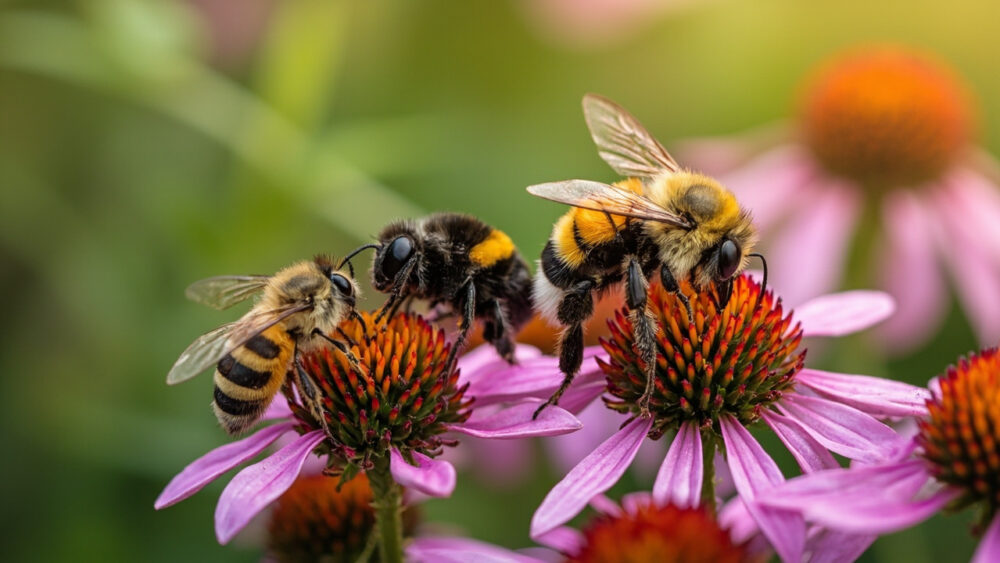
Big, round, and loudly fuzzy, bumblebees are cold-tolerant workers that fly in weather too chilly or wet for honeybees. They are excellent for tomatoes, squash, and other plants that need buzz pollination, where the bee literally vibrates pollen loose, something honeybees cannot do.
3. Mason Bees
Small, dark, metallic blue or green, mason bees are solitary, nonaggressive, and nest in narrow tubes or reeds rather than hives. One mason bee can pollinate as much as a hundred honeybees on fruit trees in early spring, which is why orchard growers actively recruit them with simple nesting blocks.
4. Leafcutter Bees
You will notice their work before you notice the bee, clean round notches cut from the edges of rose and redbud leaves. They use that leaf material to line nest cells, and despite the cosmetic leaf damage they are gentle, efficient pollinators of beans, alfalfa, and summer wildflowers.
5. Squash Bees
Fast, early-rising specialists, squash bees show up at dawn specifically for squash, pumpkin, and gourd flowers, often finishing their work before honeybees even wake up. If you grow cucurbits, you likely already have these and never knew it.
Bees get the credit, but the next group does more of the actual flying around at hours bees skip entirely.
Flies, Beetles, and the Underrated Crew
This group gets overlooked constantly, and that is exactly why experienced gardeners quietly rely on them.
6. Hoverflies
Bee-colored but fly-shaped, hoverflies have short antennae, huge eyes, and the ability to hang motionless in midair before darting sideways, a move no bee can pull off. Their larvae eat aphids, so an adult hoverfly on your flowers usually means pest control and pollination in the same visit.
7. Soldier Beetles
Long, narrow, and often orange or tan with dark wing tips, soldier beetles cluster on flat-topped flowers like yarrow and goldenrod in mid to late summer. They are slow, clumsy pollinators compared to bees, but they show up in large numbers and cover a lot of blooms simply through persistence.
8. Carrion and Blow Flies
Metallic, fast, and unglamorous, these flies are drawn to flowers that smell faintly of decay, like pawpaw and some magnolias. They are genuinely important pollinators for a specific set of plants that bees mostly ignore, even though nobody plants a garden hoping to attract them.
9. Native Sweat Bees
Tiny and often brilliant metallic green, sweat bees are solitary ground nesters that visit a huge range of small flowers, including many weeds and wildflowers other pollinators skip. They occasionally land on skin for salt, which is where the name comes from, and a light brush-off is all it takes, no sting risk beyond a mild pinch if squeezed.
If you assumed anything fly-shaped is useless in the garden, this section is the correction, now the showier fliers take over.
Butterflies and Moths
These pollinate less efficiently than bees pound for pound, but they cover more territory and work different hours.
10. Monarch Butterflies
Bright orange with bold black veining, monarchs are milkweed specialists as caterpillars and general nectar feeders as adults. They are migratory over huge distances, genuinely in decline in parts of their range, and one of the few pollinators most gardeners plant for by name, usually via butterfly milkweed or common milkweed.
11. Swallowtails
Large, with distinctive tail extensions on the hind wings, swallowtails favor deep tubular flowers like phlox, zinnias, and butterfly bush. They are strong fliers, easy to spot even from across a yard, and a reliable sign that a pollinator garden is doing its job.
12. Sphinx Moths
Often mistaken for hummingbirds at dusk, sphinx moths hover in place while feeding, using a long proboscis to reach deep into tubular flowers like evening primrose and moonflower. They work the evening shift that most daytime pollinators skip entirely, which makes them essential for night-blooming plants.
Butterflies get the photographs, but number 13 is the one everyone misjudges on sight.
The Ones People Get Wrong
These are misidentified constantly, usually out of unnecessary fear, and it costs gardeners good pollinators.
13. Hover-Mimicking Wasps and Bee Flies
Fuzzy, bee-shaped, and completely harmless, bee flies mimic bumblebees closely enough to fool almost anyone, but they have a single pair of wings, a long stiff proboscis held straight forward, and no stinger at all. They hover with pinpoint precision over flowers, feeding on nectar, and get killed or shooed off constantly by people who assume they are dangerous.
14. Paper Wasps
Slender, long-legged, and reddish brown to black, paper wasps are incidental pollinators, visiting flowers for nectar between hunting trips for caterpillars and other pests. They can sting if their nest is disturbed, so give an active nest space, but a wasp working a flower bed is not hunting you.
15. Hummingbirds
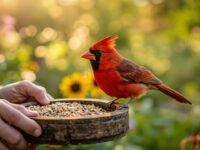
Not an insect, but a genuine pollinator, hummingbirds favor red and orange tubular flowers like salvia, trumpet vine, and bee balm, and their long bills reach nectar many insects cannot. A single hummingbird visits hundreds of flowers a day, making them disproportionately important for the specific plants they favor.
How to Choose the Right One
You do not attract one pollinator, you build conditions that invite several kinds at once. Work through this in order.
- Check your space: a few containers on a balcony favor small solitary bees and hoverflies, while a full bed supports bumblebees, butterflies, and moths too.
- Match your climate: bumblebees and mason bees tolerate cool, damp springs far better than honeybees, useful information if you garden in a northern or high-elevation zone.
- Decide your purpose: fruit and squash growers want mason bees, squash bees, and bumblebees specifically, while a wildlife-focused bed benefits more from milkweed for monarchs and tubular flowers for moths and hummingbirds.
- Plant across the day and season: early spring bulbs feed emerging mason bees, midsummer flat-topped flowers feed soldier beetles and hoverflies, and evening bloomers feed sphinx moths.
- Rate your care appetite: solitary bees need almost nothing beyond bare soil patches or a nesting block, while attracting hummingbirds and butterflies means committing to specific plant species they actually use.
- Skip the pesticides: broad-spectrum insecticide use undoes every other step on this list, so treat pest problems at the cultural level first and follow any product label exactly if you must spray.
Learn the flight pattern before the color pattern, and most of these fifteen will start identifying themselves.
Plant for a few of them on purpose, and the rest tend to show up on their own.