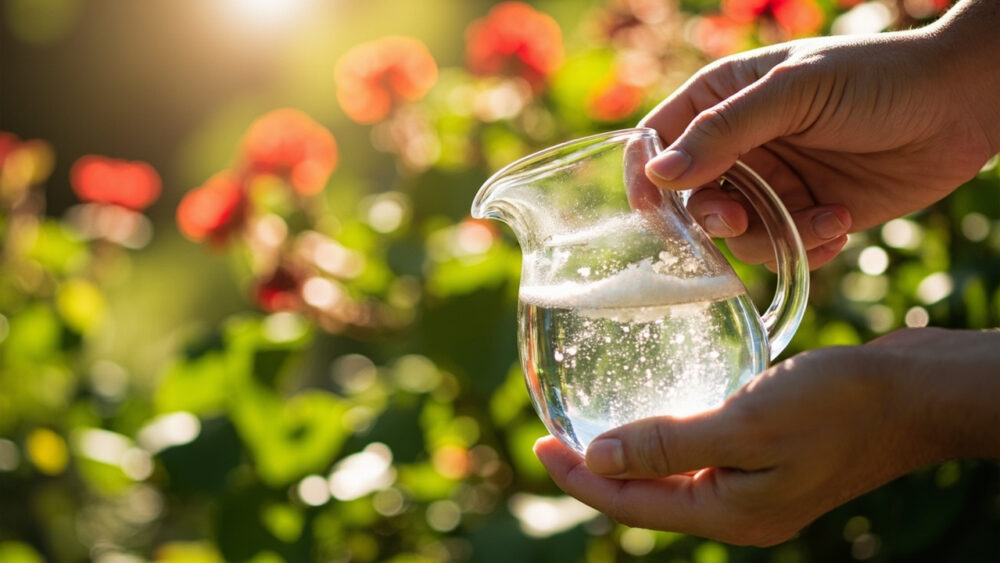
Real hummingbird nectar is one part plain white sugar dissolved in four parts water, nothing else. No red dye, no honey, no artificial sweeteners. Boil the water, stir in the sugar until it disappears, let it cool completely, and fill your feeder. That is the whole recipe, and anything more complicated than that is usually where people go wrong.
But making the nectar right is maybe a third of the job. The bigger issues are the ones nobody warns you about: the mistake that quietly kills hummingbirds instead of feeding them, the reason your feeder might sit untouched for weeks even with perfect nectar inside, and the cleaning schedule that matters more than the recipe itself.
Stick around to the bottom and you will find a save-able Wildlife at a Glance card with the ratios, timing, and cleaning schedule in one place, so you are not rereading this every time you refill.
The Ratio and Why It Matters
The standard ratio is one cup of sugar to four cups of water, or any multiple of that. This roughly mimics the sugar concentration in natural flower nectar, somewhere in the 20 to 25 percent range. Too strong and you risk dehydrating the birds or stressing their kidneys over time. Too weak and it is not worth the energy they spend visiting.
Use plain white granulated sugar only. Skip raw sugar, turbinado, powdered sugar, or organic sugar substitutes, since they carry trace minerals and additives that can harm hummingbirds or ferment faster. Honey is worse than unnecessary here, it grows a fungus that is fatal to hummingbirds. Do not use it, ever, even diluted.
Boiling the water isn’t strictly required chemically, but it helps the sugar dissolve fully and slows bacterial growth for the first day or two.
Get the ratio right and you have solved the easy half of the problem, the harder half is what happens after you hang it.
Skip the Dye, Skip the Guilt
If you assumed red food coloring helps attract birds faster, that guess is exactly what most people do, and it is the mistake that causes real harm. Dye offers zero nutritional or attraction benefit, and there is legitimate concern it accumulates in a bird’s liver and affects reproduction over repeated exposure.
Skip it entirely. Hummingbirds find feeders by color and shape, not by dyed liquid. A feeder with red or orange parts on the outside does the attracting job just fine, the nectar itself can and should stay clear.
This is also the point where people ask about “hummingbird food” powders sold at garden centers. Some are just sugar with red dye added, which you do not need. Plain sugar water, made at home, is what every serious hummingbird bander and rehabber recommends.
Once the nectar itself is right, the next question is what actually gets a hummingbird to notice your feeder at all.
What Really Attracts Them (and What Drives Them Off)
Color gets a hummingbird’s attention first. Red, orange, and hot pink feeder parts or nearby flowers act like a flag visible from a distance. Movement helps too, a feeder that sways slightly or catches light draws the eye of a bird already scanning the yard.
Cleanliness is what keeps them coming back. Hummingbirds have sharp memories for feeding spots, but they abandon feeders that smell fermented or show black mold around the ports. A dirty feeder does more to drive birds away than an empty one.
Placement matters more than most people expect. Hang feeders in partial shade if possible, since direct sun speeds fermentation, and keep them within sight of a perch like a shrub or small tree where birds can rest and watch between visits.
Getting the location right is only half the battle, the other half is knowing when in the season to actually put the feeder out.
Timing: When to Hang the Feeder
Hang feeders about two to three weeks before your typical last hard frost in spring, since early migrants often arrive before flowers have bloomed and need a reliable sugar source. In much of the U.S., this lands somewhere in early to mid spring depending on your zone, earlier in the Gulf states, later in the northern tier and Canada.
Keep feeders up through fall migration, which for most regions runs into early or mid autumn. There is a persistent myth that leaving feeders up too late keeps birds from migrating south. That is not how migration works. Hummingbirds respond to daylight length and instinct, not the presence of a feeder, so leaving nectar out actually helps stragglers and late migrants refuel safely.
In zones with mild winters, especially the Gulf Coast and Pacific Southwest, some species overwinter and feeders can stay up year round.
Timing the season right gets birds in the yard, but it is the maintenance after that decides whether they stay.
The Cleaning Mistake That Undoes Everything
Here is the honest answer to the question you are about to ask next: how often does this really need cleaning. In hot weather, above roughly 90°F, nectar can ferment and turn cloudy or moldy within a day or two.
Change nectar every two to three days in summer heat, and every four to five days in cooler weather below 60°F. If you ever see cloudiness, black spots, or mold at the feeding ports, dump it immediately regardless of how many days it has been.
Wash the feeder with hot water and a bottle brush at every refill, no soap needed since residue can deter birds. If mold builds up, a diluted vinegar soak followed by a thorough rinse handles it without introducing anything harmful.
Fermented nectar isn’t just unappealing, the alcohol produced can actually be dangerous to hummingbirds in enough quantity.
This single habit, more than the recipe, is what separates a feeder that works all season from one that quietly stops attracting visitors by midsummer.
Keeping It Working Long Term
Once you have the rhythm down, the rest is small adjustments. In real heat, consider making smaller batches more often rather than filling a large feeder that sits half full for days.
Ants and bees are the other long-game problem. A built-in ant moat, or a small dab of plain petroleum jelly on the hanger wire, stops ants without pesticides anywhere near the nectar. Bee guards on the feeder ports help with wasps and bees, though moving the feeder to a slightly shadier spot often does more good.
Refrigerate any extra nectar you make ahead, it holds for up to about a week in the fridge, longer than it would ever safely sit in a warm feeder outside.
Get the cleaning schedule and pest control dialed in, and a single feeder can reliably pull in the same hummingbirds returning day after day for an entire season.
Wildlife at a Glance
- Nectar ratio: one part plain white sugar to four parts water, boiled then cooled before use.
- Never use: honey, raw or organic sugars, artificial sweeteners, or red dye.
- When to hang feeders: two to three weeks before your average last frost in spring, earlier in warm climates.
- When to take them down: keep up through fall migration, into early or mid autumn, no need to rush this.
- Cleaning schedule: every two to three days in heat above 90°F, every four to five days in cooler weather, sooner if cloudy or moldy.
- Placement: partial shade, near a perch, with red or orange color on the feeder itself rather than in the liquid.
- Pest control: ant moat or petroleum jelly on the hanger, bee guards on the ports, shade to slow fermentation.
The recipe is the easy part. The cleaning schedule is what actually keeps hummingbirds coming back all season.