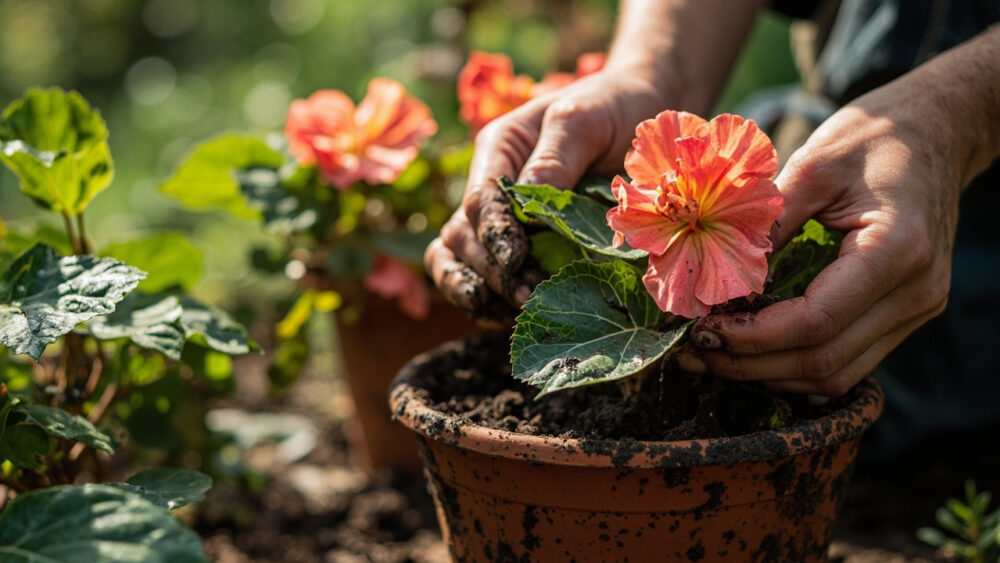
Learning how to grow begonias comes down to three things: wait until nights stay above 50°F to plant them out, give them bright but indirect light, and never let them sit in soggy soil. Get those right and most begonias bloom nonstop from late spring until frost with almost no fuss. Get any one of them wrong and you get stretched, sulky plants that rot at the base or refuse to flower at all.
Here is what trips people up before they even realize it. Most begonia failures are not a watering mistake at all, they are a light mistake wearing a watering mistake’s clothes. There is also a sign on the leaves that half of gardeners misread as a pest problem when it is actually something else entirely, and a straight answer to the question you are probably about to ask about tubers and overwintering.
Stick with me through the sections below and I will walk you from planting day to first bloom to the point where the plant starts working against you late in the season. At the bottom you will find a save-able Begonias at a Glance card with the numbers you actually need to remember.
When to Plant Begonias
Timing depends on which begonia you have. Fibrous and rex begonias go outside two to three weeks after your last frost date, once nighttime temperatures hold above 50°F. Tuberous begonias are more particular and want soil that has warmed to at least 60°F, which usually lands three to four weeks after last frost in most zones.
If you are starting tuberous begonias from dormant tubers, get a head start indoors six to eight weeks before your last frost. Press the tuber, hollow side up, into moist potting mix so the top third stays exposed, and keep it around 65 to 70°F until shoots appear.
Gardeners in zones 9 through 11 can often leave tuberous types in the ground year-round or treat them as short-lived perennials. Everywhere colder, they are grown as annuals or lifted each fall.
Timing is the easy half of this, the harder half is picking the right spot, and that is where most begonias actually lose the season.
Choosing the Spot and Prepping the Soil
If you assumed begonias want shade like other shade-tolerant annuals, that guess is only half right and it is the half that causes leggy, flowerless plants. Most begonias want bright, filtered light, morning sun with afternoon shade, or the dappled light under a high tree canopy. Deep, dense shade gets you all leaves and almost no flowers.
Soil matters more than most people expect from a plant this forgiving. Begonias want loose, rich, well-draining soil with a pH around 5.5 to 6.5. Work two to three inches of compost into the top six to eight inches of soil before planting, and if your ground stays wet after rain, raise the bed or add coarse material to open it up.
Containers work exceptionally well for begonias, partly because you control drainage completely. Use a potting mix with perlite or coarse sand blended in, never garden soil straight from the yard.
Once the site is right, the planting itself is almost too simple to mess up, almost.
Planting Begonias Step by Step
- Depth: set fibrous and rex begonias at the same depth they sat in their nursery pot. Tuberous begonias go with the tuber’s top just at or barely below the soil surface, never buried deep.
- Spacing: space small fibrous varieties 6 to 8 inches apart, larger tuberous and rex types 10 to 12 inches apart, to leave room for airflow.
- Technique: loosen the root ball gently before setting it in the hole, backfill, and firm the soil lightly without compacting it.
- First watering: water thoroughly right after planting, then let the top inch of soil dry before watering again.
Once they are in the ground, the real skill in growing begonias well is what you do with a watering can over the next four months.
Watering and Feeding Through the Season
Begonias want evenly moist soil, not wet soil. Check by pushing a finger an inch down. If it feels dry, water at the base until it runs from the drainage holes or soaks the root zone. If it still feels damp, wait a day and check again.
Overwatering is the single mistake that ends more begonia seasons than anything else, including pests or frost. Wet, heavy soil suffocates the roots and invites stem rot, which shows up as a soft, blackened base that no amount of extra care will reverse once it sets in.
Feed lightly every three to four weeks with a balanced liquid fertilizer diluted to about half strength, or work a slow-release granular into the soil at planting time. Skip nitrogen-heavy feeds, they push leaf growth at the expense of flowers.
Deadhead spent blooms and pinch back leggy stems through summer to keep the plant full and blooming instead of stretching for light.
Even with perfect watering, begonias still attract a short, predictable list of problems worth knowing before you see them.
Problems That Actually Show Up
Here is the leaf sign everyone misreads. Powdery white patches on begonia leaves look like a pest infestation to most first-time growers, but it is almost always powdery mildew, a fungal issue caused by poor airflow and high humidity, not insects at all. Space plants for airflow and water at the soil line, not overhead, to keep it from taking hold. If it appears anyway, a fungicide labeled for powdery mildew on ornamentals works, applied exactly per the product label.
Botrytis, a gray fuzzy mold, shows up on damaged or spent flowers in cool, damp conditions. Remove affected blooms promptly and improve airflow around the plant.
Slugs and snails will shred tender begonia leaves overnight, leaving ragged holes and a telltale slime trail. Mealybugs and spider mites occasionally show up on stressed or overwintered indoor plants, appearing as tiny cottony clusters or fine webbing on the undersides of leaves.
Most of these problems are entirely preventable with spacing and dry foliage, which brings us to the part of the season where your begonias are finally paying you back.
When Begonias Bloom, and What Happens at the End of the Season
Begonias typically start blooming 10 to 14 weeks after planting and continue right up until frost, which means there is no single harvest date the way there is with a vegetable. The bloom itself is the payoff, and a well-fed, well-lit plant will keep producing flowers in flushes all summer.
Now for the tuber question you were probably already wondering about. Tuberous begonias can be saved year after year, but only if you lift them before hard frost kills the foliage back. Dig the tubers once the tops yellow and die back naturally, or right after the first light frost, whichever comes first.
Let the tubers cure in a dry, shaded spot for a few days, brush off the soil, and store them in dry peat or vermiculite somewhere cool and dark, around 45 to 55°F, until you replant them next spring.
Fibrous and rex begonias, on the other hand, are usually treated as annuals outdoors, though you can pot up a favorite and bring it inside as a houseplant before frost hits.
One more honest note before you save the card below: begonias are mildly toxic to dogs and cats, especially the tuberous types, and can cause drooling, vomiting, or mouth irritation if chewed. If you suspect a pet has eaten part of one, call your veterinarian rather than waiting to see what happens.
Begonias at a Glance
- When to plant: two to three weeks after last frost for fibrous and rex types, three to four weeks for tuberous, once nights hold above 50°F.
- Light: bright, filtered light or morning sun with afternoon shade, not deep shade.
- Soil: loose, rich, well-draining, pH 5.5 to 6.5, amended with compost.
- Spacing: 6 to 8 inches for small fibrous types, 10 to 12 inches for tuberous and rex.
- Watering: water when the top inch of soil is dry, never keep it soggy.
- Feeding: half-strength balanced fertilizer every three to four weeks.
- Bloom window: 10 to 14 weeks after planting until frost, tubers can be lifted and stored for next year.
If you remember one thing, remember that a begonia’s real enemy is wet feet and too little light, not the cold. Get those two right and the flowers take care of themselves.