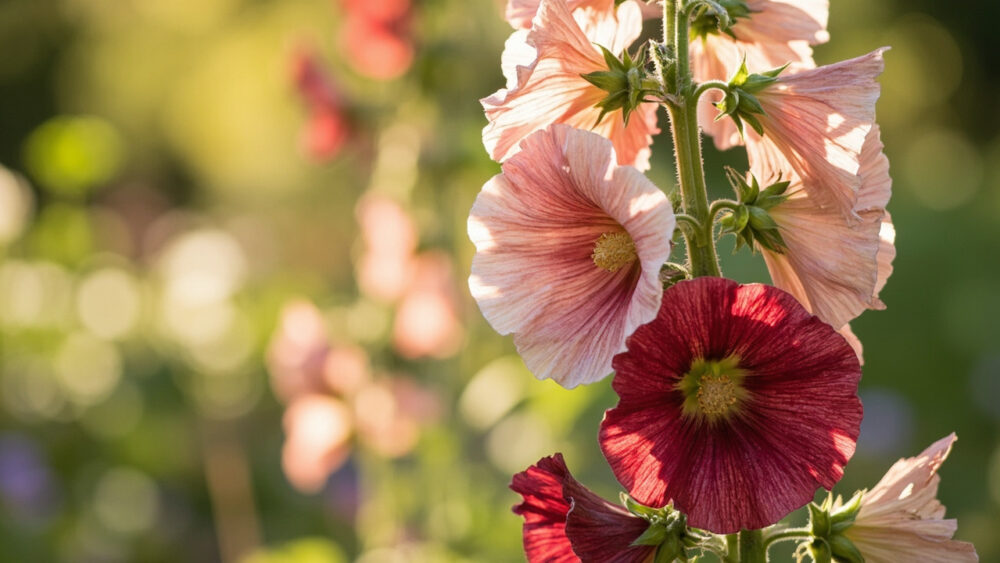
Hollyhocks bloom in early to mid summertypically June through August, and a well-sited plant will keep pushing flowers up its stalk for six to eight weeks. That is the honest range. The exact window shifts depending on one thing most people planting hollyhocks this spring do not know about their own plant.
It matters whether yours is a first-year plant or an established one, because that single detail can mean the difference between flowers this year and none at all. It also explains why your neighbor’s hollyhocks are already six feet tall and covered in blooms while yours are just a rosette of leaves sitting at the base of the fence.
Below, I will walk through what actually controls bloom timing, how to read what your plant is telling you right now, and how to stretch the show longer than most gardeners manage. Save-and-forget the quick reference card at the bottom once you have the full picture.
The Bloom Window and How Long It Lasts
A single hollyhock stalk blooms from the bottom upopening a few flowers at a time over several weeks rather than all at once. The first buds typically pop in June in mild climates, later into July in cooler ones, and the top of the stalk is usually still flowering into August.
Total bloom time per stalk runs four to eight weeks. A healthy plant sends up multiple stalks, so the display as a whole can run even longer if you deadhead and the weather cooperates.
That is the timeline for a plant that is actually ready to flower, which is not automatically true of yours.
Why Your Plant’s Age Changes Everything
Hollyhocks are biennials, though many modern varieties behave as short-lived perennials. Either way, the pattern is the same: a plant grown from seed this year almost always spends its first season building a low rosette of leaves and putting down roots. No flowers the first year is normal, not a failure.
The flower stalk shows up in year two, once the plant has enough stored energy to bolt upward and bloom. This is the guess most new hollyhock growers get wrong. They assume something is off with their soil or their watering, when really the plant is just doing exactly what it is supposed to do on exactly its own schedule.
If you started seed or bought small plants this spring, plan on next summer for the real show. If you inherited an established clump or your plant already bloomed once and came back, you are on the second-year-or-later schedule and should see flowers on the normal early-to-mid-summer timeline.
So the calendar answer depends on the plant’s age, but plenty of factors shift it within that too.
What Actually Controls the Timing
Sun exposure is the biggest lever you control. Hollyhocks want six or more hours of direct sun. In partial shade they bloom later, thinner, and lean hard toward whatever light they can find.
Soil temperature and spring weather push the window around by a couple of weeks in either direction. A cold, slow spring delays the bolt; an early warm-up pulls bloom forward.
Overcrowding and poor drainage slow plants down too. Hollyhocks tolerate average soil but hate sitting wet, and roots stressed by soggy ground put energy into surviving instead of flowering.
Get the sun right and the rest mostly falls into place on its own.
How to Get More Blooms, and Get Them Longer
Deadhead spent flowers as they fadeworking up the stalk, and the plant will keep opening new buds higher up instead of quitting early to make seed. This alone can add two to three weeks to the display.
Feed lightly. A balanced fertilizer or a couple inches of compost worked in each spring gives the plant enough fuel to push multiple stalks instead of one. Too much nitrogen, though, buys you leaves at the expense of flowers.
Water at the base during dry stretches, aiming for about an inch a week. Consistent moisture keeps buds forming instead of stalling.
Stake tall stalks in windy spots. A snapped stalk mid-bloom is a lost month of flowers you cannot get back this season.
Do all of that and you will still occasionally get a plant that just refuses, which is its own separate problem.
Why Your Hollyhock Might Not Be Blooming at All
If it is a first-year plant, the answer is almost always simply patience, not a fix. Check the section above and wait for next summer.
If it is an older plant that bloomed before and has stopped, look at these common culprits:
- Too much shade: a tree or fence that has grown taller can quietly rob a formerly sunny spot of its light.
- Rust disease: orange-brown spots on the leaves stress the plant and can suppress flowering; strip and discard affected leaves and improve airflow between plants, and treat with a fungicide labeled for rust if it is severe, following the product label exactly.
- Overcrowded roots: hollyhocks self-seed heavily, and a dense cluster of seedlings competes hard enough to stunt everyone.
- Late-season planting: a plant put in the ground in mid or late summer often will not have time to bolt before it goes dormant.
Most of these are fixable with time and a little cleanup, not a sign to start over.
Aftercare That Stretches the Show
Once the top of a stalk finishes blooming, cut the whole stalk back to the base rather than leaving it standing. This tidies the plant and, more usefully, tells it to push energy into side shoots or a second smaller flush instead of finishing out the season.
Leave a few spent flower heads unclipped late in the season if you want seed for next year’s plants. Hollyhocks self-seed readily, and the seedlings that pop up on their own are often the strongest of the bunch.
Mulch around the base going into fall to protect the crown, especially in colder zones, since a plant that survives winter is a plant that skips straight to blooming instead of starting over.
Everything you need to check on your own plant right now is below.
Hollyhocks: Quick Reference
- Bloom season: early to mid summer, typically June through August depending on climate.
- Bloom duration: four to eight weeks per stalk, longer overall with multiple stalks and regular deadheading.
- First-year plants: usually no flowers, just a leaf rosette. Blooming starts the following summer.
- Sun needs: six or more hours of direct sun for strongest, earliest bloom.
- Common no-bloom causes: young age, too much shade, rust disease, overcrowding, or late planting.
- Best aftercare: deadhead spent flowers, cut whole stalks to the base once finished, mulch the crown for winter.
Hollyhocks reward patience more than any quick fix you can buy. Get the sun and timing right, and the blooms take care of themselves.