Growing romaine lettuce means getting seed or transplants into cool soil, giving each plant 8 to 10 inches of breathing room, and pulling the whole head before summer heat turns it bitter. That is the entire job in one sentence. The details are what decide whether you get tall, sweet, crunchy heads or a bed of bolted, bitter disappointment.
Here is what trips people up. Most failed romaine crops did not fail from bad soil or bad luck, they failed from bad timing, planted a month too late into soil that was already warming toward lettuce’s breaking point. There is also a sign almost everyone misreads right before a plant bolts, and by the time you notice the obvious version it is too late to fix that head.
Stick with me and I will also give you the honest answer on watering frequency, because “keep it moist” is useless advice that kills as many lettuce beds as drought does. Save the Romaine Lettuce at a Glance card at the bottom of this page, it has the numbers you will want to check while you are standing at the bed with dirt on your hands.
When to Plant Romaine Lettuce
Romaine is a cool-season crop, and timing is most of the battle. Direct-sow or transplant 2 to 3 weeks before your last expected frost, as soon as soil can be worked and sits around 40 to 45°F. Germination happens fastest between 60 and 70°F, but the seedlings themselves tolerate real cold, down into the low 20s once established.
In zones 3 through 7, that means an early spring planting followed by a second round in late summer for a fall crop. In zones 8 and warmer, skip summer entirely and grow romaine through fall, winter, and early spring instead.
The mistake that kills most first attempts is planting too late in spring, once the soil has already warmed past 70°F. Heads planted into warm soil grow fast and ugly, then bolt before they size up.
Get the calendar right and everything else in this guide actually matters.
Choosing the Spot and Prepping the Soil
Romaine wants 4 to 6 hours of direct sun, more in cool weather, but genuine afternoon shade becomes an asset once temperatures climb past 75°F. A bed that gets morning sun and dappled afternoon shade will outlast one baking in full sun all day come late spring.
Soil should be loose, well drained, and rich in organic matter. Work in an inch or two of compost before planting. Romaine’s roots are shallow, mostly in the top 6 to 8 inches, so you do not need to double-dig, just loosen and enrich that top layer.
Aim for a soil pH between 6.0 and 6.8. Lettuce grown in compacted or nutrient-thin soil stays stunted and bitter no matter how well you water it.
Good soil sets the ceiling on how big these heads can get.
Planting Romaine Lettuce Step by Step
1. Decide seed or transplant
Direct seed for the simplest approach, or start seedlings indoors 4 to 6 weeks before your last frost for a head start on spring’s short cool window. Transplants get you to harvest 2 to 3 weeks sooner, which matters more than it sounds like once heat arrives early.
2. Sow or set at the right depth
Sow seed just 1/4 to 1/2 inch deep. Lettuce seed needs light to germinate well, so do not bury it deep. Set transplants so the crown sits at soil level, not buried.
3. Space for full heads, not baby greens
Space plants 8 to 12 inches apart in rows 12 to 18 inches apart. If you sow thickly for thinning, thin seedlings to that final spacing once they have 2 to 3 true leaves. Crowded romaine grows loose, pale heads instead of tight, upright ones.
4. Water in immediately
Give newly sown or transplanted romaine a gentle, thorough watering right away, then keep the top inch of soil consistently damp until germination or until transplants show new growth.
Once plants are in the ground, the season becomes about water, food, and watching for trouble.
Watering and Feeding Through the Season
If you assumed “keep it moist” meant watering daily, that habit drowns roots and invites rot as often as it helps. The honest answer is 1 to 1.5 inches of water a week, split across 2 to 3 waterings, adjusted up in heat and down in cool, rainy stretches. Check by pushing a finger 2 inches into the soil, if it is dry there, water.
Romaine’s shallow roots mean it dries out faster than deep-rooted crops, especially in containers. Mulch with 1 to 2 inches of straw or shredded leaves to hold moisture and keep soil temperature down as the season warms.
Feed lightly. A balanced fertilizer or a nitrogen-heavy feed like fish emulsion at half strength every 2 to 3 weeks keeps leaves growing steadily. Too much nitrogen late in growth makes leaves lush but weak and more prone to rot.
Water and food keep the plant growing, but they will not stop the two things most likely to end your crop early.
The Problems Most Likely to Strike
The sign everyone misreads is a slightly elongated, stretched-looking center before the plant visibly bolts. By the time you see an actual flower stalk shooting up, the head is already turning bitter and there is no reversing it. Watch for that early stretch, especially once daytime highs push past 75 to 80°F, and harvest early rather than gamble.
Bolting is triggered by heat and long daylight, not by anything you did wrong in care. Fast-maturing varieties and shade during hot afternoons buy you time, but heat eventually wins.
Slugs and aphids are the next most common trouble, slugs shredding lower leaves at night, aphids clustering pale and sticky on new growth. Handpick slugs or set out shallow traps, and knock aphids off with a strong water spray or insecticidal soap, following the product label if you go that route.
Bottom rot and fungal leaf spots show up in wet, crowded conditions, appearing as dark, soft patches on lower leaves touching damp soil. Good spacing and mulch that keeps soil off the leaves prevent most of it.
Catch these early and your heads sail through to harvest looking clean and upright.
When and How to Harvest Romaine
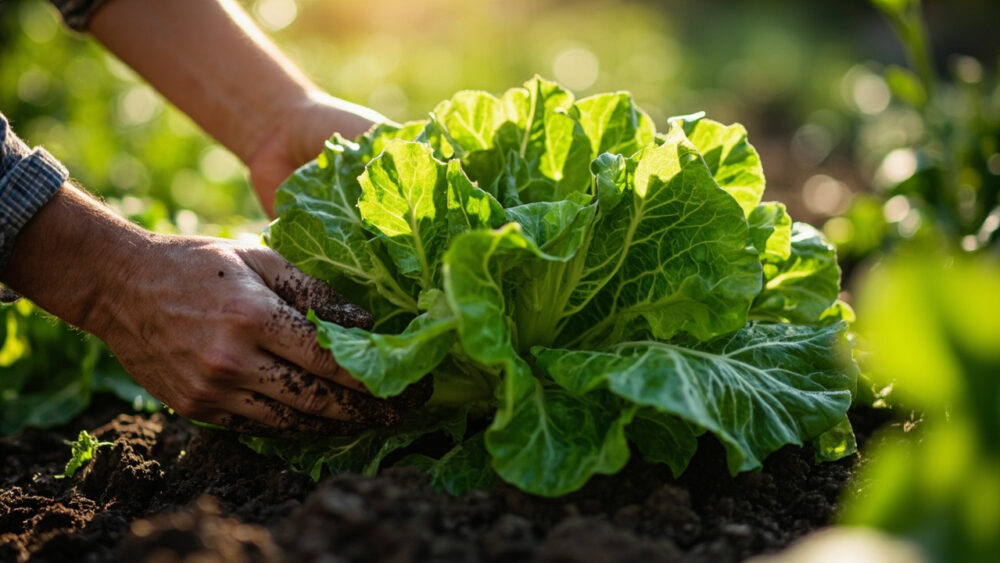
Romaine is ready in 60 to 75 days from seed, or roughly 45 to 55 days from transplant, when heads are 8 to 10 inches tall, upright, and firm when you squeeze the base gently. Outer leaves will be a deeper green, the inner leaves paler and tightly wrapped.
You can also harvest outer leaves individually starting around 30 days, taking just a few from each plant to keep it producing while the center matures.
For a full head, cut at the base with a sharp knife rather than pulling, which disturbs neighboring roots. Harvest in the cool of morning for the crispest texture and best storage life.
Once cut, romaine keeps 7 to 10 days refrigerated in a loose bag with a bit of moisture retained.
That is the whole cycle start to finish, and here is the card to save before you head back out to the bed.
Romaine Lettuce at a Glance
- When to plant: 2 to 3 weeks before last frost in spring, or in late summer for a fall crop, once soil hits about 40 to 45°F.
- Depth and spacing: sow seed 1/4 to 1/2 inch deep, space plants 8 to 12 inches apart in rows 12 to 18 inches apart.
- Sun needs: 4 to 6 hours of direct sun, with afternoon shade welcome once temperatures climb past 75°F.
- Watering: 1 to 1.5 inches per week, split across 2 to 3 waterings, checked by feel 2 inches down.
- Feeding: balanced or nitrogen-rich fertilizer at half strength every 2 to 3 weeks.
- Watch for: early stretching before bolting, slugs, aphids, and bottom rot in crowded, damp conditions.
- Harvest: 60 to 75 days from seed, when heads are 8 to 10 inches tall and firm at the base, cut rather than pulled.
Get romaine into cool soil on time and give it room to stand up straight, and the rest of the season mostly takes care of itself.
Everything else in this guide just exists to catch the few weeks where heat or crowding tries to ruin that.