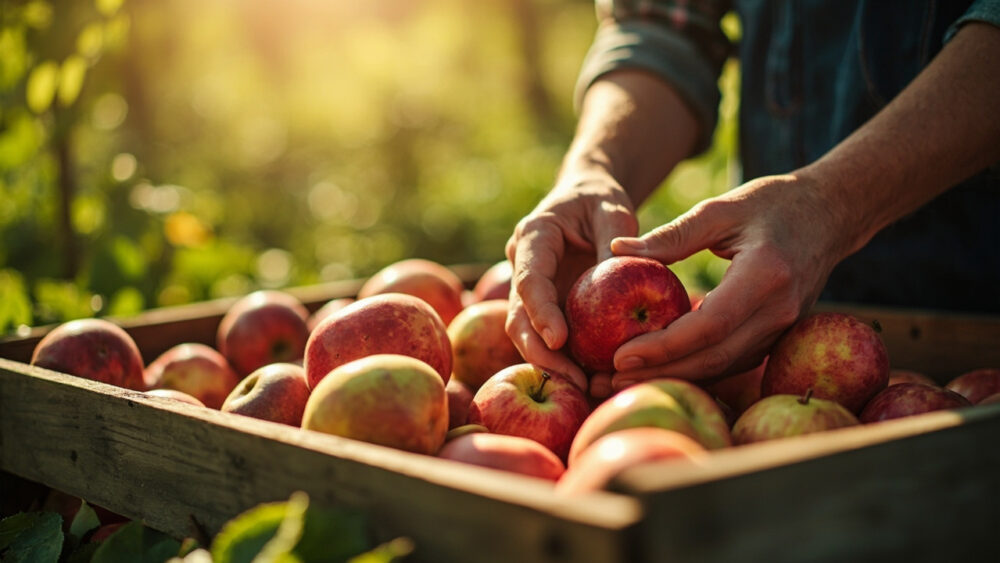
The right way to store apples is cold, dark, humid, and lonely: 32 to 40 F, in a perforated bag or a container with damp paper towels, away from other fruit, checked every couple of weeks for one bad apple that’s ruining the rest. Do that and firm apples hold for 3 to 6 months in a fridge or root cellar. Skip any one of those four conditions and you’ll be composting mushy fruit by Thanksgiving.
Most people get one thing backwards right out of the gate, and it’s not the cold part. It’s the company their apples keep in that crisper drawer, and it quietly ruins other produce for weeks before anyone figures out why.
There’s also a sorting step almost everyone skips, a smell that means “use today, not next week,” and an honest answer about whether all that grocery-store wax matters. Stick around for the Apples at a Glance card at the bottom, it’s the version you’ll actually want saved to your phone before you walk out to the tree or the farm stand.
The Method That Actually Works
Start by sorting, not washing. Pick up every apple and look for bruises, soft spots, punctures, or a stem that’s already pulling loose. Anything less than perfect goes in a separate bowl to eat within a few days, not into storage.
Do not wash apples before storing them. Water on the skin invites mold, and that’s one of the fastest ways to lose a whole batch. Wash right before you eat, not before you store.
Wrap each perfect apple loosely in newspaper or a paper towel, or lay them in a single layer in a box lined with the same. Store at 32 to 40 F with high humidity, which for most kitchens means the crisper drawer set to “high humidity” or a cardboard box in a cold garage or basement that stays just above freezing.
Next up is the part almost nobody thinks about until their lettuce goes limp for no reason.
Why Apples Can’t Share a Drawer
Apples give off ethylene gas as they ripen, and they give off a lot of it. Stored near other produce, that gas speeds up ripening and rot in everything around them, especially potatoes, carrots, and leafy greens.
Keep apples in their own drawer or their own bin, not mixed in with the rest of your produce. If your fridge only has one crisper drawer, apples go in a sealed container instead so the gas stays contained.
This works in your favor exactly once: a ripening bowl. Put an unripe avocado or green tomato next to an apple on the counter for a day or two and it’ll speed along nicely. Just don’t do it in the fridge with things you want to last.
That same gas is also your best early warning system, and here’s what it smells like when things have gone wrong.
How Long Apples Actually Keep
On the counter at room temperature, apples hold 5 to 7 days before texture starts going soft and flavor turns flat. That’s fine for eating within the week, not for storage.
In the fridge at 32 to 40 F, firm, late-season varieties like Honeycrisp, Fuji, and Granny Smith commonly hold 4 to 6 months. Softer, early-season apples like Gala or Paula Red are better used within 4 to 8 weeks even refrigerated, they simply don’t have the density to go the distance.
A true root cellar, cold and humid and dark, can match or beat a fridge for the firm keeper varieties, sometimes stretching to 6 months if temperatures stay steady just above freezing.
Frozen, apples last 8 to 12 months, but only after real prep, not just tossed in whole.
That prep is where the freezer method either earns its keep or wastes your freezer space.
Freezing Apples the Right Way
Whole raw apples do not freeze well; the texture turns to mush once thawed. If freezing is the plan, peel, core, and slice them first.
Toss the slices in a little lemon juice or an ascorbic acid solution before freezing to stop browning. Then either flash-freeze slices on a tray for an hour before bagging, or pack them straight into freezer bags with the air pressed out.
Blanching is optional here, not required the way it is for most vegetables. A quick 1 to 2 minute blanch before freezing helps slices hold their texture a bit better for pies later, but plenty of gardeners skip it and still get good results for cooking and baking.
Frozen apple slices are best used cooked, in pies, sauce, or crisps, not thawed and eaten raw.
Fresh storage still asks you to check in occasionally, and this is what to look and smell for.
The Signs an Apple Has Turned
A soft spot that gives under light thumb pressure is the first real warning, even if the skin still looks fine. That apple is turning from the inside out.
A strong, sweet, almost fermented smell coming from a storage box means at least one apple in there has started to rot and is releasing extra ethylene and moisture onto its neighbors. Find it and pull it before it takes down more of the batch.
Wrinkled, leathery skin means the apple has simply dried out from low humidity, it’s not dangerous, just past its best texture for eating fresh. Good for sauce or baking instead of the fruit bowl.
Mold, whether white, blue-green, or black fuzz, means that apple goes straight to the compost or trash, not just the moldy spot cut away. Rot inside an apple often runs deeper than what you can see on the surface.
Most of these problems trace back to a handful of repeat mistakes, so let’s name them plainly.
The Mistakes That Ruin a Batch
- Storing bruised apples with perfect ones: one damaged apple releases enough ethylene and moisture to speed up rot in everything touching it.
- Washing before storage instead of before eating: trapped moisture on the skin is an open invitation to mold.
- Piling apples in a deep bin instead of a single layer: weight bruises the apples on the bottom, and bruised apples rot fastest.
- Keeping them warm because “the fridge seems excessive”: apples ripen roughly 10 times faster at room temperature than at proper cold storage temperatures, so a week on the counter does the damage of months in the cold.
- Skipping regular checks: one rotten apple left for a few weeks can spread soft spots to a dozen neighbors before you notice the smell.
Fix those five and almost every storage failure disappears on its own.
Apples at a Glance
- Ideal storage temperature: 32 to 40 F, cold and steady, with high humidity.
- Counter storage: 5 to 7 days before texture and flavor decline.
- Fridge storage: 4 to 6 months for firm varieties like Honeycrisp, Fuji, and Granny Smith, 4 to 8 weeks for softer early-season types like Gala.
- Freezer storage: 8 to 12 months, but only peeled, cored, sliced, and treated with lemon juice first.
- Prep rule: sort out bruised or soft apples, never wash before storing, wash only right before eating.
- Storage setup: single layer or loosely wrapped in paper, in their own drawer or sealed container away from other produce.
- Warning signs: soft spots under light pressure, a sweet fermented smell, or any visible mold means sort, use, or toss immediately.
Cold, dry hands, no washing, and a little breathing room between apples will get you further than any fancy container.
Check the box every couple weeks, pull the stragglers, and the rest will keep quietly doing their job.