Here is the honest version of how to grow plums from seed: you pull the pit from a ripe plum, clean it, chill it for 10 to 12 weeks to break dormancy, then plant it about an inch deep once the ground warms in spring. From there it is a matter of years, not weeks, before you see fruit, and the tree you get may not taste like the plum you ate.
That last part surprises almost everyone, and it is the mistake that ruins most attempts before they even start. People plant a pit from a delicious grocery-store plum expecting a copy of that fruit, and instead get a seedling that is genetically its own thing.
There is also a step almost everyone skips or botches, and skipping it means the seed just sits in the ground and rots instead of sprouting. Stick with me and I will walk you through that step, tell you the honest answer to “how long until I get plums,” and at the very bottom you will find a save-able Plums at a Glance card with the numbers worth keeping on your phone.
When to Start Plum Seeds: Indoors, Direct Sow, or Fridge First
Plum pits need a cold, moist period before they will sprout, called stratification. In nature this happens when fruit drops in autumn and the pit sits through winter.
You are recreating winter, and the fridge is almost always the better choice over direct fall sowing because you control the moisture and keep rodents and squirrels from digging up your pit before spring.
Start stratification in early to mid winter, about 10 to 14 weeks before your last expected frost. That timing lands the seed ready to plant right as soil is workable in spring.
Direct sowing outdoors in fall works too, in zones 5 through 8, if you protect the spot with a wire cage over the soil.
The step everyone gets wrong is next, and it decides whether you get a seedling at all.
Sowing Step by Step
- Clean the pit: eat the plum, then scrub every trace of fruit flesh off the pit under running water. Leftover sugar invites mold during the cold months ahead.
- Crack or skip the crack: some growers gently crack the hard outer shell with a nutcracker to help water reach the seed inside, without crushing it. This is optional but speeds germination.
- Stratify: pack the pit in barely damp sand, peat, or a paper towel inside a sealed plastic bag or container. Store it in the refrigerator, around 34 to 41 degrees Fahrenheit, for 10 to 14 weeks.
- Check monthly: peek inside every few weeks. The medium should stay damp, not wet, and any pit showing mold should be rinsed and the medium refreshed.
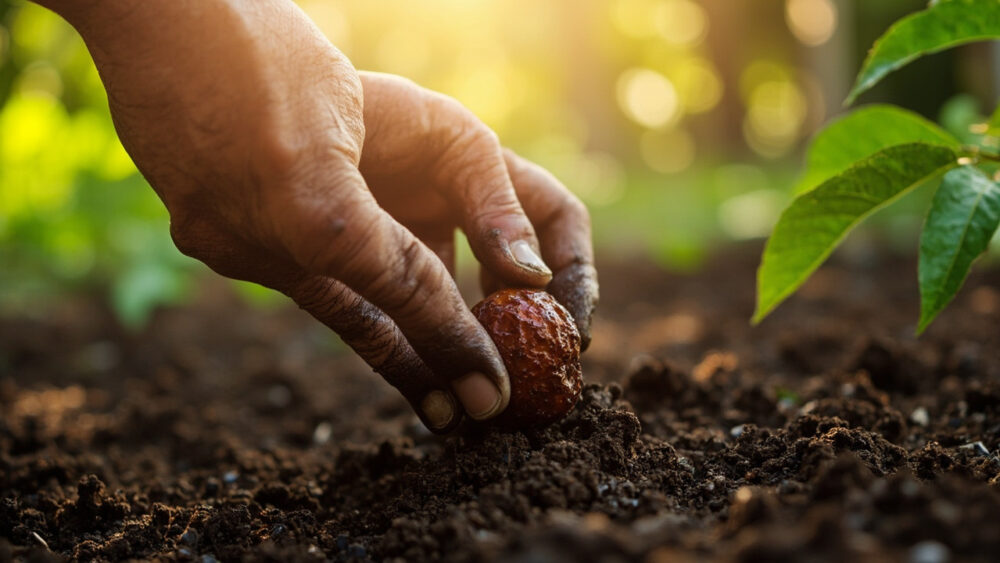
- Plant: once your last frost has passed and soil has warmed past 50 degrees Fahrenheit, plant the pit about 1 to 1.5 inches deep in well-draining potting soil or garden soil, one pit per 4-inch pot if starting containerized.
- Light and warmth: place the pot somewhere it gets bright light and daytime temperatures of 65 to 75 degrees Fahrenheit. Direct-sown pits outdoors just need sun and settled spring soil.
Get the cold period right and the hardest part of the whole process is already behind you.
Germination: What to Expect and When to Actually Worry
Once planted, a properly stratified plum pit typically sprouts in 4 to 8 weeks, though some take longer. You will see a pale shoot push through the soil, followed by a set of true leaves within a week or two.
If you assumed a plum pit sprouts fast, like a bean or a squash seed, that guess is why so many people give up early. Stone fruit is slow, and patience here is not optional.
Worry only if 10 to 12 weeks pass with no movement at all, or if the pit feels soft, hollow, or smells sour when you check it. A firm pit with no shoot yet is still very possibly fine.
Keep the soil consistently moist but never soggy during this wait, since a dried-out pit will not recover.
Once you see that first shoot, the countdown to hardening off begins.
Hardening Off and Transplanting Your Plum Seedling
A seedling started indoors or in a protected spot cannot go straight into open garden sun and wind. It needs 7 to 10 days of hardening off first, set outside in shade for an hour or two, with increasing sun and time each day.
Transplant once the seedling has several true leaves and outdoor overnight temperatures are reliably staying above 40 degrees Fahrenheit. This is typically several weeks to a couple months after germination.
Choose a planting site with full sun, at least 6 hours a day, and soil that drains well. Plums hate wet feet and will sulk or rot in a low, soggy spot.
Space seedlings at least 15 to 20 feet apart if you are planting more than one, since a mature standard plum tree needs real room to spread.
Dig a hole as deep as the root ball and twice as wide, and settle the young tree at the same depth it sat in the pot.
Getting the tree in the ground is only half the job, the next few years of care decide whether it thrives.
Season-by-Season Care for a Young Plum Tree
Water a newly transplanted seedling deeply once or twice a week through its first summer, more often in real heat, less if rain is doing the work for you. Check soil moisture by feeling an inch down; if it is dry there, water.
Mulch a 2 to 3 inch layer around the base, kept a few inches back from the trunk, to hold moisture and keep weeds down.
Skip fertilizer the first year. After that, a balanced fertilizer applied in early spring supports steady growth without pushing soft, disease-prone growth too fast.
Prune young trees in late winter while dormant, removing crossing branches and encouraging an open, vase-like shape that lets light reach the center.
Watch for curled or spotted leaves and small holes, common signs of aphids or plum curculio; both are manageable with cultural cleanup and, if needed, a product labeled for the specific pest, applied exactly as directed.
All of that groundwork is what eventually gets you to the question everyone is really asking: when does this thing actually fruit.
The Honest Timeline to Bloom and Harvest
Here is the part nobody wants to hear: a plum tree grown from seed typically takes 3 to 6 years to flower, and often longer before it fruits reliably, compared to 2 to 3 years for a nursery-grafted tree.
Seed-grown plums are also frequently not self-fertile and not true to the parent, meaning the fruit may differ in size, flavor, and sweetness from whatever plum you started with. Some seedlings never produce good fruit at all.
You will know bloom is coming when the tree develops thick, healthy branch structure and starts setting fat flower buds in late winter, opening to white or pale pink blossoms in early spring.
If you want fruit sooner and predictable flavor, grafting a known variety onto your seedling’s rootstock, or simply buying a grafted tree, is the realistic shortcut. Growing from seed is still worth doing for the experience and the free rootstock, just go in knowing what you are trading for that.
Whichever path you take, here is everything worth saving before you close this tab.
Plums at a Glance
- When to plant: stratify pits 10 to 14 weeks in the refrigerator, then sow after your last frost once soil hits about 50 degrees Fahrenheit.
- Planting depth: 1 to 1.5 inches deep in well-draining soil or potting mix.
- Germination time: 4 to 8 weeks after planting a properly stratified pit, sometimes longer.
- Spacing: 15 to 20 feet between mature trees, full sun with at least 6 hours of direct light daily.
- Watering: deep watering once or twice weekly the first season, checking soil moisture an inch down before adding more.
- Time to bloom or fruit: 3 to 6 years to first flowering from seed, often longer before reliable fruit.
- Honest catch: seed-grown plums may not match the parent fruit’s flavor and are usually slower and less predictable than a grafted nursery tree.
The single thing worth remembering: the cold stratification is what makes or breaks this whole project, not the planting itself.
Get that right, give it years instead of weeks, and the tree will eventually tell you what kind of plum you actually grew.