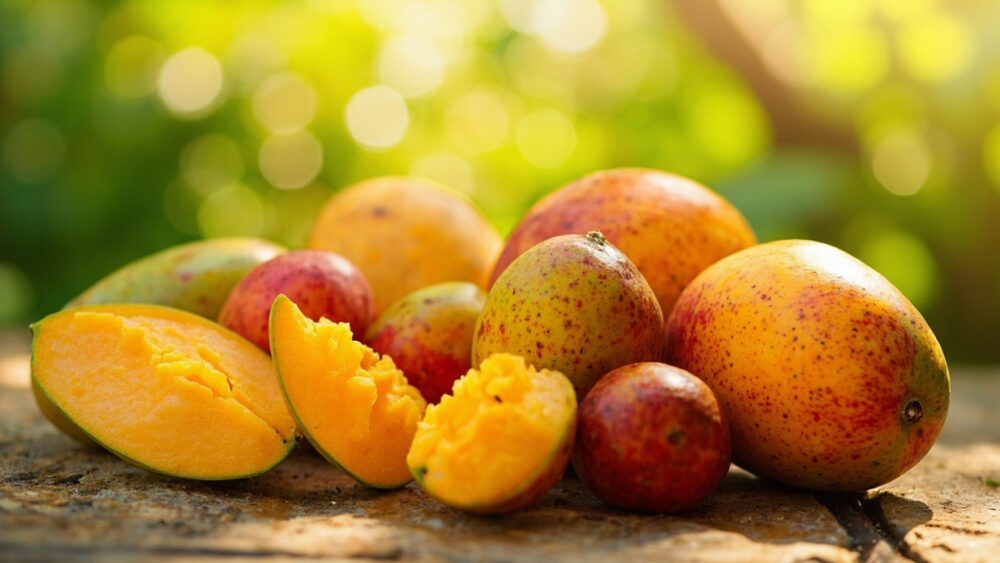
The fastest way to sort out types of mangoes is by fiber and color, not size. Some varieties are smooth and nearly fiberless with a custardy bite, others are stringy and sweet in a way that’s better suited to juice than a fork, and skin color tells you almost nothing about ripeness across varieties since some ripen green and some blush red while still tart.
Most backyard shoppers grab whatever’s biggest and reddest, which is exactly backward. The blushed-red types are often the fibrous, mild ones bred for shipping, while the homely yellow-green varieties tend to be the dessert-quality fruit growers actually fight over.
Number 13 on this list is the one almost everyone misjudges by looks alone, and it’s worth holding out for. The last few entries plus a straightforward method for picking the right tree for your yard are waiting at the bottom, so keep going.
Everyday Grocery Store Types
These are the varieties bred for shipping durability and shelf appeal, and they’re what most people mean when they say “mango” without knowing it.
1. Tommy Atkins
Thick, tough skin is this mango’s whole reason for existing. It ships and bruises better than almost any other variety, but the flesh is noticeably fibrous and only moderately sweet, which is why growers who’ve tasted better rarely plant it on purpose.
2. Kent
A juicy, low-fiber bite sets Kent apart from Tommy Atkins even though they’re often shelved side by side. The tree grows large and produces heavily in USDA zones 10 to 11, and the fruit ripens green to yellow with only a light red blush, so color is a poor ripeness cue here.
3. Keitt
Staying green even when ripe is Keitt’s signature trap for shoppers who wait for red. Squeeze instead of looking: a ripe Keitt gives slightly under gentle thumb pressure, and the flesh inside is sweet, juicy, and nearly fiber-free.
4. Haden
A short, heavy fruiting season makes Haden a feast-or-famine tree. It’s the parent variety behind many modern commercial mangoes, with a rich, aromatic flavor, but it’s more disease-prone in humid climates than its own offspring.
Grocery types get you started, but the small, intensely sweet varieties are where flavor really sharpens up.
Small, Intensely Sweet Dessert Types
These mangoes trade size for concentrated sugar and almost no fiber, and they’re the ones experienced growers quietly plant for eating fresh.
5. Ataulfo (Honey Mango)
A slim, kidney-bean shape and canary-yellow skin identify Ataulfo at a glance. The flesh is buttery, fiberless, and sweet enough that it’s become a favorite even among people who claim they don’t like mango, and the tree stays compact enough for a large container in zone 10 or warmer.
6. Carabao (Philippine Mango)
An elongated, tapered tip and pale green-yellow skin mark this one. It’s prized across Southeast Asia for eating slightly underripe, when it’s crisp, tart, and salty-good with a dip, as much as for full ripeness sweetness.
7. Alphonso
A short, saffron-tinted flesh with almost no fiber makes Alphonso the variety most serious mango growers name when asked for their favorite. It’s genuinely harder to find as a grafted tree outside South Asia and doesn’t ship well at all, which is exactly why it rarely shows up in stores.
8. Champagne (Ataulfo-type)
Often confused with true Ataulfo at the market, Champagne is a related small yellow mango with the same fiberless, honeyed flesh. If you see “champagne mango” and “honey mango” priced differently side by side, you’re often looking at the same style of fruit from different growers.
If you want a tree built for cooking and juicing instead of eating out of hand, the fibrous types earn their reputation differently.
Fibrous, Juice-and-Cooking Types
Fiber isn’t always a flaw. In these varieties it’s part of the texture the fruit is grown for.
9. Manila (Philippine juice type)
A thin skin over stringy, very sweet flesh makes Manila mangoes better suited to smoothies and juice than a knife and plate. They’re heat-loving and productive, and in the Philippines this is often the everyday eating mango rather than a specialty one.
10. Julie
A dwarf tree habit makes Julie a favorite for small Caribbean yards and large pots, staying under 10 to 12 feet with regular pruning. The fruit is small, fragrant, and moderately fibrous, with a flavor fans describe as almost pineapple-like.
11. Bombay
A soft, melting texture with real fiber running through it defines Bombay mangoes, which are common in South Asian and Caribbean home gardens. They’re often eaten by cutting off the top and squeezing the pulp straight into the mouth rather than slicing, which tells you everything about the texture to expect.
Now for the varieties that don’t fit neatly into either camp, including the one most people call wrong on sight.
Specialty and Regional Standouts
These varieties have loyal followings for reasons that don’t always show up in a produce aisle description.
12. Nam Doc Mai
A long, curved shape similar to a chili pepper makes this Thai variety easy to spot. It’s eaten both green, when it’s firm and tart for salads, and ripe, when it turns rich and honeyed, so the same fruit serves two completely different purposes depending on when you pick it.
13. Pica (Cambodian mango)
Pale, almost sickly-looking skin is exactly why this one gets skipped at markets, and it’s the mistake worth correcting. Underneath that unimpressive exterior is dense, low-fiber flesh with a floral sweetness that rivals Alphonso, and growers who’ve tried it once tend to seek out the tree specifically.
14. Valencia Pride
A long, tapered fruit that can run larger than a pound, Valencia Pride is a Florida-bred variety with juicy, mild flesh and light fiber. It’s a reliable, vigorous producer in zones 10 to 11 and a common choice for home orchards that want size without sacrificing too much texture.
15. Cotton Candy
A genuinely dessert-like flavor that tastes closer to its namesake than fruit is what Cotton Candy is bred for. It’s a newer, smaller-market variety with soft, fiberless flesh, and while trees can be harder to source than classics like Kent or Ataulfo, growers who find one rarely go back to the standard grocery types.
How to Choose the Right One
Match the tree to your space and your patience before you fall for a flavor description.
- Check your space first: dwarf types like Julie or container-grown Ataulfo suit small yards and pots, while Kent, Keitt, and Valencia Pride need real room to spread.
- Confirm your climate: mangoes need USDA zone 10 or warmer outdoors, consistent warmth, and protection from frost, since even a light freeze can kill a young tree.
- Decide your purpose: pick fiberless dessert types like Alphonso, Ataulfo, or Pica for eating fresh, and fibrous types like Manila or Bombay for juicing and cooking.
- Judge ripeness by feel, not color: a gentle give under thumb pressure and a fruity smell at the stem end beat any color chart, since Keitt and Nam Doc Mai stay green even when perfectly ripe.
- Weigh your care appetite: heavy producers like Haden crop hard but are more disease-prone in humid climates, while Kent and Valencia Pride tend to be steadier and more forgiving.
- Buy grafted trees, not seedlings, if you want fruit that matches the variety name, since mango seeds don’t reliably grow true to type.
There’s no universally best mango, only the one that fits your yard, your climate, and what you actually plan to do with the fruit once it’s in your hand.