To grow peaches, plant a bare-root or container tree in late winter to early spring while it is still dormant, in full sun with well-drained soil, spacing trees 15 to 20 feet apart, and expect your first real harvest in year three or four. Peaches are not a slow, fussy fruit tree once they get going, but the first two years decide whether you get a productive tree or a sickly one that limps along for a decade. Get the planting depth and the early pruning right and everything downstream gets easier.
Here is what trips people up. Most new peach growers either plant too deep, skip the hard pruning a young tree actually needs because it feels wrong to cut back a tree you just paid for, or ignore chill hours and pick a variety that will never fruit reliably in their climate.
There is also a sign almost everyone misreads in the first summer, gummy amber blobs on the trunk that look like disease but usually are not what you think. Stick with me and I will walk you through the whole thing planting to harvest, and there is a save-able Peaches at a Glance card waiting at the bottom for when you are standing at the nursery or out in the yard with dirt on your hands.
When to Plant Peaches
Plant dormant bare-root peach trees in late winter to early spring, four to six weeks before your last expected frost, as soon as the ground can be worked and is not waterlogged. In mild-winter areas this might mean planting in January or February. In colder zones, wait until the soil has thawed and drains freely, even if that pushes you into March or April.
Container-grown trees are more forgiving and can go in anytime spring through early fall, but spring planting still gives the best root establishment before summer heat arrives.
Peaches need winter chill to break dormancy and set fruit, generally 600 to 900 hours below 45°F depending on variety, so growers in zones 6 through 8 have the easiest run. If you garden in zone 9 or warmer, look specifically for low-chill varieties bred for your region, and if you garden in zone 4 or colder, look for the most cold-hardy cultivars and plant in the most sheltered, sun-warmed spot you have.
Get the timing right and the next decision, where you actually put the tree, matters just as much.
Choosing the Spot and Prepping the Soil
Full sun is non-negotiable, at least 6 to 8 hours of direct light. Peaches grown in partial shade produce fewer flowers, softer wood, and fruit with poor color and flavor no matter how well you feed them.
Good drainage matters just as much as sun. Peaches are notoriously intolerant of wet feet, and a spot where water puddles after rain will rot the roots within a season or two. If you are unsure, dig a hole a foot deep, fill it with water, and see how long it takes to drain. Under an hour is great, several hours means you need a raised planting mound or a different spot.
Avoid low spots and frost pockets. Cold air settles in valleys and dips, and a late frost hitting open blossoms can wipe out your entire crop for the year even if the tree itself survives fine.
Amend heavy clay with compost worked into a wide area, not just the planting hole, and skip amending sandy soil beyond a bit of compost for water retention.
The spot is picked and the soil is ready, so now it is time to actually get the tree in the ground.
Planting Peaches Step by Step
1. Soak bare-root trees
Submerge bare roots in water for 2 to 4 hours before planting if they look dry. Do not let them sit soaking overnight, roots can suffocate.
2. Dig the hole wide, not deep
Dig a hole twice the width of the root spread but no deeper than the roots need. Peach roots grow outward more than down, and a wide hole gives them room to spread into loosened soil.
3. Set the graft union above the soil line
This is the mistake that ruins most attempts. The knobby graft union near the base of the trunk must sit 2 to 3 inches above final soil level. Bury it, and the tree either struggles for years or the rootstock takes over and you lose the fruiting variety entirely.
4. Backfill and water in
Fill in around the roots with the native soil you dug out, mixed with a bit of compost, tamping gently to remove air pockets. Water deeply right after planting, about 5 to 10 gallons, to settle the soil around the roots.
5. Space trees 15 to 20 feet apart
Standard peach trees need 15 to 20 feet between trees for airflow and root room. Dwarf varieties can go as close as 8 to 10 feet.
6. Cut it back hard
Immediately after planting, cut the young tree back to knee height, about 24 to 30 inches, and remove side branches back to a few buds. This feels brutal and it is the single step most beginners skip or do halfheartedly, but it forces low, strong scaffold branches instead of a tall, weak, top-heavy tree.
The tree is in the ground and pruned hard, and now the real work of keeping it alive through its first season begins.
Watering and Feeding Through the Season
Young trees need consistent moisture, about 1 to 2 inches of water per week for the first two growing seasons, more during hot dry stretches. Check by pushing a finger 2 to 3 inches into the soil near the root zone, if it is dry, water.
Established trees, three years and older, are more drought-tolerant but still benefit from deep watering every 7 to 10 days during fruit development. Water stress right before harvest causes small, mealy fruit.
Hold off fertilizer at planting time, the roots do not need the push yet and it can burn tender new roots.
Starting the second spring, feed with a balanced fruit tree fertilizer following the label rate, applied as new growth begins and again after harvest. Too much nitrogen produces lush leafy growth at the expense of fruit and makes the tree more attractive to pests.
Feeding and watering keep the tree alive, but peaches face a specific lineup of problems that catch new growers off guard.
The Problems Most Likely to Strike
That amber, gummy ooze on the trunk everyone panics about is often just a normal stress response to a wound, sunscald, or minor borer activity, not automatically a death sentence. That said, if the gumming is heavy and paired with sawdust-like debris at the base, it likely is peach tree borer, and pruning out damaged wood and keeping the trunk healthy is the cultural fix, with a labeled insecticide as the next step if it recurs.
Peach leaf curl and brown rot are the two diseases that do the most damage. Leaf curl shows up as puckered, reddish, distorted leaves in spring, and a dormant-season fungicide application before buds swell is the standard preventive, follow the product label exactly.
Brown rot attacks ripening fruit, turning it soft and fuzzy brown almost overnight in humid weather. Thinning fruit for airflow and cleaning up dropped fruit promptly cuts risk significantly.
Thin your fruit when peaches are about the size of a nickel, leaving one peach every 4 to 6 inches along the branch. Skip this and the tree overloads, branches can snap under the weight, and every peach comes out undersized.
Handle the pests and diseases and thin the fruit, and the last question is simply knowing when to pick.
When and How to Harvest Peaches
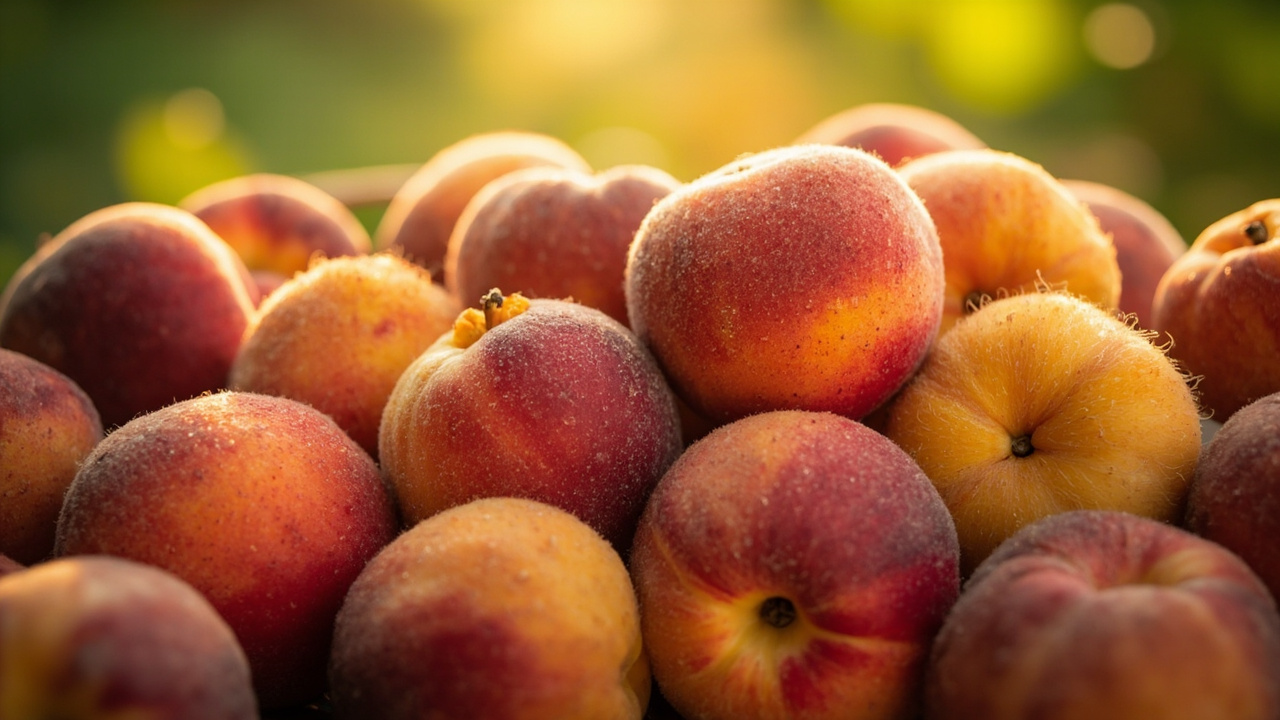
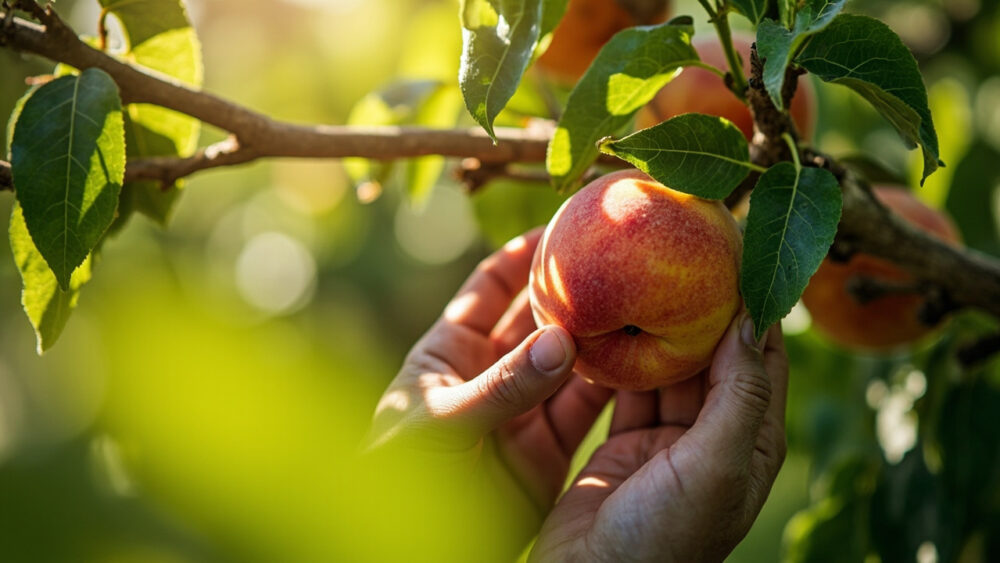
A peach is ready when the background color behind the red blush shifts from green to creamy yellow and the fruit gives slightly to gentle pressure near the stem. This usually happens 3 to 5 months after bloom, depending on variety, typically mid to late summer.
Do not rely on size or color blush alone, plenty of peach varieties turn red while still rock-hard and weeks from ready. The honest test is a gentle twist, if it separates from the branch with barely any resistance, it is ready. If you have to tug, give it a few more days.
Peaches ripen fast once they start, sometimes going from firm to soft in 2 to 3 days in hot weather, so check trees daily during the final week.
Pick in the cool of morning when the fruit is firmest, and handle peaches gently, they bruise easily and bruised fruit does not store well.
That is the whole cycle from bare root to full basket, and here is everything worth saving before you close this tab.
Peaches at a Glance
- When to plant: late winter to early spring while dormant, 4 to 6 weeks before last frost, or anytime spring through fall for container trees.
- Sun and soil: full sun, 6 to 8 hours minimum, well-drained soil that does not stay wet after rain.
- Spacing and depth: 15 to 20 feet apart for standard trees, 8 to 10 feet for dwarf, graft union set 2 to 3 inches above soil level.
- Watering: 1 to 2 inches per week for young trees, deep watering every 7 to 10 days for established trees during fruit development.
- Feeding: skip fertilizer at planting, start balanced fruit tree fertilizer the second spring.
- Watch for: peach leaf curl, brown rot, and peach tree borer, with dormant-season fungicide and fruit thinning as the main preventives.
- Harvest cue: background color shifts to creamy yellow, fruit gives slightly at the stem and twists off with almost no resistance.
Get the graft union height and that first hard pruning cut right, and most of the hard part of growing peaches is already behind you.
Everything after that is just watching, watering, and waiting for that first amber-yellow blush to show up.