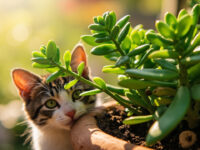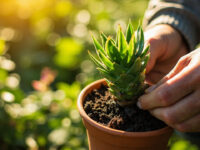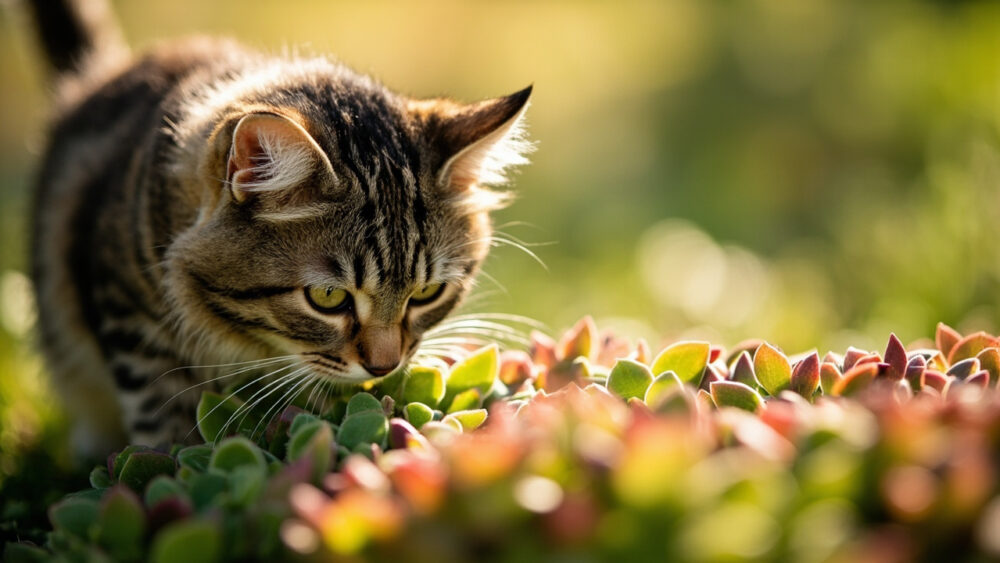
No, sedum is not considered toxic to cats. The ASPCA lists most common sedum species, including the low-growing groundcover types and the taller “stonecrop” varieties, as non-toxic to cats, dogs, and horses. That covers the sedum you are probably asking about, whether it is a hen-and-chicks-style rock garden mat or an upright Autumn Joy in a border.
That said, “non-toxic” and “harmless to eat a bunch of” are not the same thing. There is a real gap between the official safety answer and what actually happens when a cat chews through a pot of it, and that gap is where most of the useful information lives.
Stick with me through the next few sections and you will know which part of your particular plant matters, what mild stomach upset actually looks like versus something worse, what to do in the first ten minutes if you catch your cat mid-chew, and which look-alike succulents you should actually worry about instead. There is also a save-and-screenshot quick reference card waiting at the bottom.
The Plain Answer: Sedum and Cats
Sedum, as a genus, is on the safe list. That includes popular species like Sedum spurium (creeping stonecrop), Sedum acre (goldmoss stonecrop), Sedum spectabile, and the tall Autumn Joy hybrids most people grow in perennial beds.
The confusion usually comes from the name, not the plant. Some succulents get called “sedum” casually by nursery tags or well-meaning sellers when they are actually a different genus entirely. If your plant came labeled simply “succulent” or you are not sure of the exact species, that uncertainty matters more than anything else on this page.
Next up: why the amount your cat actually eats changes the real-world outcome, even with a safe plant.
Why “Non-Toxic” Doesn’t Mean “Eat All You Want”
Here is the part most pet owners skip past. A plant being classified as non-toxic means it does not contain compounds known to cause organ damage, neurological symptoms, or the serious poisoning reactions vets watch for. It does not mean a cat’s digestive system is built to process a mouthful of leaves.
Any plant material, safe or not, can cause mechanical irritation if a cat eats enough of it. Fibrous leaves and stems can trigger vomiting or mild diarrhea simply because the gut is trying to move out something it cannot digest, not because of a toxin.
So the honest answer has two layers: sedum will not poison your cat, but a cat that eats an entire trailing stem of it can still have a rough afternoon.
That rough-afternoon scenario is exactly what the next section covers.
Signs to Watch For After Your Cat Nibbles Sedum
If your cat has taken a bite or two, watch for the following general signs over the next several hours:
- Vomiting, once or a few times
- Loose stool or mild diarrhea
- Drooling or lip-licking right after eating it
- Mild lethargy or a cat that seems “off” but is still eating and drinking
These are typically mild and short-lived with a genuinely non-toxic plant like true sedum. They usually resolve within a day without intervention.
What should worry you more is anything beyond this list, which brings up the one call you should always make.
What to Actually Do If Your Cat Ate Sedum
If you catch your cat eating sedum, or you find a chewed stem and a guilty-looking cat, call your veterinarian or an animal poison control line. Do this even though sedum is on the safe list, especially if you are not one hundred percent certain of the plant’s identity.
Do not try to induce vomiting or give any home remedy on your own. That decision depends on factors a vet needs to assess, and doing it wrong can cause more harm than the plant itself.
Before you call, take a quick photo of the plant and note roughly how much is missing. If you can, snip a small sample and bring it with you.
Tell the vet what you observed: how long ago it happened, whether your cat vomited, and any behavior changes since.
If symptoms go beyond mild vomiting, meaning repeated vomiting, visible blood, extreme lethargy, difficulty breathing, or collapse, treat it as an emergency and get to a vet or emergency animal clinic immediately rather than waiting it out at home.
Now, the part that actually prevents this from happening again: what to plant instead if your cat treats every pot as a salad bar.
Cat-Safe Succulents to Grow If You Have a Chewer
Some cats leave plants alone. Others treat every windowsill succulent as a chew toy, and no amount of “no” training fully fixes that.
If you have a determined chewer, sedum is actually one of your better bets among succulents, since it is already non-toxic and forgiving of a nibble or two. Other genuinely cat-safe succulent options include:
- Haworthia (zebra plant and cousins)
- Echeveria (most common rosette varieties)
- Peperomia (not a true succulent, but pet-safe and chew-resistant)
Plants to keep well out of reach instead, because they are genuinely toxic to cats, include Kalanchoe, Aloe vera, and Euphorbia species (like the pencil cactus or crown of thorns). These are commonly sold right next to safe succulents, often with similar-looking rosettes, so check the tag or ask before you buy if a cat lives in your house.
Get the genus right at the nursery, and the rest of this worry mostly takes care of itself.
Sedum: Quick Reference
- Toxicity: true sedum species are non-toxic to cats, dogs, and horses per the ASPCA’s plant list.
- What matters most: confirming the plant is actually sedum and not a differently-genused succulent sold under a similar nickname.
- Mild reaction possible: vomiting, loose stool, or drooling from eating a large amount, caused by fiber and irritation, not toxin.
- When to call the vet: anytime a cat eats a notable amount, especially if you are unsure of the plant’s identity, and always if symptoms are severe or repeated.
- Never do this: induce vomiting or give any home remedy without veterinary guidance.
- Safer swaps for chewers: Haworthia, Echeveria, and Peperomia; avoid Kalanchoe, Aloe vera, and Euphorbia, which are genuinely toxic.
Sedum earns its reputation as one of the more forgiving houseplants for a house with cats in it.
Keep the tag, know the species, and you can stop worrying every time your cat walks past the pot.