Portulaca grows best sown or transplanted after the soil has warmed to at least 65°F, spaced 6 to 12 inches apart in full sun, in soil that drains fast and stays on the lean side. It is one of the easiest flowering succulents you can grow, but it fails in exactly one predictable way, and that failure has nothing to do with neglect. If you’re learning how to grow portulaca because you’ve killed it before, you almost certainly overwatered it or planted too early into cold, wet ground.
There’s a sign most people misread completely: portulaca closing up tight in the afternoon looks like wilting or heat stress, and gardeners rush to water it. That reaction usually makes things worse, not better.
Stick around and you’ll get the real reason for that closing behavior, the mistake that rots more portulaca than any pest ever will, and the exact moment it’s ready to reseed itself for next year. There’s also a save-able Portulaca at a Glance card at the bottom with every number in one place.
When to Plant Portulaca
Portulaca is a warm-season annual (or short-lived perennial in zones 10 and 11) that has zero tolerance for cold, wet soil. Wait until night temperatures reliably stay above 50°F and all frost danger has passed, which is usually two to three weeks after your last spring frost date.
Soil temperature matters more than the calendar. Push a thermometer 2 inches down and look for at least 65°F. Seed sown into cold soil will simply sit there and often rot before it germinates.
In most of the country that lands sometime from late spring into early summer. Gardeners in hot southern zones can plant earlier and get a second flush going into fall.
Get the timing right and the next decision, where you put it, becomes a lot more forgiving.
Choosing the Spot and Prepping the Soil
Portulaca wants the harshest, sunniest, driest spot in your yard, the place where other flowers sulk. Give it a minimum of six hours of direct sun, and eight or more is better. Less sun means fewer flowers and leggy, stretched growth.
Drainage is non-negotiable. This is a succulent relative of purslane, built to handle drought and poor soil, and it will not forgive a spot that stays soggy.
If you’ve got heavy clay, work in coarse sand or fine gravel to loosen it, or just plant portulaca in a raised bed, container, or rock garden instead. Skip rich compost here. Soil that’s too fertile pushes leafy growth at the expense of bloom.
Once the bed drains well and bakes in full sun, you’re ready to actually get plants or seed into the ground.
Planting Portulaca Step by Step
Starting from seed
- Scatter seed directly on the soil surface, since portulaca seed is tiny and needs light to germinate, don’t bury it.
- Press it in gently with your palm or the flat of a board rather than covering it with soil.
- Keep the surface lightly moist for 10 to 14 days until you see seedlings, then ease off watering.
- Thin seedlings to stand 6 to 12 inches apart once they have a couple of true leaves.
Setting out transplants or nursery starts
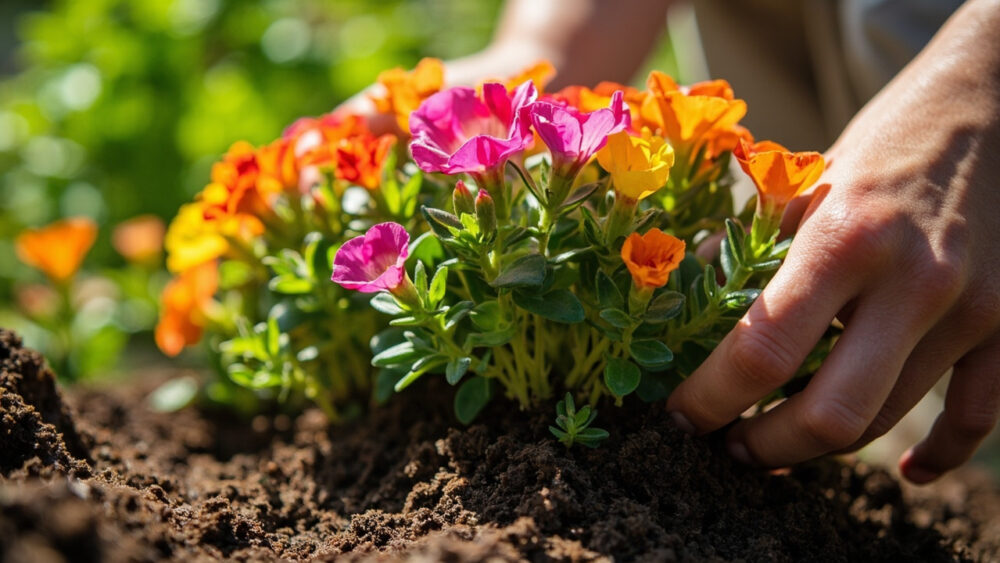
- Dig a hole no deeper than the root ball, since planting the stem too deep invites rot.
- Space plants 6 to 12 inches apart depending on the variety, tighter for a solid groundcover effect, wider if you want individual mounds.
- Water in once at planting time, then hold off until the top inch of soil is dry.
That’s really the whole job, portulaca does most of the rest of the work itself once it’s rooted.
Watering and Feeding Through the Season
Here’s the mistake that costs most people their portulaca: they treat it like a thirsty annual bedding plant instead of the desert succulent it actually is. Water only when the top 1 to 2 inches of soil are completely dry, and let it dry out between waterings every time.
Established portulaca in the ground often needs nothing extra once it’s rooted in, surviving on rainfall alone in most climates. Containers dry out faster and need more frequent checking, maybe every few days in real heat.
Skip heavy feeding. A light dose of balanced fertilizer once at planting time is plenty. Too much nitrogen gives you soft, floppy stems and fewer flowers, which defeats the entire point of growing it.
Now for that afternoon closing you were probably worried about.
Why Portulaca Closes Up, and the Problems That Actually Threaten It
If you guessed the flowers closing in the afternoon means the plant is stressed and thirsty, that’s the natural assumption, and it’s wrong. Portulaca flowers close on their own schedule, typically by early to mid afternoon, and reopen the next sunny morning. It’s a normal response to light and temperature, not a distress signal, and some newer hybrid varieties stay open longer into the day.
The real threats to portulaca are almost all moisture-related. Root rot and stem rot from overwatering or poor drainage are what actually kill it, showing up as blackened, mushy stems at the soil line.
Aphids and spider mites occasionally show up in hot, dry stretches, usually as a light stippling on leaves or clusters near new growth. A strong spray of water knocks most infestations back, and insecticidal soap applied per the label handles anything more persistent.
Fungal issues appear almost exclusively in gardens that water too often or plant too densely with poor airflow. Thin plants out and let the soil dry between waterings and you’ll rarely see disease at all.
Handle drainage and restraint on the hose, and you’ve solved the one real risk to this plant.
When and How Portulaca Blooms and Reseeds
Portulaca doesn’t have a harvest in the vegetable-garden sense, its payoff is the bloom. Expect flowers roughly 6 to 8 weeks after sowing, and once it starts, it doesn’t stop until frost, opening fresh flowers every sunny morning.
Here’s the honest answer to the question most people ask next: does it come back on its own? In warm zones, and often even in cooler ones, yes. Portulaca self-seeds readily, dropping tiny seeds that overwinter in the soil and pop up again the following year once the ground warms.
If you want it to reseed, let a few spent flowers stay on the plant instead of deadheading everything. If you’d rather keep it contained, deadhead regularly and clean up fallen seed at season’s end.
Either way, once you’ve grown it one season, you’ll recognize exactly what conditions it wants the next time it shows up.
Portulaca at a Glance
- When to plant: after all frost danger has passed and soil has warmed to at least 65°F, usually two to three weeks after your last spring frost.
- Sun and soil: full sun, six to eight or more hours daily, in fast-draining, lean soil rather than rich compost.
- Spacing and depth: 6 to 12 inches apart, seed pressed onto the surface uncovered, transplants set no deeper than their root ball.
- Watering: only when the top 1 to 2 inches of soil are dry, letting it dry out fully between waterings.
- Feeding: light, once at planting, skip heavy nitrogen to avoid floppy growth and fewer blooms.
- Biggest risk: root and stem rot from overwatering or poor drainage, not pests or heat.
- Bloom time: roughly 6 to 8 weeks after sowing, flowering continuously until frost and often self-seeding for next year.
Get the drainage and watering restraint right and portulaca more or less grows itself.
Everything else about this plant, including that afternoon closing, is just it doing exactly what it’s supposed to do.