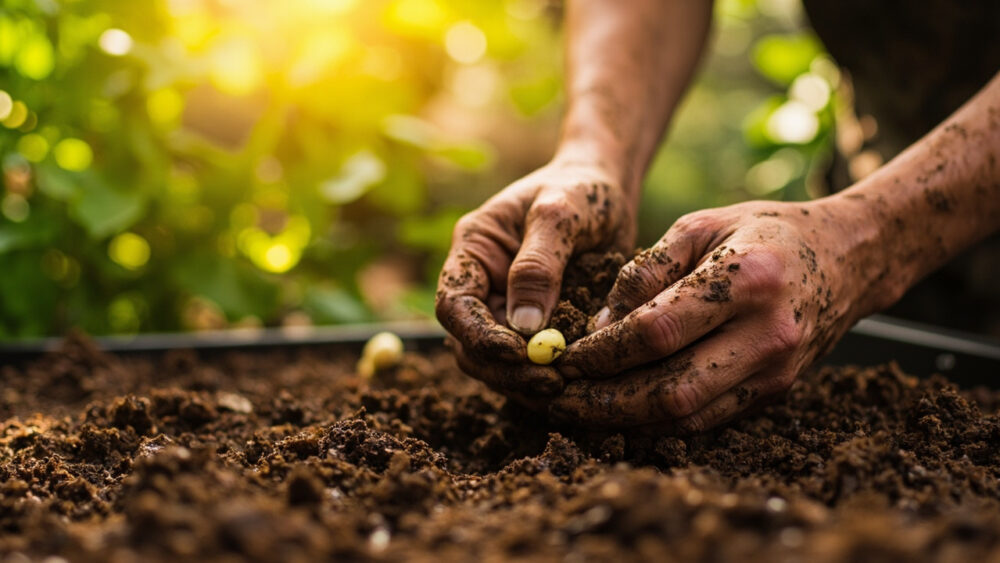
To grow habanero peppers from seed, start them indoors 8 to 10 weeks before your last frost date, since habaneros need warm soil (80 to 85F) to germinate and a long season to ripen. Sow seeds a quarter inch deep in a seed-starting mix, keep the medium consistently warm and lightly moist, and expect germination in 10 to 21 days, sometimes longer. From there you are looking at 90 to 100 days after transplant before you get ripe, colored fruit, so the whole run from seed to harvest often takes four to five months.
Here is what trips people up. Most gardeners treat habanero seeds like tomato seeds, and that single assumption costs them three or four weeks of stalled, silent soil. There is also a moment around week two when the tray looks completely dead and most people give up right before germination actually happens. And once fruit finally sets, almost everyone picks it at the wrong time, which mutes both the heat and the flavor.
I will walk through all of it below, including the transplant mistake that stunts plants for a month and the exact color cue that tells you a habanero is actually ready. Save-able specifics, spacing, depth, timing, are all in the “Habanero Peppers at a Glance” card at the very bottom, so keep scrolling once you have the full picture.
When to Start Habanero Seeds: Indoors vs Direct Sowing
Start habanero seeds indoors, always. Direct sowing works for beans and squash, not for a pepper that needs 90 to 100 days of warm weather after it is already a transplant. In most climates, direct-sown habanero seed simply runs out of season before fruit ripens.
Count back 8 to 10 weeks from your average last frost date. If your last frost lands in early May, that means starting seed in late February to early March. Habaneros are slower to germinate and slower to size up than jalapenos or bell peppers, so err toward the 10-week end if you have never grown them before.
Starting too early is its own trap. Plants that sit too long in small pots get root-bound and stressed before the ground is even warm enough to take them.
Get the timing right and the sowing itself is straightforward, which is where the real technique lives.
Sowing Habanero Seeds Step by Step
This is the part where the tomato-seed assumption does the most damage. Habaneros germinate on heat, not on hope, and skipping that one detail is why so many trays sit empty for a month.
1. Choose the medium
Use a sterile seed-starting mix, not garden soil and not straight potting soil. Garden soil compacts and can carry disease; a light, well-draining mix lets tiny roots push through easily.
2. Set the depth
Sow seeds about a quarter inch deep. Any deeper and a slow-germinating pepper seed may rot before it ever reaches the surface.
3. Control the temperature
This is the step everyone underrates. Habanero seeds want soil at 80 to 85F to germinate reliably. A seedling heat mat under the tray makes the difference between two weeks and never. Room temperature alone, especially anything under 70F, can stall germination for weeks or stop it entirely.
4. Manage light and moisture
Keep the mix moist but never soggy, and cover the tray with a humidity dome until seeds sprout. Light does not matter yet, heat does. Once seedlings emerge, light becomes everything.
Get the heat right and you have done the hard part.
Germination: What to Expect, and When to Actually Worry
Expect germination in 10 to 21 days on consistent heat. That is the honest range, and it is genuinely slower than tomatoes, jalapenos, or bells, so do not judge habanero seed by how fast other seeds usually pop.
Around day 10 to 14, the tray often looks completely inactive, and this is the exact moment most people assume the seed is dead and start over. That guess is usually wrong. Give it the full three weeks before you write off a batch, as long as the mix has stayed warm and evenly moist the whole time.
Once you see germination, pull the humidity dome and get seedlings under strong light immediately, either a bright south window or a grow light 2 to 4 inches above the leaves. Weak light at this stage produces tall, floppy seedlings that never recover their strength.
If nothing has emerged past 25 to 28 days with steady heat, the seed likely will not sprout and it is time to resow, not to keep waiting indefinitely.
Seedlings that do emerge still have one more hurdle before they can handle the outdoors.
Hardening Off and Transplanting Habaneros
Do not transplant habaneros outside until night temperatures are reliably staying above 55 to 60F, which is usually two to three weeks after your last frost date, not right at it. Habaneros are more cold-sensitive than most peppers, and a single chilly night below 50F can stall growth for a week or more.
Before that, harden plants off over 7 to 10 days. Set them outside in a sheltered, shaded spot for an hour the first day, and add an hour or two of sun and time each day after that. Skipping this step is the transplant mistake that stunts habaneros for a month, because seedlings moved straight from a windowsill to full sun and wind get scorched and shocked, and some never fully recover.
Space transplants 18 to 24 inches apart in soil that drains well, with a pH around 6.0 to 6.8. Bury the stem to just below where the first true leaves start, water in well, and skip fertilizer for the first week or two while roots settle.
Once plants are in the ground and settled, the season is really about steady maintenance, not drama.
Caring for Habaneros Through the Season
Habaneros want consistent moisture, not constant moisture. Water when the top 1 to 2 inches of soil feel dry, aiming for about 1 inch of water per week including rain, more during heat waves.
Overwatering is more common than underwatering here, and it shows up as yellowing lower leaves and slow growth, which people often mistake for a nutrient problem and respond to with more fertilizer, making it worse.
Feed lightly with a balanced fertilizer every 4 to 6 weeks once flowering starts, and avoid heavy nitrogen, which pushes leafy growth at the expense of fruit. Habaneros like heat and full sun, at least 6 to 8 hours a day, and they genuinely stall in cool, cloudy stretches, there is no fixing that with feeding.
Watch for aphids and spider mites on the undersides of leaves; a strong water spray or insecticidal soap applied per the product label handles most early infestations.
All of that steady care is building toward one visual cue that tells you exactly when to pick.
When Habaneros Are Ready to Harvest
Habaneros start green and firm, and most people pick them right there, assuming green means ready the way it does with a bell pepper. That guess costs you most of the heat and the fruit’s actual flavor.
The real signal is full color change, orange being the most common, though white, red, chocolate, and pink varieties exist too. A habanero that has finished coloring is noticeably more wrinkled-glossy and slightly softer than the hard green stage, and that is when capsaicin and flavor have fully developed.
Expect first ripe fruit 90 to 100 days after transplant, sometimes longer in cooler summers. Harvest by snipping or twisting the stem rather than yanking, which can snap brittle branches.
Wear gloves when picking and processing habaneros. The oils cling to skin and will find your eyes hours later if you are not careful.
Once the first fruits ripen, plants typically keep producing steadily until frost, so regular picking is what keeps new flowers coming.
Habanero Peppers at a Glance
- When to start seeds: 8 to 10 weeks before your last frost date, indoors only.
- Germination conditions: soil at 80 to 85F, quarter inch deep, moist but not soggy, sprouts in 10 to 21 days.
- When to transplant: 2 to 3 weeks after last frost, once nights stay above 55 to 60F.
- Spacing: 18 to 24 inches apart, full sun, well-draining soil at pH 6.0 to 6.8.
- Watering: about 1 inch per week, letting the top 1 to 2 inches of soil dry between waterings.
- Days to harvest: 90 to 100 days after transplant, longer in cool summers.
- Ready sign: fruit has fully changed color and turned slightly soft and glossy, not just firm and green.
Get the heat right at germination and the timing right at transplant, and the rest of the season mostly takes care of itself. Everything else is patience, and waiting for color, not size, to tell you it is time.