If your weigela has spots, powdery coating, wilting stems, or a general look of decline, the most likely culprit is a fungal leaf spot or powdery mildew brought on by wet foliage and poor air movement, and the fix is usually as simple as pruning for airflow and watering at the soil instead of overhead. Most weigela diseases trace back to moisture sitting where it should not, not to some incurable blight. But a few causes look nearly identical from six feet away and need very different fixes.
Everyone blames the soil first. Most of the time the soil is fine and the real issue is water hitting the leaves at the wrong time of day or branches packed so tight the center never dries out. The detail that actually tells you which cause you have is where the damage starts: bottom versus top, old growth versus new, one branch versus the whole shrub.
Stick around for the tell-apart guide, the honest recovery odds for each cause, and a two-minute diagnosis checklist you can run right at the plant. It is saved for the bottom so you can work through it step by step once you have read what is actually going on.
Most Likely Causes, Ranked
1. Fungal leaf spot
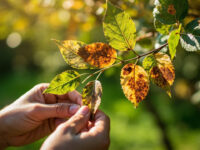
Confirm it: look for round or irregular brown, tan, or purplish spots on leaves, often with a slightly darker border, concentrated on lower and inner foliage. Spots may merge into larger blotches as the season goes on. This shows up most after a stretch of humid or rainy weather.
Fix it: remove and destroy affected leaves, thin out crowded branches so air moves through the plant, and switch to watering the root zone rather than the leaves. Clean up fallen leaves at the base each fall since the fungus overwinters there.
That one is manageable, but the next cause gets mistaken for it constantly.
2. Powdery mildew
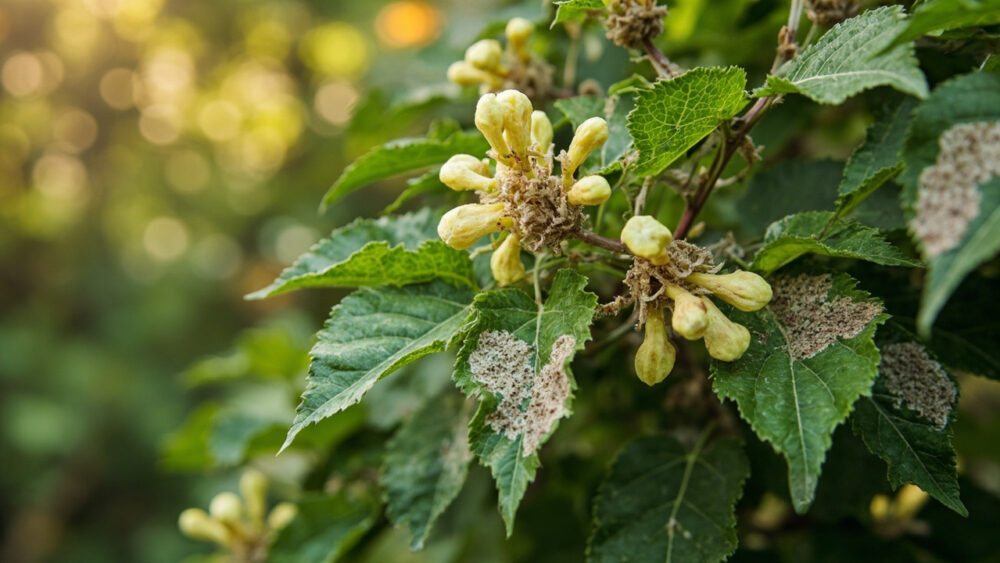
Confirm it: a gray-white, flour-like coating on leaf surfaces and sometimes stems, usually starting on newer growth at the shrub’s shadier side. Unlike leaf spot, you can often rub it off with a finger.
Fix it: improve airflow with selective pruning, avoid high-nitrogen fertilizer that pushes soft new growth, and water in the morning so leaves dry by evening. Badly coated leaves can be removed, but mildew rarely kills a weigela outright.
If the damage looks more like sudden wilting than spots or coating, you are dealing with something rooted in the soil, not the leaf surface.
3. Root rot from poor drainage
Confirm it: dig down 4 to 6 inches near the root zone. Soil that stays soggy days after rain, combined with wilting leaves that do not perk up, roots that are brown and mushy instead of firm and white, all point here. Yellowing often shows on the whole plant rather than in a spotty pattern.
Fix it: if the shrub is young enough to move, replant it in a raised spot or amended, well-draining bed. For established shrubs, improve drainage around the root zone and cut back watering. Severely rotted root systems are a poor bet for full recovery.
A shrub with dying stems but healthy-looking soil is pointing you toward something entirely different.
4. Bacterial or fungal canker
Confirm it: look for sunken, discolored patches on individual stems or branches, sometimes oozing, with leaves on that one branch wilting or dying while the rest of the shrub looks normal. Cankers are localized, not shrub-wide.
Fix it: prune out affected branches well below the canker, cutting into clean healthy wood, and disinfect pruners between cuts. There is no chemical cure for canker; removal is the treatment.
If it is not one branch but the whole plant losing vigor gradually, check the roots and crown next.
5. Crown gall or general decline from stress
Confirm it: rough, tumor-like swellings near the soil line or on roots point to crown gall, a bacterial disease that enters through wounds. General thinning, poor bloom, and small leaves with no clear spots or coating instead usually mean environmental stress: compacted soil, drought stress from a previous season, or transplant shock.
Fix it: crown gall has no cure; badly galled shrubs should be removed and that planting spot avoided for new woody plants for a couple of years. Stress-related decline often responds to consistent watering, a layer of mulch, and patience over a full growing season.
Once you have a suspect, the next step is confirming it against the plant itself, not against a photo online.
How to Tell the Causes Apart
Location on the plant is your best clue. Leaf spot and mildew start on lower, inner, or shadier leaves where air is stillest. Canker shows up on one specific branch. Root rot and crown stress affect the whole shrub evenly.
Old growth versus new growth matters too: mildew favors tender new leaves, leaf spot favors older lower leaves, and root problems show first as yellowing on the oldest leaves before spreading up.
Texture is the fastest field test. A coating that rubs off is mildew. Spots with defined edges are fungal leaf spot. Mushy, oozing, or sunken tissue means canker or rot, not a surface fungus at all.
Once you know which one you are looking at, the real question is how much trouble you are actually in.
Will It Recover?
Leaf spot and powdery mildew are cosmetic problems more than survival threats. A weigela with either one almost always leafs out fine the following spring once you clean up debris and improve airflow. Expect this year’s damaged leaves to stay damaged. New growth is where you will see the improvement.
Root rot is the honest bad news of this list. Mild cases caught early, with some firm white roots still present, can recover if drainage improves fast. Once most of the root mass is brown and mushy, the shrub is not coming back and replacing it is the practical choice.
Canker recovers well if you catch it on one or two branches and prune promptly. Left alone, it spreads branch to branch and eventually girdles the shrub.
Crown gall does not go away, though a mildly infected shrub can limp along for years with reduced vigor. Cut your losses if galls are widespread or if bloom and growth have dropped off for multiple seasons.
Whatever the verdict, prevention is what keeps you from running this diagnosis again next year.
How to Keep It From Happening Again
Water at the baseearly in the day, so foliage dries before evening. This one habit prevents more leaf spot and mildew than any spray ever will.
Prune every yearright after bloom, to open up the center of the shrub. Weigela flowers on old wood, so late winter pruning costs you blooms. Post-bloom thinning does not.
Give it room and drainage. Space new shrubs 3 to 6 feet apart depending on variety, and never plant in a spot that stays wet for days after rain.
Clean up fallen leaves each fall, since that is where fungal spores overwinter and reinfect next year’s growth.
With the causes and the prevention both covered, here is the checklist to run at the plant right now.
Diagnosis Checklist
- Check where the damage is: whole shrub evenly, one branch only, or concentrated on lower and inner leaves.
- Touch any coating on the leaves: if it rubs off gray-white powder, call it powdery mildew.
- Look at spot edges: distinct brown or tan spots with defined borders mean fungal leaf spot.
- Inspect a single wilting branch for sunken or oozing bark: that confirms canker, treat by pruning below it.
- Dig 4 to 6 inches near the roots: soggy soil and brown mushy roots confirm root rot from poor drainage.
- Check the soil line and roots for rough swellings: that confirms crown gall, with no cure available.
- If none of the above fit and the shrub is just thin and slow, suspect drought stress or compacted soil rather than disease.
- Match your finding to its fix above, then recheck the shrub in two to three weeks for new, clean growth.
Most weigela problems are fixable with pruning shears, a hose aimed at the ground instead of the leaves, and a little patience through one growing season.
Get the water and airflow right and this is usually the last time you have to diagnose it.