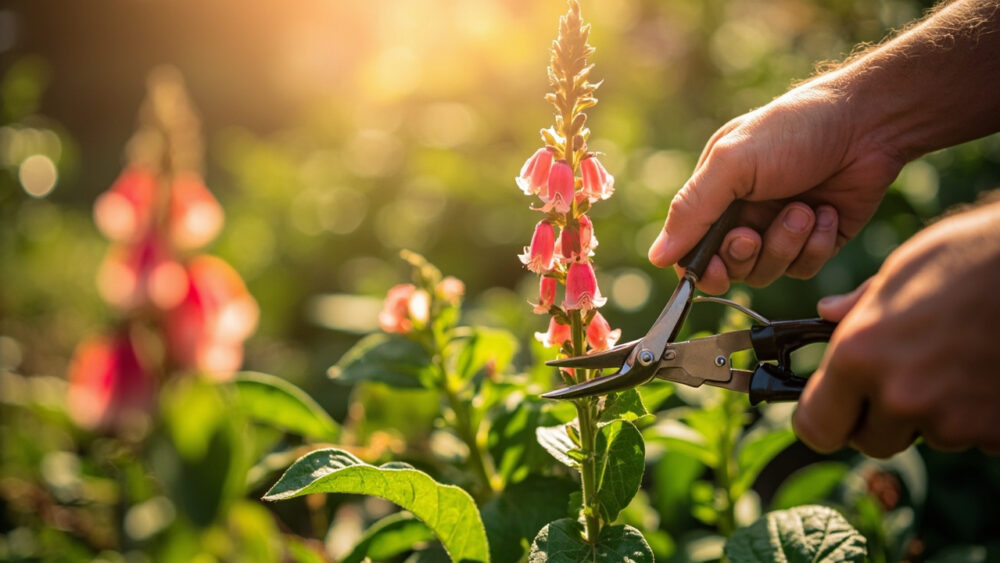
You deadhead penstemon by cutting the spent flower spike down to the first set of healthy leaves or a side shoot, not just snipping off the dead flowers at the tip. Do it as soon as a spike is more brown than pink, starting in early summer and continuing through the bloom season, since regular how to deadhead penstemon upkeep is what pushes out the second and third flushes. Skip it in fall, when you want the plant to stop pushing new growth and start hardening off for winter instead.
That part is simple. What trips people up is everything around it: the mistake that quietly kills next year’s first flush, the sign that looks like disease but is not, and the honest answer to whether you should just shear the whole plant with hedge trimmers like lavender.
Stick around for that last one especially, because the answer surprises most gardeners. And save the last section, the Penstemon at a Glance card, straight to your phone before you walk back out to the bed.
When to Deadhead Penstemon, and When to Leave It Alone
Start deadheading as soon as the first flower spikes finish, usually four to six weeks after bloom begins, depending on your climate and variety. You will see it before you have to think about it: the lower flowers on the spike turn brown and papery while the top ones are still going, and the whole spike starts leaning or looking tired.
Keep at it every week or two through summer. Each round of deadheading tells the plant to put energy into new spikes instead of seed, which is the entire trick to getting a penstemon to rebloom instead of flowering once and quitting for the year.
Stop about six weeks before your first fall frost. Late-season cuts push tender new growth that will not have time to toughen up, and that soft growth is what gets hit hardest by an early cold snap.
Timing is only half the job though, because how you cut matters just as much as when.
The Tools and the One Prep Step That Matters
A clean pair of bypass pruners or garden snips is all you need. Skip anvil-style pruners on penstemon; they crush the hollow stems instead of slicing them, which leaves a ragged wound that dries out and can let in rot.
The prep step people skip: wipe your blades with rubbing alcohol before you start, especially if you have used them on anything with powdery mildew or blight this season. Penstemon stems are hollow and the cut end is an open door for whatever was on your blade last.
Do this in the morning after the dew has dried, or anytime the foliage is dry. Cutting wet stems spreads fungal spores around far more efficiently than cutting dry ones.
Clean tools and dry foliage take thirty seconds and save you a fungicide conversation later.
Where Exactly to Cut
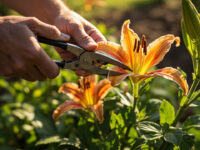
Follow the spent flower stem down past the last dead bloom until you hit either a leaf node with fresh green growth or a side shoot already forming. Cut just above that point, about a quarter inch, at a slight angle.
Do not cut straight down to the base of the plant unless the entire stem, not just the flower spike, has gone brown. Most of the time only the top third to half of the stem needs to come off.
How Much to Remove
If you guessed that more is better here, that guess is exactly what stalls a lot of penstemon in midsummer. Shearing the whole plant down hard, the way you would with catmint or salvia, removes the side shoots that were about to become your next round of flowers.
Take only the spent spike and leave the rest of the plant, including any lower buds or branching stems, completely alone. Penstemon reblooms from side growth lower on the same stems, not from a fresh flush off a hard-cut crown.
Once you know where to cut, the next question is what the plant is going to do about it.
What Happens After You Deadhead
Within one to two weeks in warm weather, you should see new buds forming at the leaf nodes just below your cut, or on side shoots that were already waiting under the old flower spike. That is the second flush starting.
If nothing happens after three weeks, check the plant’s overall vigor before blaming your pruning cut. Penstemon that is drought-stressed, in too much shade, or growing in heavy wet soil will sulk regardless of how well you deadheaded.
A light feeding with a balanced fertilizer right after the first deadheading round, or a topdress of compost, helps fuel that second flush. Skip heavy nitrogen though, since it grows leaves at the expense of flowers and makes the stems floppy.
Most varieties will give you two to three solid rebloom cycles in a season if you keep up with it, which is exactly where the next set of mistakes usually shows up.
The Mistakes That Cost You Flowers
The biggest one is waiting too long between rounds. Once a spike finishes going to seed, the plant considers its job done for that stem and stops signaling for more blooms nearby.
Deadhead on a schedule, not just when you happen to notice it, especially during the peak of summer when spikes finish fast.
- Cutting too low: removing entire stems to the base takes out the side shoots that would have flowered next, and forces the plant to rebuild from scratch.
- Confusing seed pods for buds: the swelling capsules left after bloom look bud-like from a distance; if you are not sure, snap one open, seed pods are dry and papery inside while buds are green and tight.
- Shearing the whole plant with hedge trimmers: this works fine on many woody perennials but sets penstemon back hard, since it removes too much live wood and side growth at once.
- Deadheading too late in fall: pushing new soft growth right before frost gets that growth killed and can weaken the crown going into winter.
- Ignoring the base of the plant: letting old, woody stems from prior years pile up without ever thinning them invites fungal problems in humid climates.
Get those five right and the rest of penstemon care is genuinely low-maintenance.
Penstemon at a Glance
- When to deadhead: as soon as a flower spike is more brown than colorful, roughly every one to two weeks through the bloom season.
- When to stop: about six weeks before your first fall frost, to avoid pushing tender new growth into cold weather.
- Where to cut: just above the first healthy leaf node or side shoot below the spent flowers, never straight to the base.
- How much to remove: only the spent spike, roughly the top third to half of the stem, leaving side growth intact.
- Tools: clean bypass pruners, wiped with rubbing alcohol between plants if disease has been an issue.
- After care: a light balanced feeding or compost topdress after the first round helps fuel the second flush.
- What to avoid: hedge-trimmer shearing, cutting when foliage is wet, and mistaking dry seed pods for new buds.
Deadhead little and often, cut just above live growth, and stop six weeks before frost. That single habit is what turns a one-flush penstemon into one that blooms most of the summer.