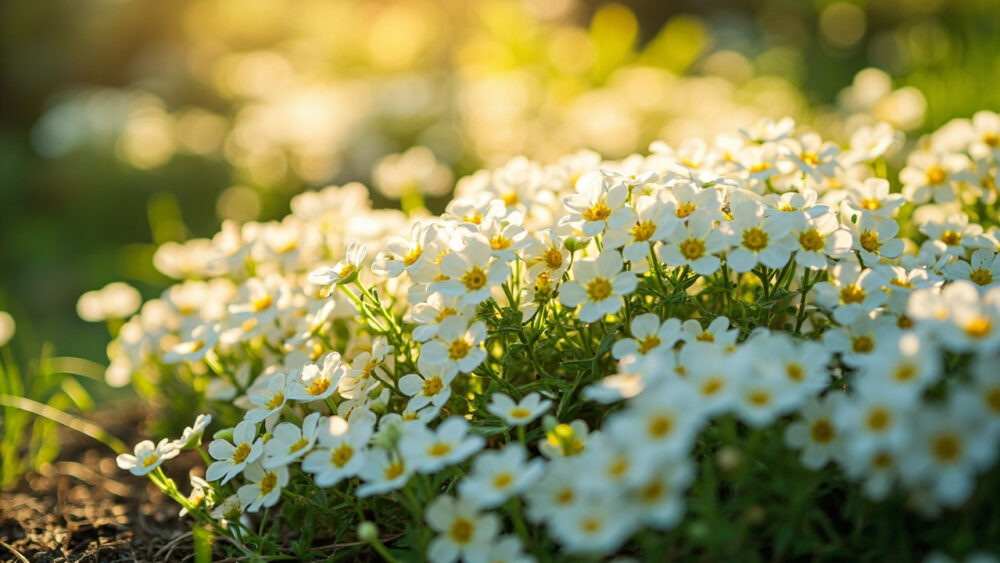
The honest answer is: it depends entirely on where you garden. Sweet alyssum (Lobularia maritima) is a true perennial in USDA zones 9 through 11, where it can live and bloom for two or three years. Everywhere colder, it behaves as an annual and dies with the first hard freeze, though it often comes back on its own from dropped seed the following spring.
That last part is the piece most people miss, and it is the one that changes everything about what you should expect next season. Alyssum reseeds so readily that a lot of gardeners in zone 6 or 7 swear it is perennial in their yard, when really they are looking at volunteer seedlings, not the original plant.
Below I will show you how to tell which one is happening in your own bed, what your alyssum needs from you this fall if you want it back, and when it is honestly smarter to just treat it as a one-season flower and replant. Stick around for the save-able quick-reference card at the bottom, it covers the zone breakdown and the reseeding trick in one glance.
The Plain Answer, By Zone
In zones 9 through 11, alyssum is a genuine short-lived perennial. It slows down in the heat of summer, may look ragged by its second year, and usually needs replacing after two to three seasons anyway as it gets woody and stops flowering well.
In zones 8 and colder, winter kills the plant outright. Frost turns the foliage black and mushy within a day or two, and there is no reviving it once that happens.
So if you are in a cold or temperate climate, no, the exact plant you have now will not survive winter. What might come back is something else entirely.
Why Your Alyssum Might “Come Back” Anyway
Alyssum drops seed generously all season, especially once you stop deadheading late in summer. Those seeds can overwinter in the soil and sprout on their own once the ground warms, often in the exact same spot, sometimes drifting a few feet away.
This is the mistake that trips people up: they assume their perennial alyssum survived winter, when really last year’s plant died and this year’s seedlings are its offspring. The difference matters because volunteer seedlings can vary slightly in color and habit from the parent, and they show up on their own schedule, not necessarily as early as a deliberately planted flat.
If you want to know which is true in your yard, check the crown of last year’s plant in early spring before assuming anything.
How to Read What’s Actually Happening in Your Bed
Look at the base of last year’s plant, right where the stems meet the soil. If you see green, fleshy growth pushing directly from that same woody crown, congratulations, that is genuine perennial regrowth, likely because your winter stayed mild or your microclimate ran warmer than your zone map suggests.
If the old crown is dry, gray, and clearly dead, but you see fresh little seedlings scattered nearby with rounded leaves and no connection to the old plant, that is reseeding, not survival.
Pot-grown alyssum almost never survives winter outdoors even in borderline zones, since roots in containers freeze harder and faster than roots in the ground.
Once you know which one you are dealing with, you can decide how much effort to put in.
Helping It Return Next Year, On Purpose
If you want more of it, work with the reseeding habit instead of fighting it. Let the last flush of flowers each fall go to seed rather than deadheading everything, and skip the fall cleanup that would rake those seeds away.
A light mulch of an inch or so protects seed and any marginal perennial crowns through winter without smothering next spring’s sprouts.
In true perennial zones, cut plants back by about half after their first flush fades in early summer heat. This keeps growth compact and often triggers a second bloom cycle into fall instead of the plant going leggy and dying out early.
Do this and you are working with the plant’s natural habit rather than hoping for a miracle it cannot deliver.
When Treating It as an Annual Is the Smarter Move
If you garden in zone 8 or colder, do not bank on alyssum as a permanent bed filler. Even reliable reseeding varies year to year depending on how wet or cold winter gets, and a hard, snowless freeze can wipe out seed that would otherwise have sprouted.
The straightforward fix is to buy a new flat each spring, or start seed indoors four to six weeks before your last frost, and treat alyssum the way you would treat any fast, cheap annual filler. It is inexpensive, it germinates in one to two weeks, and it blooms within about six to eight weeks of sowing.
Trying to nurse a cold-climate plant through winter it cannot survive wastes effort you could spend on the reseeding trick instead.
Alyssum: Quick Reference
- Core answer: perennial only in zones 9 to 11, an annual everywhere colder, and it often reseeds itself in cooler zones so it can appear to return.
- Perennial lifespan: typically two to three years even in warm zones before plants get woody and stop blooming well.
- Cold-zone reality: a hard freeze kills the plant outright within a day or two, no recovery possible.
- How to tell what happened: check the old crown in spring, green growth from the same base means true survival, fresh unconnected seedlings mean reseeding.
- To encourage reseeding: let the last fall flowers go to seed, skip raking that bed clean, and add a light mulch for winter.
- To renew perennial plants: cut back by about half after the first summer flush to push a second bloom cycle.
- Simplest option in cold zones: treat it as a cheap annual and resow or replant each spring, blooms arrive in six to eight weeks.
Alyssum rewards you either way, it just asks you to be honest about which game you are playing.
Plant it for what it is this year, and next spring’s surprises take care of themselves.