Whole, unwashed, unpeeled jicama keeps best in a cool, dark, dry spot, not the refrigerator crisper drawer most people reach for first. A whole root stored around 55 to 65°F, out of direct light, lasts 2 to 3 weeks on a counter or in a pantry, and up to a month in a cooler spot like a basement or garage. The fridge actually shortens its life once it’s cut open the wrong way, which is the first mistake worth knowing about before you touch a knife.
Here’s the thing almost nobody guesses correctly: jicama behaves more like a potato than a cucumber. It’s a root, it breathes, and it hates being wrapped in plastic while whole. Do that and you trap moisture against the skin, and the flesh underneath starts breaking down from the outside in within days.
There’s also the question everyone asks right after “how do I store it,” which is why the beige flesh sometimes turns grayish or translucent even when nothing looks obviously wrong on the outside. That one has a specific answer, and it’s not just “it’s old.” Stick around, because the full Jicama at a Glance card is at the bottom of this page, saved and ready to screenshot before you put your root away.
The Best Way to Store Whole Jicama
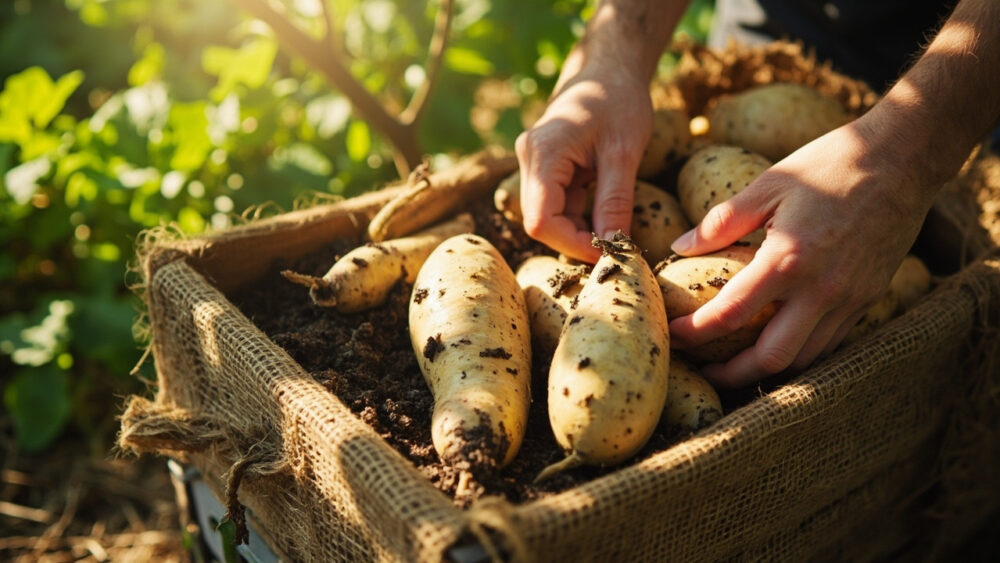
Leave it whole, leave it unwashed, and leave it out of the fridge. Jicama’s thin brown skin is its natural barrier against moisture loss and rot, and washing it before storage softens that skin and invites spoilage. Store it loose in a paper bag, a wire basket, or just sitting on a shelf, somewhere dark and dry with decent airflow.
A root cellar or unheated pantry around 55 to 65°F is ideal. A kitchen counter works fine too, it just shortens the clock a little compared to somewhere cooler.
Avoid sealed plastic bags and airtight containers for whole roots. They trap humidity against the skin and speed up soft spots.
Once you cut into it, everything about storage changes.
Storing Cut Jicama (This Is Where People Go Wrong)
Once jicama is peeled or cut, it needs the refrigerator, not the counter, and it needs to be airtight. Wrap cut pieces tightly in plastic wrap or seal them in a container, and submerging peeled chunks in cold water actually extends their crisp texture noticeably better than a dry container does.
Change that water daily if you’re storing it more than a day or two. Cut jicama held this way keeps well for about 5 to 7 days in the fridge before texture and flavor start to slide.
Skip the water-soak method and just bag it dry, and you’ll usually only get 3 to 4 days before the edges dry out and turn slightly rubbery.
That texture change is one clue, but it’s not the only sign worth watching for.
Freezing Jicama: The Honest Answer
Yes, you can freeze jicama, but raw pieces frozen straight from the cutting board turn mushy and watery once thawed. The fix is a quick blanch first: cut it into cubes or sticks, boil for 2 to 3 minutes, then plunge into ice water to stop the cooking.
Dry the pieces well, spread them on a tray to freeze solid, then transfer to a freezer bag. Done this way, jicama holds reasonable texture for 8 to 10 months and works well in cooked dishes, stir-fries, and soups.
It will not come back crisp for raw eating after freezing, blanched or not. If you want that snap for slaws or crudités, freezing was never going to be the answer, and no amount of technique changes that.
So if the freezer isn’t the fix for crispness, what actually is?
Curing: The Step Most People Skip Entirely
Jicama doesn’t need curing the way onions or winter squash do, and this is where a lot of storage advice online overcomplicates things. Fresh-dug jicama with intact, unbruised skin already stores well without any special treatment.
What actually matters is letting a freshly harvested root sit somewhere dry and shaded for a day or two before long-term storage, just enough for any surface moisture from washing or digging to fully dry off. Skip this and you’re storing a root with damp skin, which is an invitation for mold in the first week.
That’s a small step, but it’s the one nearly everyone skips because nobody tells them it matters.
Now here’s what actually ruins a stored jicama once that step is done right.
The Signs Jicama Has Turned
A jicama that’s still good feels heavy for its size, firm all over with no give when you press it, and the skin is smooth and dry with no soft patches. That’s your baseline.
- Soft or mushy spots: even one soft patch on the skin means rot has started underneath, and it spreads.
- Wrinkled, shriveled skin: the root has lost moisture and will taste starchy and dry inside, past its best.
- Dark or discolored patches on cut flesh: this is oxidation and early spoilage, not just cosmetic.
- A sour or fermented smell: this means it’s gone, no amount of trimming saves it.
- Slimy surface on cut pieces: discard, don’t rinse and hope.
That grayish, translucent flesh some people notice is usually just early dehydration, not the same thing as rot. It’s still generally safe to eat if firm and odorless, just past peak texture, best used cooked rather than raw. If you’re ever unsure whether a root is simply old versus actually spoiled, when in doubt, don’t eat it, since spoiled produce can carry bacteria or mold that isn’t always visible to the eye.
Most of the time, though, jicama doesn’t spoil quietly, it spoils because of something the grower or cook did.
The Mistakes That Actually Ruin a Batch
The single biggest mistake is refrigerating a whole, unpeeled jicama. Cold, humid fridge air is exactly wrong for the skin, and it triggers chilling injury, a softening and internal discoloration that shows up as mealy, off-flavored flesh within a week or two.
The second most common mistake is washing jicama before storing it whole. Water on the skin plus dark storage is a mold recipe, every time.
Third is leaving cut jicama uncovered in the fridge, even for a few hours. Exposed flesh dries out and browns fast, and it also picks up other food odors from the fridge, which ruins the clean, sweet flavor jicama is prized for.
Last one: buying or digging a root that already had a bruise or nick in the skin and expecting it to store long term. Any break in that skin is where spoilage starts first, so use bruised roots within a few days rather than banking on them for weeks.
Get those four things right and jicama is genuinely one of the easier roots to keep around, which brings us to the card worth saving.
Jicama at a Glance
- Whole, unwashed jicama: store cool, dark, and dry, 55 to 65°F, no plastic wrap, keeps 2 to 3 weeks on a counter or up to a month somewhere cooler.
- Cut or peeled jicama: refrigerate airtight, ideally submerged in water changed daily, keeps 5 to 7 days.
- Frozen jicama: blanch 2 to 3 minutes first, then freeze, keeps 8 to 10 months, best used cooked not raw.
- Before storing: let freshly harvested roots air dry a day or two if surfaces are damp, skip washing whole roots entirely.
- Signs it’s gone: soft spots, sour smell, or sliminess on cut flesh mean toss it, no salvaging.
- Signs it’s just aging: wrinkled skin or grayish flesh, still usable cooked, just past its raw-eating prime.
- Biggest mistake to avoid: never refrigerate a whole, unpeeled jicama, cold storage causes chilling injury and ruins texture.
Store it whole, dry, and out of the cold, and jicama outlasts almost anything else in your produce drawer.
Cut it, and the fridge becomes its friend instead of its enemy.