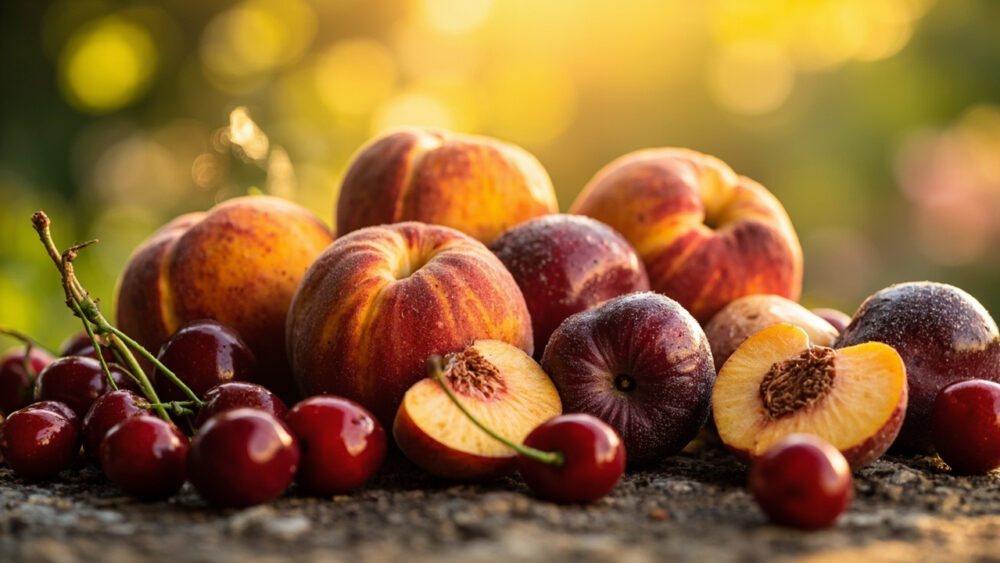
The fastest way to sort out types of stone fruits is by chill hours, the number of cold winter hours a tree needs before it will bloom and fruit properly. Get that number wrong for your climate and you get a tree that either never fruits or blooms so early a frost wipes it out. Everything else, flavor, size, freestone versus clingstone, is secondary once that box is checked.
Most people pick peaches for the wrong reason, they buy whatever nursery tree is blooming pink in the spring lineup without checking if it even wants their winters. Meanwhile experienced growers quietly load up on the type in slot 8, which nobody asks for by name but which outproduces everything else with almost no spraying.
Number 13 is the one most people get completely wrong, confusing it for a different fruit entirely until they taste it. Stick around, because the back half of this list and the actual method for choosing between all of them is waiting at the bottom.
Peaches and Nectarines: The Familiar Face of Stone Fruit
These are genetically almost identical, the only real difference is fuzz.
1. Freestone Peach
The pit lifts right out once the fruit is ripe, no cutting or wrestling required. Trees run 12 to 15 feet unless kept pruned to 8, need full sun, and want 750 to 950 chill hours, which puts them in zones 5 through 8. This is the type for fresh eating and baking, since clean flesh matters when you are slicing for a pie.
2. Clingstone Peach
The pit hangs on stubbornly to the flesh, which sounds like a flaw but actually means denser, sweeter fruit that holds together better in canning and jam. These ripen a bit earlier than freestones in most climates. If you can peaches every summer, this is the type worth planting even though grocery stores rarely carry it.
3. Nectarine
Smooth skin, no fuzz, otherwise this is a peach in every way that matters, same chill hour range, same size, same care. Nectarines are slightly more prone to brown rot in humid climates because that fuzz on a peach actually sheds moisture. Choose nectarines for eating fresh off the tree, not for a humid Southeast garden where fungal pressure is already a fight.
That fuzz distinction seems trivial until you are the one spraying for rot every June.
Plums: The Fruit With Two Different Personalities
European and Japanese plums behave almost like separate fruits, and mixing them up ruins a lot of first harvests.
4. European Plum
Firm, sweet, and often self-fertile, these are the plums that dry into prunes and the ones you want for baking, since the flesh holds its shape when heated. Trees are more cold hardy than Japanese types, tolerating zone 4 winters. Pick this type if you want reliable fruit from a single tree with no neighbor pollinator required.
3.5 skip
5. Japanese Plum
Juicier, softer, and earlier to ripen than European types, but almost none are self-fertile, so you need a second variety blooming at the same time nearby. These bruise easily and do not store long, which is exactly why you rarely see great ones at a store. Grow these if you have room for two trees and want the best fresh-eating plum flavor you can get.
6. Damson Plum
Small, tart, and almost never eaten raw, damsons exist for jam and preserves, with a sharp flavor that mellows completely once cooked with sugar. The trees are tough, cold hardy into zone 4, and tolerate poorer soil than dessert plums. This is the pick for someone who wants a low-fuss tree and actually makes preserves rather than eating fruit off the branch.
7. Pluot and Plumcot Hybrids
Bred from plum and apricot crosses, pluots lean mostly plum in texture with a sweetness that can beat both parents, while plumcots split closer to even. These need a compatible plum or another hybrid nearby for pollination and want a similar chill range to Japanese plums. Grow one if you already have plums for pollination and want a novelty fruit that actually earns a spot in the orchard rather than just being a gimmick.
The next category is the one most home orchards skip entirely, and it is a mistake.
Apricots and Cherries: Early Bloomers That Test Your Patience
Both fruit early in the season, which means both are frost gamblers in marginal climates.
8. Apricot
Blooms earlier than almost any other stone fruit, sometimes weeks before your last frost, which is exactly why it disappoints so many gardeners in unpredictable spring climates. Where it works, in zones 5 through 8 with reliably mild late winters, it is one of the most productive, low-spray trees you can own. This is the underrated pick, ignored because of frost risk but genuinely easier to grow than peaches once your climate cooperates.
9. Sweet Cherry
Needs long, warm summers to develop real sugar, and most varieties are not self-fertile, requiring a second tree blooming at the same time. Trees can reach 20 to 35 feet unless grown on dwarfing rootstock, and birds will take a serious share of your crop without netting. Choose sweet cherries if you have space, patience, and a plan for bird pressure, because none of those are optional.
10. Sour Cherry
Smaller, self-fertile, and far more cold hardy than sweet cherries, tolerating zone 4 winters without complaint. The fruit is too tart to eat off the tree for most people but excellent in pies, jam, and sauce. This is the practical choice for a single backyard tree, since it fruits reliably without a pollinator partner.
The next group covers fruits most gardeners have never actually grown on purpose.
Lesser-Grown Stone Fruits Worth a Second Look
These are stone fruits by definition but rarely by habit, and that is exactly their appeal.
11. Sour Cherry Plum, Cherry Plum
Also called myrobalan plum, this small, round fruit tastes like a plum wearing a cherry’s size, tart skin, sweet flesh. The tree is tough and often used as rootstock for grafting other plums, but the fruit itself is genuinely good fresh or in jam. Plant it if you want something unusual that neighbors will not recognize on sight.
12. Jujube, Chinese Date
Technically a stone fruit despite its wrinkled, date-like dried form, jujube is tough enough to handle drought, heat, and poor soil that would kill a peach tree outright. Fresh, it tastes closer to a crisp apple than a date, and that flavor only shows up once dried and shriveled. This is the pick for hot, dry climates where stone fruit otherwise struggles.
13. Umeboshi Plum, Ume
Confused constantly with regular plums despite being closer botanically to apricots, ume is almost never eaten raw because it is intensely sour and slightly astringent off the tree. It is grown specifically for pickling and for umeboshi and umeshu, and the tree itself blooms early with fragrant flowers before leaves even emerge. Grow this only if you plan to process the fruit, since eating it straight off the branch is genuinely unpleasant.
14. Beach Plum
A wild coastal native across the northeastern United States, beach plum tolerates sandy, salty, wind-battered soil that would stunt almost anything else on this list. The fruit is small and tart, used almost exclusively for jelly and preserves, and the shrub form stays compact at 4 to 6 feet. Choose it for a difficult coastal site where a standard fruit tree has no chance.
15. Almond
The one stone fruit grown for the pit, not the flesh, almonds are close botanical relatives of peaches, right down to the blossom. Trees need hot, dry summers and mild winters, zones 7 through 9 typically, with low humidity to avoid fungal problems on the nut hulls. This is the choice for a Mediterranean-style climate where peaches would otherwise struggle with rot.
How to Choose the Right One
Work through these in order, not by flavor first.
- Space: know your mature tree size and whether you need one tree or a pollinator pair before you fall for a variety online.
- Climate: match chill hours and frost timing to your zone, since an apricot in a late-frost pocket will bloom itself into failure every few years.
- Purpose: decide fresh eating, baking, canning, or drying first, because clingstone, freestone, and tart varieties are not interchangeable in the kitchen.
- Pollination: check whether the variety is self-fertile or needs a second tree blooming at the same time nearby.
- Care appetite: peaches and cherries want more spraying and pruning attention than plums, jujube, or sour cherries.
- Soil and site: sandy, salty, or drought-prone ground rules out the fussier types and points you toward jujube or beach plum instead.
Once you match chill hours and pollination needs to your actual yard, the flavor decision practically makes itself.
Plant for your climate first, and the harvest takes care of the rest.