Bloodgood Japanese maple care comes down to four things this tree will not compromise on: dappled or morning sun with afternoon shade in hot climates, soil that drains fast but never fully dries out, a deep infrequent watering routine instead of frequent shallow sips, and almost no pruning beyond removing dead or crossing branches in late winter. Get those right and Bloodgood is one of the toughest, most forgiving Japanese maple cultivars you can plant. Get the sun exposure or watering wrong and it will tell you fast, usually with scorched leaf edges by midsummer.
Most people kill or stunt a Bloodgood in the first year with one specific mistake, and it is not underwatering. It is planting it where afternoon sun in July hits those thin red leaves directly, which scorches them no matter how much water you give.
There is also a sign almost everyone misreads: leaves that fade from deep red to green in summer. That looks like a problem. It usually is not, and the real explanation is below.
Stick with me through the sections below and you will know exactly what this tree needs in every season, plus the honest fixes for the two or three problems that actually take Bloodgoods down. The full Bloodgood Japanese Maple at a Glance card is waiting at the bottom, saveable in ten seconds so you are not rereading this on your phone next spring.
Light, Placement, and Temperature
Bloodgood wants morning sun and afternoon shade in anything warmer than USDA zone 6b. In cooler zones (4 to 6) it can often handle more direct sun, even most of a full day, because the heat load is lower.
The mistake that ruins most attempts is planting it on the west or south side of a house or in an open bed with no afternoon relief. The result is leaf scorch, crispy brown edges that show up by July and do not recover that season.
Give it a spot with some high shade from taller trees, or east-facing exposure. Wind matters too. A Bloodgood in an exposed, windy spot dries out and browns faster than one tucked near a wall or fence.
Cold tolerance is solid down to about minus 20 F once established (zone 5), but young trees and container specimens need root protection their first couple of winters.
Placement decides half of this tree’s fate before you ever pick up a watering can.
Watering: How Much, How Often, and How to Tell
Water a newly planted Bloodgood two to three times a week for the first two months, then taper to once or twice weekly through its first full year as roots establish. Established trees in the ground usually need deep watering only during dry stretches, roughly once a week when there has been no rain and temperatures are high.
Skip the calendar and check the soil instead. Push a finger or a trowel 2 to 3 inches down. If it is dry at that depth, water deeply until it runs from the drainage holes (containers) or soaks the full root zone (ground plantings).
Container-grown Bloodgoods dry out much faster than ones in the ground, sometimes needing water every day or two in summer heat. Curled, crispy leaf edges mean it dried out too far between waterings. Yellowing lower leaves with soggy soil mean the opposite problem, roots sitting wet.
Consistent moisture matters more than volume, which is exactly why soil and drainage come next.
Soil, Potting Mix, and Feeding
Bloodgood needs soil that drains fast but holds a little moisture, slightly acidic to neutral, in the 5.5 to 6.5 pH range. Heavy clay that holds water around the roots is the number one soil killer for this tree.
If you are planting in the ground and your soil is dense clay, amend the planting area generously with compost or work with a raised bed or mound instead of fighting the native soil.
For containers, use a quality potting mix formulated for trees or shrubs, not straight garden soil, and make sure the pot has real drainage holes.
Feeding is light-touch. Apply a slow-release, balanced fertilizer formulated for trees or acid-loving plants once in early spring as buds break. Skip fertilizer entirely after midsummer, since late feeding pushes soft new growth that will not harden off before frost.
Get the soil right once at planting time and feeding becomes the easy part.
Pruning, Repotting, and Seasonal Cleanup
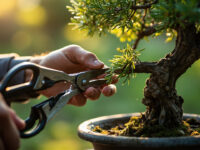
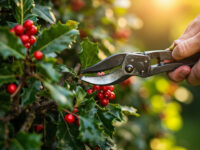
Prune a Bloodgood in late winter while it is still dormant, before the sap starts running, removing only dead, damaged, or crossing branches. This tree has a naturally attractive shape and heavy pruning usually does more harm than good.
Avoid pruning in spring once leaves have emerged; Japanese maples bleed sap heavily if cut during active growth, which stresses the tree.
Repot container specimens every two to three years, ideally in early spring before bud break, moving up one pot size and refreshing the soil. Established in-ground trees never need repotting, obviously, but do appreciate a fresh 2 to 3 inch layer of mulch each spring, kept a few inches back from the trunk.
Fall cleanup is simple: rake up fallen leaves to reduce overwintering fungal spores, especially if the tree has had leaf spot issues before.
That light pruning schedule is also your best defense against the pests and diseases coming up next.
Problems Most Likely to Strike, and the Honest Fixes
Leaf scorch is the most common issue, and it comes from too much direct afternoon sun, wind, or underwatering during heat, not from a disease. The fix is shade adjustment and consistent deep watering, not a spray.
Verticillium wilt is the serious one: sudden branch dieback, wilting on one side of the tree, sometimes staining under the bark. There is no reliable cure once it is established in a mature tree; remove and dispose of severely affected wood and avoid replanting another maple in that exact spot. A tree with early, mild symptoms sometimes stabilizes with good care, but be honest with yourself about the odds if dieback keeps spreading.
Aphids and scale show up as sticky residue or a black sooty mold on leaves. Insecticidal soap or horticultural oil, applied per the product label, handles most infestations.
Root rot from soggy soil looks like wilting despite wet ground, and the fix is drainage correction, not more water.
None of these are common enough to expect trouble every year, but knowing the signs early is what saves the tree.
How to Tell Your Bloodgood Is Actually Thriving
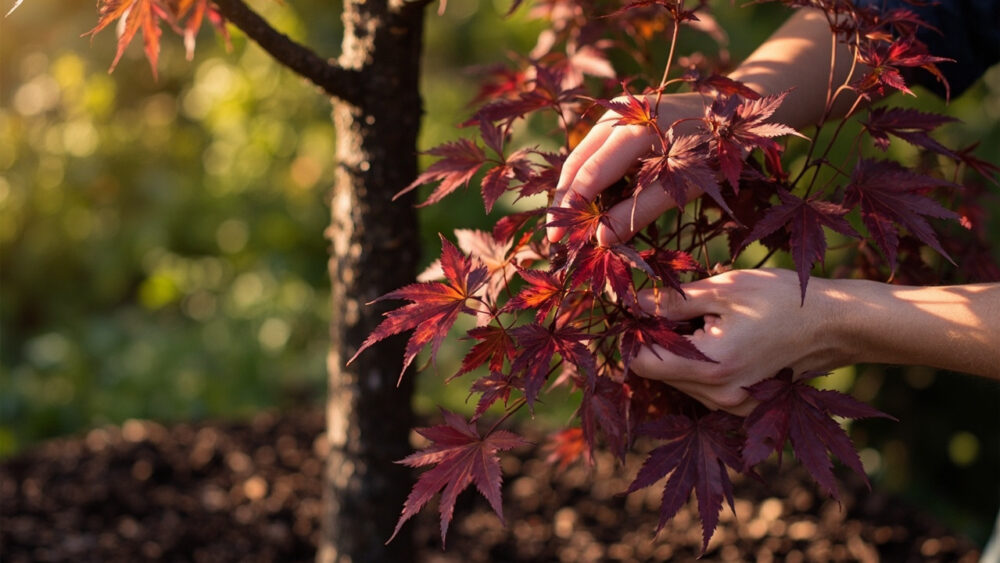
Now, the color question. A Bloodgood fading from deep red-purple to bronzy green over summer is normal, especially in more shade or in hot climates, and it is not a sign of stress by itself. Come fall, a healthy Bloodgood often flushes back to brilliant red before dropping leaves.
The real signs of a thriving tree are steady spring growth with leaves that unfurl fully and hold their shape, no widespread curling or browning at the edges through summer, and new stem growth of several inches or more each year on an establishing tree.
Bark should be smooth and free of cracking or oozing. Branch tips should be flexible and green or reddish inside when scratched lightly with a fingernail, not brittle and brown.
If your tree is doing those things, the color shift you were worried about was never the problem.
Bloodgood Japanese Maple at a Glance
- Light: morning sun with afternoon shade in hot climates, more sun tolerated in cooler zones 4 to 6.
- Watering: deep and consistent, roughly two to three times weekly when newly planted, weekly once established, checked by feeling soil 2 to 3 inches down.
- Soil: well-draining, slightly acidic, pH 5.5 to 6.5, amended with compost if planting in clay.
- Feeding: slow-release balanced or tree-formula fertilizer once in early spring only, none after midsummer.
- Pruning: late winter while dormant, dead and crossing branches only, never during spring sap flow.
- Hardiness: reliable to about minus 20 F (zone 5) once established, young trees need winter root protection.
- Watch for: leaf scorch from sun or wind, aphids and scale, verticillium wilt on older stressed trees.
Bloodgood forgives a lot, but not full afternoon sun and not soggy roots.
Get placement and drainage right at planting and this tree mostly takes care of itself for decades.