The window for planting pumpkins in Illinois runs from about May 20 through mid June for most of the state, and late May through the end of June if you garden in far southern Illinois. That timing works backward from your target harvest, not forward from spring fever. Pumpkins need 90 to 120 days depending on the variety, and you’re planting for a late September or October pumpkin, not a July one.
Here’s where most Illinois gardeners lose the season before it starts. They plant on the first warm weekend in May because the calendar says spring, then watch the seed rot in cold soil or the seedlings sit stunted for three weeks doing nothing. The mistake isn’t enthusiasm. It’s trusting the air temperature instead of the soil temperature, and not doing the one 10-second check that tells you the truth.
There’s also a harvest-math trap that catches people who plant right on time but pick the wrong week to do it, and a zone difference across Illinois that changes your answer by two to three weeks depending on where you live. Stick with me and you’ll get the exact window for your part of the state, the soil check that removes the guesswork, and the mistakes on both ends of the calendar that cost gardeners their whole crop. The save-able Pumpkins at a Glance card is at the bottom once you’ve got the reasoning behind it.
The Real Planting Window, Anchored to Frost and Soil
Illinois spans USDA zones 5b in the north to 6b in the deep south, and that spread matters more for pumpkins than most crops because you’re counting backward from a fall harvest date. Last frost dates run roughly early May in far southern Illinois, mid to late May around central Illinois and Chicagoland, and can push toward late May or even early June in the far north.
Pumpkin seed will not germinate reliably in cold soil. It wants soil at 65 to 70°F, and it will rot before it sprouts if the soil is sitting in the 50s. That usually lines up with 10 to 14 days after your last frost date, which for most of Illinois lands in the last week of May through the first half of June.
Work backward from your harvest target too. If you want pumpkins ready by mid October for carving, count back 90 to 120 days depending on the variety and land your planting date accordingly.
Your calendar gives you a range, but your soil gives you the real answer.
How to Find Your Actual Window, Not the Average One
Averages are a starting point, not a promise. Illinois weather swings hard from year to year, and a warm April can be followed by a cold, wet May that pushes everyone’s real window back by two weeks.
Check the soil yourself before you trust any date. Push a soil thermometer 3 to 4 inches deep in the morning, before the sun has warmed the top layer, for several days running. You want a consistent 65°F or warmer, not one lucky afternoon reading.
No thermometer? Grab a handful of soil from where you’ll plant. If it’s cool and holds together in a tight, cold ball, it’s not ready. If it’s warm to the touch and crumbles apart loosely, you’re close.
Also watch your local lilacs and peonies if you garden by feel. Full lilac bloom is a rough folk signal that soil has warmed enough for warm-season seed, and it tends to track soil temperature better than the calendar does.
Once your soil passes that test, the next question is what happens if you jump the gun anyway.
What Planting Too Early Actually Costs You
If you assumed planting early just means an earlier harvest, that guess is exactly backward and it’s the one that ruins the most pumpkin patches in Illinois. Cold soil does not slow pumpkins down gently. It stops them.
Seed sits in cold, wet ground and rots outright, or it germinates weakly into a seedling that never catches up to a plant sown two weeks later in warm soil.
A stunted early start also gets hit harder by squash bugs and cucumber beetles, which target weak transplants before they target vigorous ones. You end up replanting in early June anyway, except now you’ve lost time and seed for nothing.
An unexpected late frost is the other early-planting trap. Illinois can throw a frost after your average last-frost date more years than you’d think, and pumpkin seedlings have zero frost tolerance. One clear, calm night in the mid 30s and a stand of young pumpkins is gone.
Early isn’t the only way to lose this crop though.
What Planting Too Late Actually Costs You
Planting late doesn’t kill the plant. It kills the harvest, and it does it quietly enough that you won’t notice until October.
Pumpkins need their full 90 to 120 days to reach mature size and full orange color, and they need to finish that count before your first fall frost, which in Illinois typically arrives mid October in the north and late October to early November in the south. Plant past mid to late June in most of the state and you’re gambling on a warm fall to finish the job.
The visible sign of a too-late planting isn’t a dead plant, it’s vines loaded with green, rock-hard pumpkins in late September that never turn orange before frost blackens the leaves. Green pumpkins don’t ripen much once cut, unlike tomatoes.
Miniature and small-fruited varieties buy you the most flexibility if you’re planting later than you’d like, since some mature in as few as 85 to 90 days versus 110 to 120 for the big jack-o-lantern types.
Timing on both ends matters, but so does what you do with the ground before seed ever goes in it.
The Prep That Actually Determines Your Success
Pumpkins are heavy feeders and vine aggressively, so the bed you prepare matters as much as the date you plant. Work compost or aged manure into the planting area two to three weeks before you sow, at a couple inches worked into the top 8 to 10 inches of soil.
Pumpkins want full sun, at least 6 hours minimum, and soil that drains well since they’re prone to rot in soggy spots.
Space matters more than most new pumpkin growers expect. Standard vining varieties need 4 to 6 feet between plants and 8 to 12 feet between rows, or plant in hills spaced 6 to 8 feet apart with 2 to 3 seeds per hill, thinned to the strongest one or two seedlings.
Bush varieties are more forgiving, needing 3 to 4 feet of space.
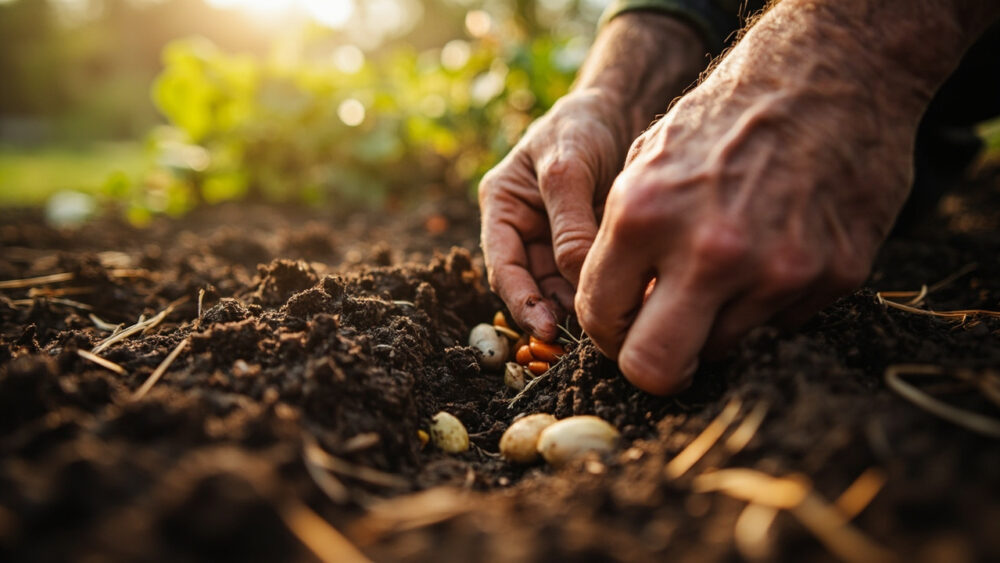
Plant seed 1 inch deep in heavier clay soils, up to 1.5 inches in sandy soil. Sow direct rather than transplanting when you can, since pumpkins resent root disturbance and transplants often stall for a week adjusting.
Get the bed right and the timing right, and the last variable left is exactly where in Illinois you’re standing.
Regional Notes: North, Central, and Southern Illinois
Northern Illinois, including the Chicago suburbs and up toward the Wisconsin border, sits in zone 5b, with last frost often mid to late May and first fall frost arriving by early to mid October. That’s a tighter window, so lean toward the earlier end of soil readiness and favor varieties in the 90 to 100 day range unless you’re confident in a long, warm fall.
Central Illinois zone 6a gives you more breathing room, with last frost typically early to mid May and first fall frost in mid to late October. Most standard pumpkin varieties fit comfortably here if planted by mid June.
Southern Illinois, zone 6b and warmer pockets near the Ohio River, has the longest season, with last frost sometimes in late April and first fall frost pushing into late October or early November. You can plant as late as late June here and still finish big varieties with room to spare.
Wherever you land in that map, the same checklist applies once you’re ready to plant.
Pumpkins at a Glance
- When to plant: late May through mid June across most of Illinois, late June possible in the southern third of the state.
- Soil temperature target: a consistent 65 to 70°F at 3 to 4 inches deep, checked over several mornings, not one warm afternoon.
- Frost timing: plant 10 to 14 days after your local last frost date, and never before, since pumpkin seedlings have no frost tolerance.
- Days to maturity: 90 to 120 days depending on variety, count backward from your target harvest and your area’s first fall frost.
- Spacing: 4 to 6 feet between vining plants, 8 to 12 feet between rows, or hills spaced 6 to 8 feet apart with 2 to 3 seeds thinned to the strongest seedling.
- Planting depth: 1 inch deep in clay soil, up to 1.5 inches in sandy soil.
- Zone notes: zone 5b in northern Illinois needs the tightest window and earlier varieties, zone 6a central Illinois has the widest margin, zone 6b southern Illinois allows the latest planting dates.
Get the soil temperature right and count backward from frost, and the rest of the season mostly takes care of itself. Everything else is just details, this part is the whole game.