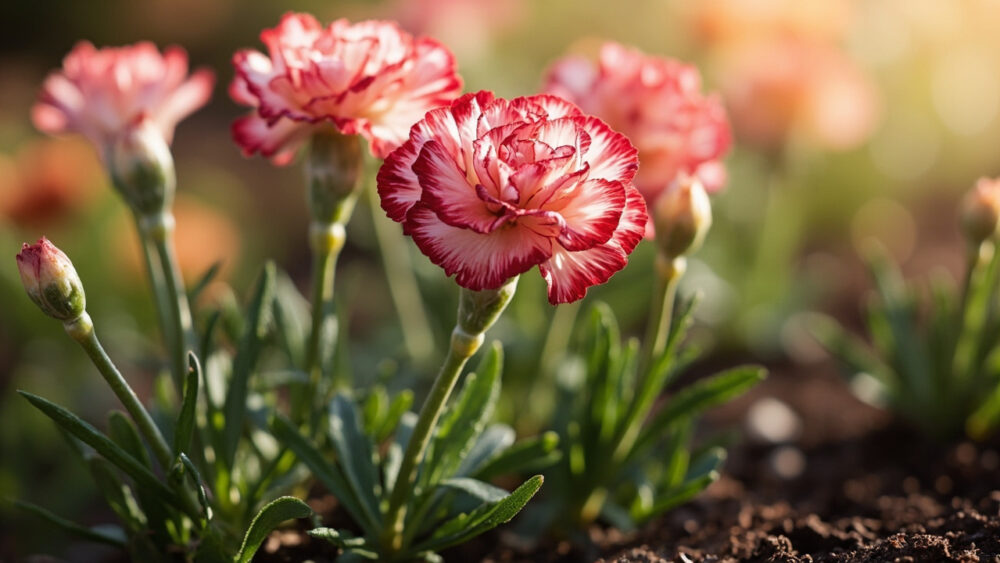
Yes, but only if your winters cooperate. Garden carnations (Dianthus caryophyllus and its close relatives) are perennial in USDA zones 6 through 9, meaning the same plant should green up again next spring. Below zone 6, most carnations die over winter and get replaced like annuals, whether you intended that or not.
So do carnations come back every year for you specifically? That depends on your zone, your drainage, and one mistake that kills more overwintering carnations than cold ever does. It also depends on whether you are growing florist-shop carnations or the tougher garden types, which is a mix-up that trips up a lot of first-time buyers.
Stick with me through the zone breakdown and the overwintering steps, and I will hand you a save-able quick-reference card at the bottom with the answer and every condition that changes it.
The Honest Answer, By Zone
Zone matters more than anything else you do. In zones 6 through 9, garden carnations are reliable short-lived perennials, typically coming back for two to four years before they get woody and need replacing anyway. In zone 5, they survive some winters and not others, depending on snow cover and drainage. In zone 4 and colder, treat them as annuals unless you dig and overwinter them indoors.
There is also a plant-identity problem hiding in this question. The carnations sold in grocery store bouquets are usually greenhouse-grown florist cultivars, bred for cut-flower stems, not for surviving a real winter. Garden center carnations sold in nursery pots for landscaping are a different, hardier story.
Knowing which one you actually have changes everything that follows.
What Actually Happens Over Winter
Above ground dies back, but the crown can survive. In hardy zones, the foliage goes gray-green to brown and the stems flop by the time you get a hard frost. That is normal, not a death sentence. The plant is pulling energy down into the crown and root system to ride out the cold.
What kills carnations over winter is almost never the cold itself. It is wet feet, soil that stays soggy through freeze-thaw cycles, which rots the crown before spring ever arrives. Carnations evolved in lean, fast-draining, almost gravelly soil, and they never stopped wanting that.
If your carnation bed holds water like a sponge after rain, that is the detail that decides next spring, not your thermometer.
How To Actually Get Yours To Return
Drainage first, cutback second, mulch third. If you want a hardy garden carnation back next year, do these three things before your ground freezes hard:
- Cut the plant back to about 2 to 3 inches of stem once foliage has browned, removing dead growth without cutting into the green crown.
- Skip watering unless it is bone dry, since carnations go semi-dormant and rot fast in cold, wet soil.
- Mulch with a loose material like straw or shredded leaves, 2 to 3 inches deep, laid after the ground starts to cool but before deep freeze.
- Pull that mulch back gradually in early spring once new green growth shows at the base, so the crown does not stay smothered and damp.
In pots, the rules get stricter. A container freezes through faster than garden soil, so a potted carnation in zone 6 behaves like it is a full zone colder. Move pots against a house foundation, into an unheated garage, or bury the whole pot in the ground for winter if you want it back.
Get the drainage and the timing right, and a two-year-old plant often outblooms the one you started with.
When Treating It As An Annual Is Honestly Smarter
Sometimes replanting beats babying a marginal plant. If you are in zone 5 or colder, or your soil is heavy clay that will not drain no matter what you amend, fighting for overwintering success is a real time cost for odds that are against you.
Buying fresh starts each spring gets you full, tidy plants and heavy bloom in the same season, without gambling a whole winter on a crown that might rot anyway. Many serious gardeners in colder zones do this on purpose, not because they failed at overwintering, but because annual treatment is simply the higher-return move for their climate.
There is no shame in that trade. A carnation grown as an annual still gives you a full flush of ruffled, clove-scented blooms from late spring into fall.
If that sounds like your situation, the quick-reference card below tells you exactly what to expect either way.
Reading Your Own Plant Right Now
Check the crown, not the leaves. If your carnation looks rough right now, gently brush back mulch or soil at the base and look at the crown, the thick woody point where stems meet roots. Firm and pale to greenish inside means it is alive. Black, mushy, or hollow means it is gone, and no amount of waiting brings it back.
A plant with a healthy crown but collapsed top growth is not dead, it is doing exactly what it should. Resist the urge to yank it in fall because it looks finished.
That single crown check tells you more than the calendar does, so use it before you write a plant off.
Carnations: Quick Reference
- Core answer: garden carnations are perennial in zones 6 through 9, typically returning for 2 to 4 years before needing replacement.
- Colder zones: in zone 5 they are borderline and unreliable, in zone 4 and below they generally die over winter and act as annuals.
- Florist carnations: grocery-store cut-flower carnations are usually tender greenhouse cultivars, not bred for winter survival outdoors.
- Real killer: soggy, poorly drained soil through freeze-thaw cycles kills carnations far more often than cold temperatures alone.
- Overwintering steps: cut back to 2 to 3 inches after foliage browns, stop regular watering, mulch 2 to 3 inches once soil starts cooling, then pull mulch back in spring.
- Pots need more help: container roots freeze faster than ground soil, so move or insulate pots, or sink them in the garden for winter.
- Check for life: a firm, pale to greenish crown means it survived, a black or mushy crown means it is done.
Give it drainage, a hard cutback, and a light mulch, and most hardy carnations will surprise you next spring.
If yours does not make it, that is not a failure, it is just the plant telling you which zone it actually wanted.