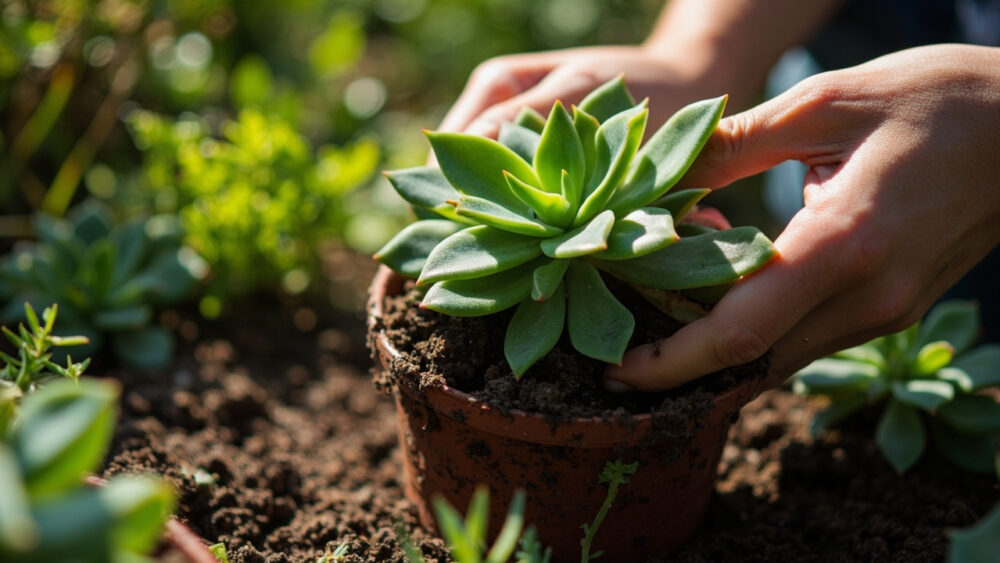
Stem cuttings rooted in dry succulent soil, not water, are what actually work for propagating string of dolphins. Snip a 3 to 4 inch section with at least three or four of those little “leaping dolphin” leaves, let the cut end dry for two to three days until it calluses, then lay or lightly bury it on top of barely damp cactus mix. Skip the water glass everyone recommends for pothos and you skip the rot that kills most attempts before they start.
Here’s what nobody tells you upfront: the cutting that looks the healthiest right after you take it is often the one that rots first, because a plump, fully hydrated stem has nowhere to send its energy while it waits to root. There’s also a specific week in this process where absolutely nothing visible happens and most people panic and start “helping,” which is exactly when they kill it. And the leaves themselves, those curved little dolphin shapes, drop off constantly during propagation for reasons that have nothing to do with failure, but almost everyone reads it as a death sentence and gives up too early.
Stick with this and you’ll get the full method, the week-by-week timeline so you know what’s normal, and the mistakes that quietly end most attempts. Save the String of Dolphins at a Glance card at the bottom to your phone before you head out to the plant, because you’ll want it while your hands are dirty.
Why Stem Cuttings Beat Water Propagation and Division
String of dolphins (Senecio peregrinus) is a succulent through and through, even though it trails like a vine. That matters because succulent stems store water in their tissue, and sitting one in a glass of water floods that tissue and invites bacterial rot within days. You’ll see the stem turn translucent and mushy at the base, and by the time you notice, it’s usually too far gone.
Dry-callused stem cuttings rooted directly in soil mimic how this plant roots in the wild, where a trailing stem touches dry, fast-draining ground and sends out roots only where it stays lightly moist, never wet. Division works too if your plant is big enough to have multiple rooted crowns, but most home plants are single trailing stems, so cuttings are the realistic option for almost everyone.
The method matters less than the discipline of staying dry, and that discipline starts with the cut itself.
Step by Step: Taking the Cutting and Getting It to Root
Take the cutting
Use clean, sharp scissors or a knife and cut a healthy stem into 3 to 4 inch sections. Each section should carry at least three or four dolphin leaves. Choose stems that are plump and green, not shriveled or yellowing, since a stressed stem has little reserve energy left to grow roots.
Let it callus
Set the cut pieces on a paper towel or dry tray somewhere out of direct sun for two to three days. You’re waiting for the cut end to seal over, dry and slightly leathery to the touch. Skipping this step is the fastest route to a rotted cutting, because an open, wet wound in damp soil is an invitation to bacteria.
Choose the medium
Use a fast-draining cactus or succulent mix, ideally with extra perlite or pumice mixed in. Regular potting soil holds too much moisture and stays wet for days after watering, which this plant cannot tolerate at the root zone while it’s trying to establish.
Set the cutting
Lay the callused stem horizontally on top of the soil, pressing it in just enough that it makes contact, or bury the bottom third to half an inch deep if you prefer a more upright look. Horizontal placement roots faster because more of the stem’s nodes touch soil at once.
Once it’s placed, the hardest part of this whole process begins: waiting without fussing.
Conditions That Actually Get Roots to Form
Bright, indirect light is what this plant wants during rooting, not direct sun, which will scorch a cutting that has no root system yet to support recovery. An east-facing windowsill or a spot a few feet back from a bright south or west window works well.
Warmth speeds rooting considerably. Aim for a room temperature in the 68 to 80°F range. Below 65°F, root growth slows to a crawl, which is why cuttings taken in cold winter rooms often sit for a month or more with no progress.
Water sparingly, a light misting every 5 to 7 days is enough to keep the soil barely damp, never soggy. If you can squeeze the top inch of soil and get moisture on your fingers, hold off watering.
Get the light and moisture right and the next question is simply how long you’ll be waiting.
The Timeline: What to Expect Week by Week
Roots don’t show up overnight, and knowing the honest timeline keeps you from digging up a cutting out of impatience, which resets the whole process.
- Week 1: Nothing visible happens above the soil. This is the callus finishing its seal and the stem adjusting, not a sign of failure.
- Week 2 to 3: Fine white roots begin forming under the soil, invisible unless you gently lift the cutting to check. Some leaves may yellow or drop during this stretch, which is normal stress shedding, not rot, as long as the stem itself stays firm.
- Week 4 to 6: A gentle tug on the stem meets slight resistance, meaning roots have anchored it. New leaf growth, tiny fresh dolphin shapes at the growing tip, is the clearest sign rooting succeeded.
- Week 6 to 8: The cutting is functioning as an independent plant, ready for normal watering and, soon, its own pot.
Once you see that new leaf growth, it’s time to think about where this cutting actually lives long-term.
Potting Up: When and How
Wait until you see clear new growth or feel real root resistance before transplanting, usually around the 6 to 8 week mark. Moving a cutting too early, before roots have anchored, is one of the quieter ways people lose progress, since a disturbed, unrooted stem often has to start the whole callusing process over.
Choose a shallow, wide pot rather than a deep one. This plant’s roots stay near the surface, and a too-deep pot holds excess moisture down where roots never reach, inviting rot from below.
Use the same fast-draining succulent mix you rooted it in. Water it in lightly once, then return to the same sparing watering schedule, letting the soil dry out most of the way between waterings once established.
Getting a plant potted up successfully means little if the mistakes below undo it, so it’s worth knowing exactly what they are.
Why Most Attempts Actually Fail
If you assumed the water-glass method was fine because it works for pothos and philodendron, that assumption is the single biggest reason string of dolphins cuttings rot. Succulent stems simply cannot handle prolonged submersion the way vining foliage plants can.
Overwatering during the rooting phase is the second-biggest killer. A cutting with no roots can’t take up water even if it wanted to, so excess moisture just sits against the stem and breeds rot. Underwatering barely ever kills a succulent cutting; overwatering does, constantly.
Skipping the callus step is third. An open wound set into damp soil is asking for bacterial infection before roots even have a chance to form.
Last, panicking at leaf drop leads people to pull cuttings up to “check,” disturbing whatever fragile roots have started. A few dropped leaves during propagation is normal shedding, not a verdict.
Avoid those four mistakes and this plant roots about as reliably as any succulent you’ll ever propagate.
String of Dolphins at a Glance
- Best method: stem cuttings, 3 to 4 inches long with three or four leaves, callused two to three days, then rooted in dry succulent mix.
- When to propagate: anytime indoors, but spring through early summer gives the fastest, most reliable rooting due to warmth and light.
- Rooting medium: fast-draining cactus or succulent mix, never plain potting soil, never water.
- Light and temperature: bright, indirect light and 68 to 80°F room temperature during rooting.
- Watering: light misting every 5 to 7 days, soil barely damp, never wet.
- Timeline: roots form around week 2 to 3, resistance and new growth by week 4 to 6, ready to pot up by week 6 to 8.
- Potting up: shallow, wide pot, same succulent mix, wait for visible new growth before moving.
Keep it dry, keep it patient, and this plant roots almost every time.
The leaf drop and the quiet week are both normal, not failure.