The fastest way to sort out types of compost is to ask what went into the pile before you ask what it’s called. Manure-based, plant-based, and municipal composts behave completely differently in soil, and mixing that up is the single biggest reason people either burn their seedlings or wonder why nothing improved.
Most beginners grab whatever bag says “compost” on the front and figure that settles it. It usually does not, and the popular bagged stuff is often the weakest option for the job people actually want it for.
Below you will find all 15 sorted into groups that actually matter: what they’re made from, how they’re processed, and what they do in the ground. Number 13 is the one most gardeners misuse without realizing it, and the full how-to-choose method, plus the compost experienced growers quietly reach for first, is waiting at the bottom.
Manure-Based Composts
These come from animal bedding and waste, and they run hotter in nitrogen than almost anything plant-based.
1. Cow Manure Compost
Mild and balanced is the reputation, and it’s earned. Aged cow manure compost has a gentle nutrient load, feeds soil life steadily, and rarely burns plants even applied generously, which makes it the standby for vegetable beds and new lawns.
2. Horse Manure Compost
Weedy if rushed is the honest warning here. Horses don’t fully digest grass and grain seed, so compost from horse bedding needs a long, hot cure or you’ll be weeding sprouted oats and grass all summer; done right, it’s light, fluffy, and excellent for breaking up heavy clay.
3. Chicken Manure Compost
Hot and fast-acting describes both its nitrogen punch and the reason it needs real aging before use. Fresh chicken manure will scorch roots, but composted and mellowed it becomes one of the strongest natural nitrogen sources available, ideal for leafy greens and heavy feeders like corn.
4. Rabbit Manure Compost
Gentle enough to skip the wait sets rabbit droppings apart from other manures. It’s cool enough to apply with little aging, moderate in nitrogen, and a favorite among gardeners with backyard rabbits who want a low-drama soil amendment straight from the hutch.
Manures are the powerhouses, but plant-based composts are what most gardens run on day to day.
Plant-Based and Yard Composts
Made from leaves, grass, food scraps, and garden trimmings, these are the composts most people build themselves.
5. Leaf Mold
Made from nothing but leaves and time, leaf mold is not technically compost in the fast-breakdown sense, it’s slow fungal decay that takes one to two years. The payoff is a crumbly, water-holding amendment that’s unmatched for improving soil structure, though it adds almost no nutrients.
6. Grass Clipping Compost
Fast and nitrogen-richfresh grass clippings break down quickly on their own, but piled too thick and wet they turn into a slimy, smelly mat. Mixed with dry brown material at roughly equal volume, they compost in weeks and give a solid nitrogen boost.
7. Kitchen Scrap Compost
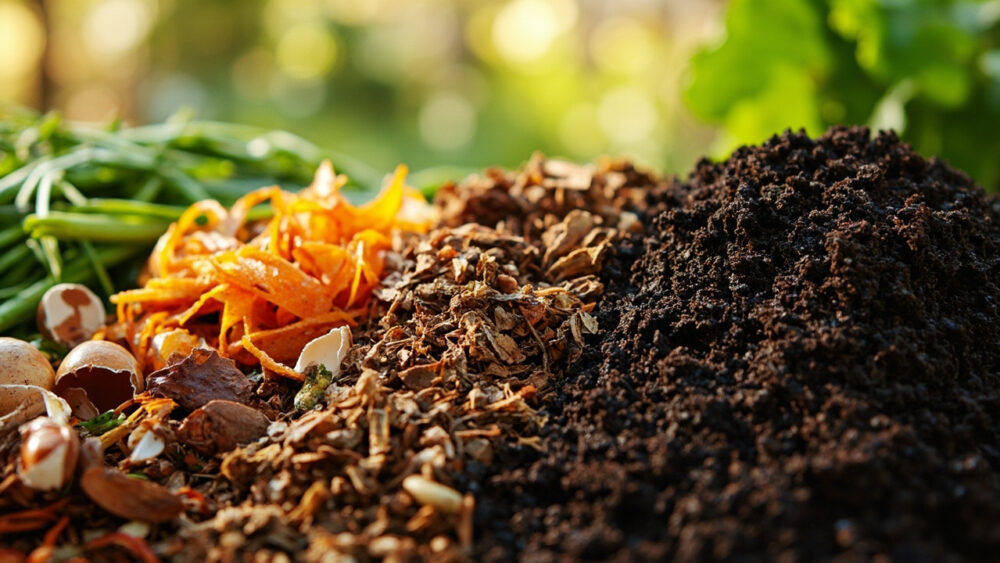
The everyday backyard bin most people picture when they hear “compost.” A mix of vegetable peels, coffee grounds, and eggshells balanced with dry leaves or shredded paper, it’s moderate in nutrients and the most accessible way to close the loop on household waste.
8. Municipal Yard Waste Compost
Convenient but inconsistent is the tradeoff with city-collected compost made from residents’ leaves, brush, and grass. It’s cheap or free in many towns and fine for soil building in bulk, but batch quality varies and it can carry stray herbicide residue if contaminated feedstock got mixed in.
Plant-based piles are the workhorses, but a few specialty composts do jobs the basics simply can’t.
Specialty and Manufactured Composts
These are built with a specific soil problem in mind, not general fertility.
9. Mushroom Compost
A byproduct with a second lifemushroom compost is the spent substrate left over from commercial mushroom farming, usually straw, manure, and gypsum broken down together. It’s alkaline-leaning and salty when fresh, so it suits vegetable beds better than acid-loving plants like blueberries or azaleas, and it should be labeled and identified by its supplier, not foraged or guessed at, since this list is about garden amendments, not wild mushroom identification for eating.
10. Worm Castings (Vermicompost)
The concentrated option that punches above its weight. Produced by feeding food scraps to red wiggler worms, castings are gentle enough to use directly on seedlings, rich in beneficial microbes, and typically applied in small amounts mixed into potting soil rather than spread by the wheelbarrow.
11. Bokashi Compost
Fermented, not decomposedis what makes bokashi different from every other entry here. Kitchen scraps are pickled in an airtight bin with an inoculated bran, which lets you compost meat and dairy that would rot in an open pile, but the result is pre-compost that still needs a few weeks buried in soil or added to a regular pile to finish breaking down.
12. Biochar-Blended Compost
Built for the long haulthis blends regular compost with charred, porous biochar that doesn’t break down for decades. It boosts water retention and gives soil microbes permanent housing, making it a favorite for improving sandy or depleted soil that needs structure more than a quick nutrient hit.
13. Sphagnum Peat-Based “Compost”
This is the one most people get wrong. Peat is not really compost at allit’s harvested, partially decayed moss with almost no nutrients and no microbial life to speak of. Gardeners buy it thinking it feeds soil the way manure or leaf mold does, when its real job is holding moisture and lowering pH, and it should be paired with an actual compost or fertilizer, not used as a stand-in for one.
Two more entries left, and they cover the ends of the spectrum: the slowest compost you can make and the fastest.
Compost by Speed and Scale
The last pair separates gardeners by how much patience and space they’ve got.
14. Cold Compost (Passive Pile)
Slow, low-effort, and forgivinga cold pile is just yard and kitchen scraps left to break down on their own timeline, no turning, no temperature checks. It takes six months to two years depending on climate and material, and it won’t reliably kill weed seeds or pathogens, but it asks almost nothing of the gardener in return.
15. Hot Compost (Thermophilic Pile)
Fast because you work ita properly built hot pile hits 130 to 160°F at its core, breaks down in as little as four to eight weeks, and kills most weed seeds and disease pathogens in the process. It demands the right carbon-to-nitrogen ratio, regular turning, and consistent moisture, which is exactly why experienced gardeners who want finished compost fast build these instead of waiting on a cold pile.
How to Choose the Right One
Match the compost to the job, not the bag that looked biggest at the store.
- Space: tight yard or balcony, go with worm castings or bagged bokashi finish; full yard, cold or hot piles and leaf mold become realistic.
- Climate: hot, dry regions lose moisture fast, so biochar-blended or peat-boosted mixes help retention. Wet climates need well-drained compost like aged manure to avoid waterlogging.
- Purpose: feeding hungry vegetables calls for chicken or cow manure compost. Building long-term soil structure calls for leaf mold or biochar blends. Seedlings and containers want worm castings.
- Time on hand: need finished compost in weeks, build a hot pile. Happy to wait months with no work, run it cold.
- Care appetite: if you don’t want to turn a pile or check a thermometer, buy finished bagged compost or run bokashi and let a regular pile absorb it.
- Soil test first: if your soil already runs alkaline or salty, skip mushroom compost. If it’s acidic and sandy, peat or biochar blends will do more good than manure alone.
Pick by the job first and the ingredient second, and almost any compost on this list will earn its place in your soil.