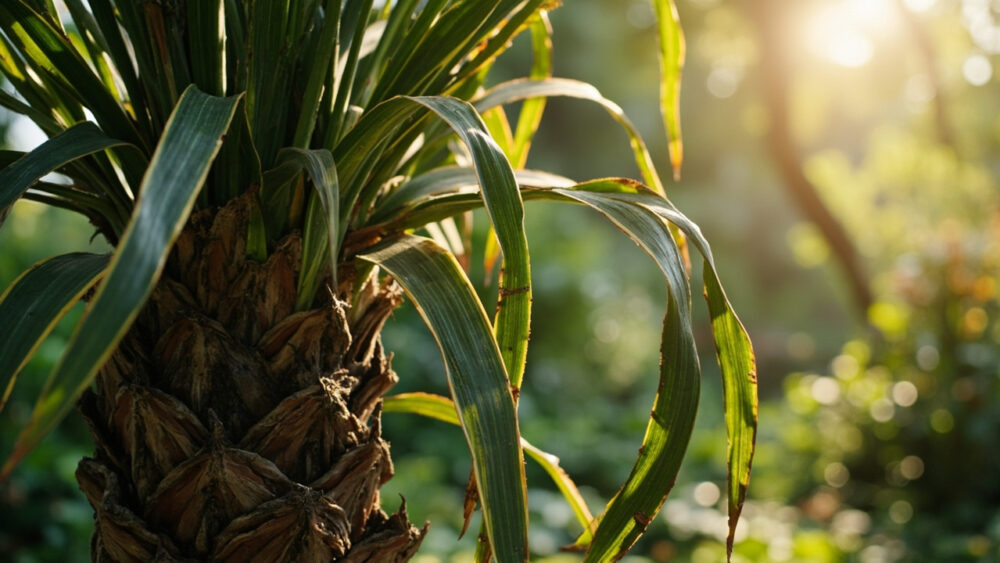
A drooping ponytail palm almost always means overwatering, full stop. This plant stores water in that bulbous base (called a caudex) specifically so its roots can stay dry, and when the soil stays wet, those roots suffocate and stop feeding the leaves, so the whole head goes limp and floppy instead of standing up straight and curling like a fountain.
Here is the part that trips people up: everyone blames underwatering first because “drooping” sounds thirsty. With a ponytail palm drooping is almost always the opposite problem, and reaching for the watering can is the single mistake that finishes off a palm that was already struggling.
There is one detail on the plant right now that tells you exactly which cause you’re dealing with, and it’s not the leaves, it’s the caudex. Stick with this and you’ll know within two minutes whether your plant is fixable or already too far gone.
The full diagnosis checklist is at the bottom, save-able so you can run it at the plant without scrolling back through everything.
Causes of a Drooping Ponytail Palm, Most to Least Likely
1. Overwatering and Root Rot
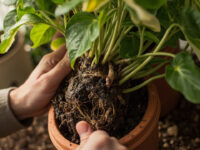
Confirm it: squeeze the caudex low near the soil line. If it feels soft, spongy, or gives under light pressure instead of feeling hard like a coconut, and the soil has stayed damp for more than a week, this is your cause. Pull the plant if you can and look for brown, mushy roots with a sour smell instead of firm white or tan ones.
Fix it: stop watering immediately. Unpot, trim away any black or mushy roots with clean scissors, let the remaining roots air dry for a few hours, and repot into fresh, fast-draining cactus or succulent mix. Do not water again until the soil is bone dry at least two inches down.
But a soft caudex isn’t the only shape trouble takes.
2. Underwatering, Usually After Neglect for Months
Confirm it: the caudex feels hard, but shrunken, wrinkled, or slightly deflated compared to its normal round shape, almost like a grape turning into a raisin. Soil has likely been dry for many weeks, not days.
Fix it: water thoroughly until it runs from the drainage holes, then let the top two to three inches dry out before watering again. The caudex should plump back up over several weeks as it rehydrates.
That’s the true thirsty version, and it’s less common than people assume.
3. Low Light
Confirm it: the plant has been in a dim corner or more than a few feet from any window, growth looks stretched or pale, and leaves droop evenly all around rather than on one side.
Fix it: move it to bright, direct or strong indirect light, ideally a south or west-facing window. Do this gradually over a week or two if the plant has been in low light a long time, to avoid leaf scorch.
Light problems are slow to show and slow to fix, but they’re easy to fix once you spot them.
4. Cold Drafts or Temperature Shock
Confirm it: drooping appeared suddenly within a day or two of a cold front, an open door, an air conditioner vent, or a recent move near a drafty window. Leaves may look limp but not discolored yet.
Fix it: relocate away from drafts and vents, keep it above roughly 50°F, and give it a few days. Sudden temperature drops stress the plant without necessarily killing tissue.
If the timing lines up with weather or a move, this one resolves faster than almost any other cause.
5. Rootbound or Undersized Pot
Confirm it: the plant has been in the same small pot for two or more years, water runs straight through without soaking in, and roots are visible circling at the drainage holes or pushing up through the soil surface.
Fix it: repot into a container just one to two inches larger in diameter, using fresh cactus mix, and only water once new growth confirms the roots are functioning again.
A cramped pot causes slow decline, which brings up how to tell these apart when more than one looks possible.
How to Tell the Causes Apart
Start with the caudex, not the leaves. Soft and squishy points to rot from overwatering. Hard but shriveled points to drought. Hard and firm with drooping only in the leaves points to light, temperature, or roots.
Check where the droop started. Overwatering and rot tend to affect the whole crown evenly and often bring yellowing lower leaves first. Cold drafts cause sudden, one-sided or partial drooping near the affected side of the plant.
Old leaves browning at the tips with new growth still upright usually means normal aging or mild underwatering, not an emergency. All leaves collapsing together, old and new alike, points to a root problem.
Once you’ve matched the pattern, the next question is the one everyone really wants answered.
Will It Recover?
Overwatering caught early, before rot has spread past the outer roots, recovers well once repotted into dry soil, usually within four to six weeks of new firm growth. If the caudex has gone soft more than halfway up, or the smell is strong and sour, the plant is often past saving and it’s honest to call that one a loss rather than keep nursing it.
Underwatered plants almost always bounce back fully within a few weeks of consistent, correctly-spaced watering.
Low light and temperature stress resolve well and quickly once conditions improve, though any leaves that already yellowed or browned won’t turn green again. New growth will look normal.
Rootbound plants recover steadily after repotting but slowly, since the plant has to rebuild a root system before top growth responds.
Knowing the odds is useful, but preventing a repeat is more useful.
How to Keep It From Happening Again
Water on a schedule tied to the soil, not the calendar. Check two inches down with a finger or a moisture meter, and only water when it’s fully dry there. Most ponytail palms in average indoor light need water only every two to three weeks, less in winter.
Always use a pot with drainage holes and a fast-draining cactus or succulent mix. Regular potting soil holds too much water for this plant’s roots.
Give it the brightest spot you have. This plant wants strong light, and weak light makes every other problem worse and slower to notice.
Keep it away from cold windowsills in winter and away from direct AC or heater airflow year-round.
Now here’s the two-minute version to run at the plant right now.
Diagnosis Checklist
- Squeeze the caudex low near the base: if soft or spongy, suspect overwatering and rot, stop watering now.
- If the caudex is hard but shriveled or wrinkled, suspect underwatering, water thoroughly and recheck soil in two weeks.
- Check soil moisture two inches down: if wet and caudex is firm, ease off watering and watch for improvement.
- If soil is dry and caudex is firm, rule out water and check light: is it within a few feet of a bright window.
- If drooping started suddenly within a day or two, check for cold drafts, open doors, or a recent move.
- Lift the pot: if roots circle the drainage holes or push through the surface, plan a repot one to two inches larger.
- If roots pulled from the pot are brown, mushy, and smell sour, trim them back and repot into dry, fresh cactus mix immediately.
- Mark today’s date and recheck the caudex firmness in three to four weeks to confirm recovery is underway.
Most drooping ponytail palms are telling you they got too much love in the form of water, not too little.
Fix the roots first, get the light right, and this plant will stand back up on its own timeline.