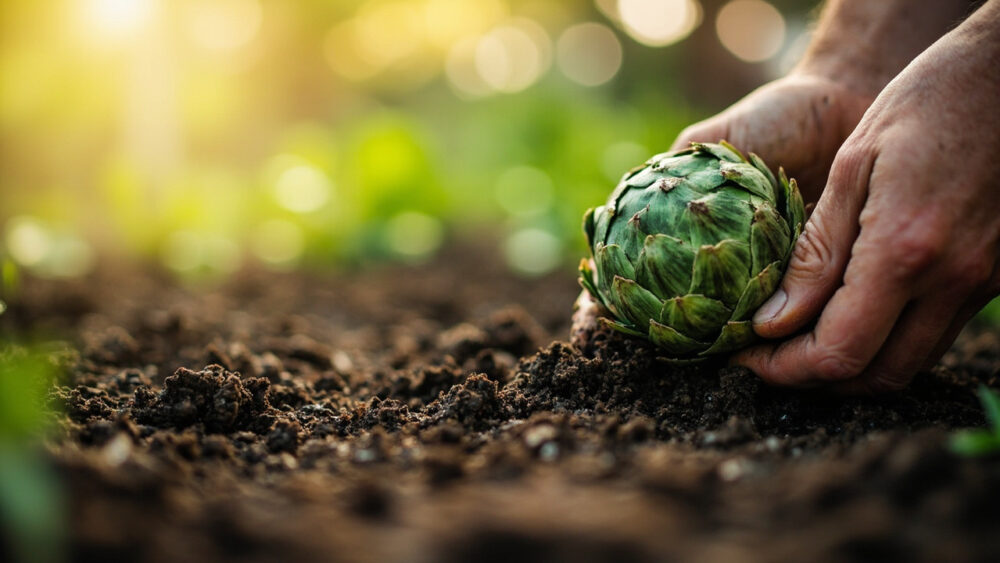
The real window for planting artichokes is 2 to 4 weeks before your last expected spring frost, once soil has warmed past 45°F, and only after the plants (or seedlings) have already gone through a cold snap of about 10 days below 50°F to trigger budding. That last part is the piece almost nobody tells you, and it’s the reason so many artichoke plants grow huge and beautiful and never make a single bud. Skip the cold exposure and you get a gorgeous thistle-leaved houseplant, not dinner.
Most of what goes wrong with artichokes isn’t the planting date itself. It’s misreading what “planting window” even means for a plant that needs to think it survived a winter before it will flower.
Stick around for the mistake that wastes an entire growing season, how to tell your actual window from your own soil and calendar instead of a seed packet’s guess, and the at-a-glance card at the bottom you’ll want saved to your phone before you touch a trowel.
The Actual Planting Window, Anchored to Frost and Soil
Artichokes are perennials in USDA zones 7 through 11, grown as annuals everywhere colder. Either way, the planting window is the same logic: get transplants into the ground 2 to 4 weeks before your last spring frost date, once soil temperature at a 2 inch depth reads consistently above 45°F.
If you’re starting from seed indoors, back up 8 to 10 weeks before that transplant date. Seedlings need to be a sturdy 4 to 6 inches tall with a few true leaves before they go outside.
In mild-winter regions (zone 7 and up), fall planting works too, letting roots establish over a cool, wet winter for an earlier, bigger harvest the following spring.
None of this matters yet, though, if the plant never got cold enough to know it survived something.
The Vernalization Trap Everyone Walks Into
Here’s the mistake that ruins the most attempts, and it isn’t planting too early or too late by the calendar. It’s skipping vernalization entirely.
Artichokes bud in response to a cold period, typically 10 to 14 days of temperatures between 32°F and 50°F, experienced while the plant is young and actively growing. Without it, the plant puts all its energy into leaves and never sets a bud.
If you assumed a healthy, leafy artichoke plant will eventually flower on its own, that assumption is exactly what leaves gardeners with a beautiful ornamental and zero artichokes by fall. Size has nothing to do with it.
In cold-winter climates, this happens naturally if you set transplants out a few weeks before last frost, while nights are still chilly. In mild climates, you may need to manufacture it, chilling young seedlings in a garage or cold frame at 35°F to 50°F for two weeks before transplanting.
Get the chill right, and the real question becomes how to know your yard’s specific window.
Finding Your Actual Window, Not the Packet’s Guess
Seed packets and big-box tags print a generic date range that assumes nothing about your yard. Your real window is set by three things you can check yourself.
- Soil temperature: push a soil thermometer 2 inches down; you want a steady 45°F to 50°F, not just one warm afternoon.
- Frost calendar: know your average last frost date, then count back 2 to 4 weeks for transplant timing.
- Overnight lows: artichoke transplants tolerate light frost down to about 28°F for short spells, but a hard freeze after transplanting can still kill young plants outright.
The honest answer to the question you’re probably about to ask: yes, you can plant a bit before your last frost date on purpose, because that cool exposure is doing double duty as vernalization. That’s the intended overlap, not a risk you’re taking blind.
Once your soil and frost numbers line up, the next honest question is what happens if you miss the window on either side.
Too Early, Too Late: What Each Mistake Actually Costs You
Planting too early, into cold, wet soil below 40°F, doesn’t kill artichokes outright most of the time. It stalls root growth, invites rot in soggy ground, and can expose young plants to a hard freeze they can’t handle if a late cold snap comes through.
Planting too late is the quieter, more common failure. Miss the cool window and skip vernalization, and you get that leafy, budless plant described earlier. You can still harvest baby artichokes in a mild climate the following year if the plant survives winter, but in a single annual season in a cold climate, a late planting often means no harvest at all.
There’s no fully recovering a missed vernalization window in the same season. You can chill the plant artificially later, but by then you’ve usually lost too much of the growing season to still get buds before fall frost shuts things down.
That’s why the prep work before the window even opens matters more with artichokes than with almost any other vegetable.
What to Do Before the Window Opens
Artichokes are heavy feeders with deep roots, and they’ll sit in the same spot for months, so bed prep pays off more than with a quick crop like lettuce.
Start 3 to 4 weeks ahead by working 2 to 3 inches of aged compost into the top 8 to 10 inches of soil. Artichokes want rich, well-drained soil with a pH around 6.5 to 7.5; heavy clay that stays soggy is the top reason for rot in young plants.
Pick a spot with full sun, at least 6 hours daily, and space plants 3 to 4 feet apart, they get genuinely large, 3 to 4 feet across at maturity. Crowd them and you’ll fight for airflow and invite fungal problems later.
If you’re vernalizing seedlings yourself, start that cold treatment 2 weeks before your planned transplant date, timed to finish right as soil hits 45°F.
With soil and timing both ready, the last variable is simply where you garden.
Zone and Region Notes That Actually Change the Plan
In zones 7 through 11, treat artichokes as perennials. Plant in early spring or fall, and in the mildest zones (9 to 11) a fall planting often outperforms spring because roots establish through a cool wet winter.
In zones 3 through 6, artichokes are grown as annuals. Start seed indoors 8 to 10 weeks before last frost, vernalize seedlings deliberately if your spring isn’t cold enough on its own, and transplant 2 to 3 weeks before last frost for a harvest by late summer to early fall.
Hot, humid summer regions add a second problem: artichokes stall and can turn bitter once temperatures push past 85°F for long stretches, so in the South, an earlier spring start or a fall planting to overwinter under mulch often beats fighting a brutal summer.
Wherever you garden, the numbers you actually need to act on are worth having in one place.
Artichokes at a Glance
- When to plant: transplants go out 2 to 4 weeks before your last spring frost, once soil hits 45°F to 50°F at 2 inches deep.
- Seed starting: start indoors 8 to 10 weeks before your planned transplant date.
- Vernalization: young plants need 10 to 14 days between 32°F and 50°F before or right after transplanting, or they won’t bud.
- Spacing and depth: space 3 to 4 feet apart, set transplants at the same depth they were growing in their pot.
- Soil needs: rich, well-drained soil, pH 6.5 to 7.5, amended with 2 to 3 inches of compost before planting.
- Zone habit: perennial in zones 7 to 11, grown as an annual in zones 3 to 6.
- Sun and heat: full sun, at least 6 hours daily, but growth stalls and quality drops once temperatures stay above 85°F.
Get the cold exposure right and the rest of artichoke growing is patience.
Rush the chill or skip it, and no planting date will save the harvest.