Alocasia light requirements come down to one rule: bright, indirect light for most of the day, with a couple hours of gentle direct sun tolerated in the morning or late afternoon. Too little light and the plant stalls out, growing small, dull leaves spaced far apart on the stem. Too much unfiltered midday sun and you get bleached, papery patches that never turn green again.
Most people get this wrong in one of two directions, and both feel reasonable at the time. Some shove the plant into a dim corner because alocasia has a reputation as a “shade plant,” and it slowly starves. Others read that it needs bright light and put it directly in a south window, where it scorches within a week.
There is also a sign almost everyone misreads, and it is not the leaf color you think it is. Stick with me here, because the real light fix rarely means buying a grow light or moving to a sunroom, and the at-a-glance card at the bottom will give you the numbers to save to your phone before you walk away from the plant.
How Much Light Alocasia Actually Needs
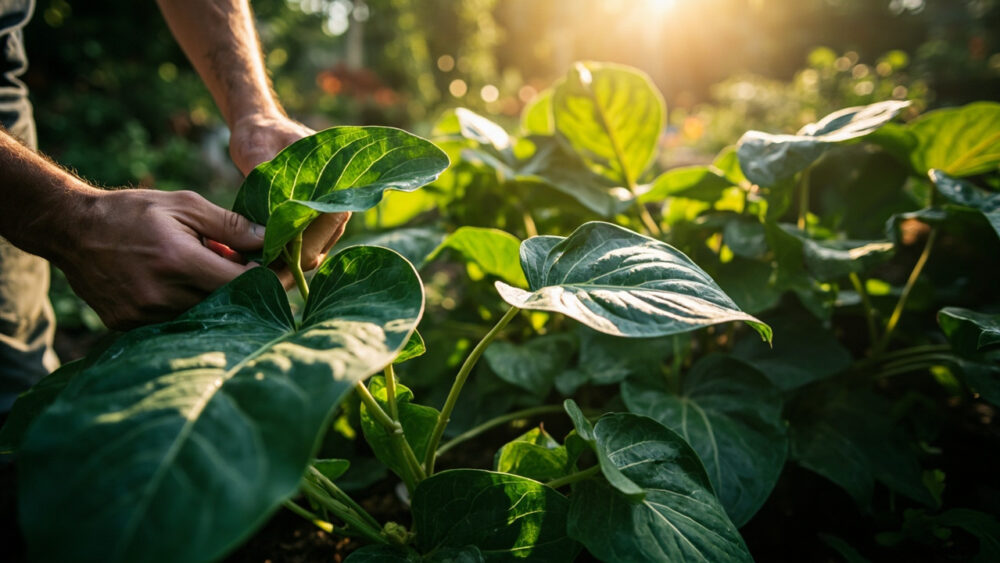
Alocasia wants bright, indirect light for six to eight hours a day. In the wild, most species grow under the broken canopy of larger trees, catching filtered light and occasional flecks of direct sun, not full open sky. That is the light quality you are trying to recreate indoors or on a patio.
Weak, indirect light on its own is not enough long term. A spot that feels “bright” to your eyes but is actually low light, like a room lit only by a north window ten feet away, will keep an alocasia alive for a while but never let it push the big, dramatic leaves it is known for.
The plant does not want dim shade and does not want harsh sun. It wants the middle, held steady most of the day.
What the Right Spot Actually Looks Like
An east-facing window is close to ideal. It gives a few hours of gentle direct morning sun followed by bright indirect light the rest of the day, and alocasia leaves handle that morning sun far better than hot afternoon rays.
A south or west window can work too, but only with distance or a sheer curtain between the plant and the glass. Three to six feet back from an unobstructed south window is usually the sweet spot; right up against the glass at midday is where scorch happens.
Outdoors, think dappled shade under a tree canopy or the bright side of a covered porch, never full open sun in a Southern exposure past late morning. If you can read a book comfortably in the spot without needing a lamp, but you are not squinting from glare, that is roughly the light level alocasia wants.
Get the spot right and the next question is how to read the plant’s own reaction to it.
The Sign of Too Little Light Everyone Ignores
If you assumed yellow leaves mean the plant needs more water, that guess sends a lot of alocasias to a worse spot instead of a better one. Yellowing is usually a watering or root problem, not a light problem.
Low light shows up differently and more quietly. New leaves come in smaller than the ones before them, growth slows to a crawl, and the stems stretch out with more space between each leaf as the plant reaches for something brighter. The leaf color often stays a perfectly healthy green, which is exactly why people miss it.
By the time you notice the plant “hasn’t grown in months,” it has usually been under-lit for a while. Move it closer to a window, or rotate it into a brighter room, and new growth should start catching up within a few weeks.
Too little light is slow and sneaky, but too much light announces itself fast.
The Sign of Too Much Light, and the One Nobody Expects
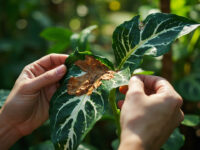
Classic sunburn is easy to spot: bleached tan or white patches, often crispy at the edges, usually on the side of the leaf facing the window. That damage is permanent on that leaf, though new growth will be fine once you move the plant.
Here is the part almost nobody expects. A washed-out, faded green leaf, not brown or crispy, just pale and less vivid than it should be, is also a light problem, not a nutrient deficiency. People reach for fertilizer when the real fix is simply pulling the plant back from the glass.
Alocasia leaves are genuinely dark and glossy when the light is right. Fading toward a washed-out olive tone, especially on the sun-facing side, means it is time to back off the intensity a notch.
Once you know what too much and too little look like, the next problem is that the right amount changes with the seasons.
Why the Same Window Stops Working in Winter
Light intensity through a window drops sharply from late fall through winter, even though the plant is sitting in the exact same spot. A window that was perfectly bright and indirect in July can be genuinely dim by December, especially at northern latitudes.
Most alocasia varieties also slow down or go semi-dormant in winter, dropping a leaf or two and pausing new growth, which is normal and not a light emergency by itself. But if it is losing leaves faster than it replaces them, or the newest leaf is noticeably smaller than the one before it, the plant needs more light, not more water or fertilizer.
The fix is usually seasonal repositioning: move it to a south or west window for winter, then pull it back toward an east window or add sheer curtain distance once spring sun returns and intensity climbs again.
If moving the plant around the house every season is not realistic for your setup, there are simpler fixes than you think.
Fixes That Do Not Require a Greenhouse
You do not need a conservatory to get this right. A few practical adjustments cover almost every real-world room.
- Sheer curtain: hang one between the plant and a south or west window to cut intensity without losing brightness.
- Distance, not darkness: pulling a pot two to four feet back from hot glass often solves scorch completely.
- Rotate the pot: a quarter turn every week or two keeps growth even instead of leaning hard toward one light source.
- Add a simple grow light: a basic LED grow light on a timer for 10 to 12 hours covers a genuinely dim room or a windowless corner.
- Reflective surfaces: a light-colored wall or a mirror near the plant bounces extra usable light into a middling spot without any new equipment.
Small adjustments like these usually solve the problem faster than buying new furniture or moving house.
With the light dialed in, here is everything worth keeping for next time you’re standing in front of the plant deciding where it goes.
Alocasia at a Glance
- Ideal light: bright, indirect light for six to eight hours daily, with light morning sun tolerated.
- Best window: east-facing directly, or south or west facing with three to six feet of distance or a sheer curtain.
- Too little light looks like: smaller new leaves, long gaps between leaves on the stem, growth that stalls for months.
- Too much light looks like: bleached or crispy tan patches, or a washed-out, faded green leaf color.
- Seasonal shift: move toward a brighter south or west window in winter, then back or add shade in spring and summer.
- No good window fix: a basic LED grow light for 10 to 12 hours a day, on a timer.
- Quick check: if you can read comfortably in the spot without a lamp but aren’t squinting from glare, the light is close to right.
Get the light in that range and most of alocasia’s reputation for being fussy disappears. Everything else, watering, humidity, feeding, gets far more forgiving once the leaves are getting what they actually need.