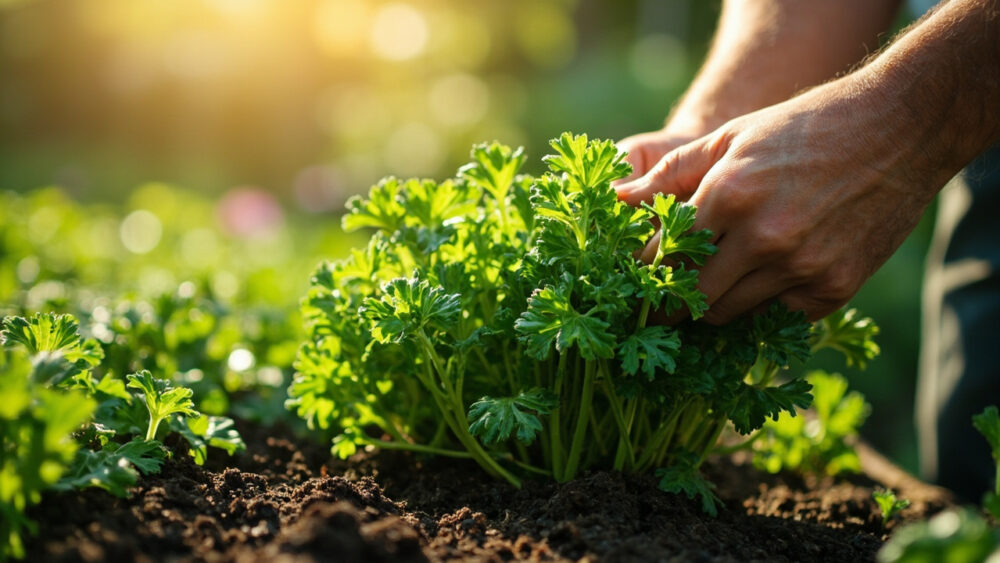
Caring for parsley comes down to four things: at least 4 to 6 hours of sun, soil that stays evenly moist but never waterlogged, a haircut method that keeps it producing instead of bolting, and patience with its slow, stubborn germination. Get those right and one or two plants will feed you all season. Get them wrong and you get a leggy, bitter, bolted mess by midsummer.
Most people who fail with parsley make the same mistake, and it is not watering or sun. It is harvesting from the top instead of the outside, which stalls the plant right when it should be filling out.
There is also a sign almost everyone misreads: a sudden shoot of tall, feathery growth from the center looks like vigor. It is actually the plant quitting on you. We will get into exactly what to do when you see it, plus the honest truth about why your parsley seeds seem to be doing nothing for two weeks straight.
Stick with me through the sections below and you will hit the save-able Parsley at a Glance card at the bottom, the kind of thing worth screenshotting before you walk back out to the garden.
Light, Placement, and Temperature
Parsley wants 4 to 6 hours of direct sun a day, though it tolerates partial shade better than most herbs, especially in hot climates where afternoon shade actually helps. It grows best in air temperatures between 55 and 75°F. It slows down hard below 40°F and struggles once days sit consistently above 85°F.
Indoors, a south or west-facing windowsill works, but parsley grown on a windowsill alone often gets leggy and pale. If your leaves are thin and stretching toward the glass, that is the plant asking for more light, not more water.
A grow light for 10 to 12 hours a day will fix leggy indoor parsley faster than moving the pot around ever will.
Watering: How Much, How Often, and How to Tell
Water when the top inch of soil feels dry to the touch, which in warm weather is often every 2 to 3 days, and less in cooler weather or in a large container. Parsley wants consistent moisture, not a swamp and not a desert in between waterings.
Wilting leaves get blamed on underwatering almost every time, and sometimes that is the answer. But wilting combined with yellow lower leaves and heavy, soggy soil means the roots are drowning, not thirsting. Squeeze a bit of soil from an inch down. If it clumps like wet sand and smells sour, ease off water and check that the pot or bed drains.
Containers dry out faster than garden beds, sometimes daily in summer heat, so check them more often than you’d check an in-ground plant.
Get the water right and the soil underneath still has to hold up its end of the deal.
Soil, Potting Mix, and Feeding
Parsley wants loose, well-draining soil rich in organic matter, with a pH between 6.0 and 7.0. Heavy clay that stays wet is the fastest way to rot the taproot, since parsley is a deep-rooted plant even though it looks delicate up top.
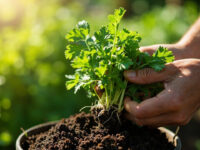
In containers, use a quality potting mix, not garden soil, and pick a pot at least 8 to 10 inches deep to give that taproot room. Crowding the roots is a quiet way to stunt the whole plant without any obvious warning sign until it just stops growing.
Feeding should be light. Mix compost into the soil at planting, then feed once a month with a balanced, diluted liquid fertilizer during active growth. Overfeeding pushes soft, fast growth that tastes weaker and bruises easier, which is the opposite of what you actually want from a kitchen herb.
Good soil and modest feeding buy you a plant that can handle regular cutting, and regular cutting is where most people go wrong next.
Pruning, Harvesting, and the Bolting Problem
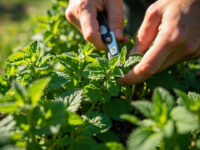
Here is the mistake that ruins most parsley: harvesting from the center or top instead of the outer, older stems. Always cut the outer stalks at the base, close to the soil, and leave the young inner growth to keep developing. Cut from the top and you stall new growth right when the plant needs to be building out.
Never take more than a third of the plant at once. Established plants can handle cutting every week or two through the growing season.
Now the sign everyone misreads. When parsley sends up a tall, hollow, feathery stalk from the center topped with small greenish-white flower clusters, that is not the plant thriving. That is bolting, triggered by heat, long daylight, or simple age, and it means the plant is shifting into seed production. Leaves get sparse and bitter fast once this starts.
Cut the flower stalk out as soon as you see it if you want a few more weeks of decent leaves, though once a parsley plant bolts hard, it is on its way out for the season. That is the honest answer: you cannot really coax it back to its earlier, tender self, you’re just buying time.
Since parsley is a biennial that often gets grown as an annual, planning a follow-up planting matters more than fighting the first one.
Problems Most Likely to Strike
Slow, spotty germination is normal, not a sign of failure. Parsley seed commonly takes 2 to 4 weeks to sprout, and soaking seed overnight before sowing can speed things up slightly. If nothing has shown after 4 weeks in warm, moist soil, then something is actually wrong.
Yellowing leaves usually mean overwatering or nitrogen-poor soil, not underwatering, so check soil moisture before you reach for fertilizer.
Watch for these common culprits:
- Aphids and whiteflies: clustered on new growth and leaf undersides, rinse off with water or treat with insecticidal soap, following the label.
- Parsley worms or swallowtail caterpillars: green and black striped, they can defoliate fast but are usually tolerable on a plant or two since they become swallowtail butterflies.
- Powdery mildew or leaf spot: shows up in humid, crowded conditions, improve airflow and avoid wetting leaves when watering.
- Root rot: from soggy soil, often not recoverable once advanced, better to start a new planting in fresh, well-draining soil.
Most of these are manageable if you catch them early, which is really just a matter of looking at the plant regularly instead of only when you need a garnish.
Signs Your Parsley Is Genuinely Thriving
Healthy parsley has deep green, firm leaves with good color all the way to the edges, not pale or yellow-tinged. New growth should keep appearing from the center at a steady clip, especially after you harvest the outer stems.
The stems should feel crisp, not limp, and the whole plant should look bushy and full rather than tall and sparse. Tall and sparse, especially indoors, usually means insufficient light, not a growth spurt to be proud of.
If you’re cutting a handful of stems every week or two and the plant keeps refilling, that is parsley doing exactly what it’s supposed to do.
Parsley at a Glance
- Light needed: 4 to 6 hours of direct sun daily, tolerates partial shade in hot climates.
- Ideal temperature: 55 to 75°F, growth slows below 40°F and stalls above 85°F.
- Watering: when the top inch of soil is dry, roughly every 2 to 3 days in warm weather.
- Soil: loose, well-draining, rich in organic matter, pH 6.0 to 7.0.
- Feeding: compost at planting, then a diluted balanced liquid fertilizer monthly during active growth.
- Harvesting: cut outer stems at the base, never more than a third of the plant at once.
- Bolting sign: a tall feathery flower stalk from the center means the plant is finishing its season, cut it out to buy a little time.
Cut from the outside, not the top, and keep the soil evenly moist rather than soaked or bone dry.
Do that consistently and parsley will outproduce almost anything else in your herb bed.