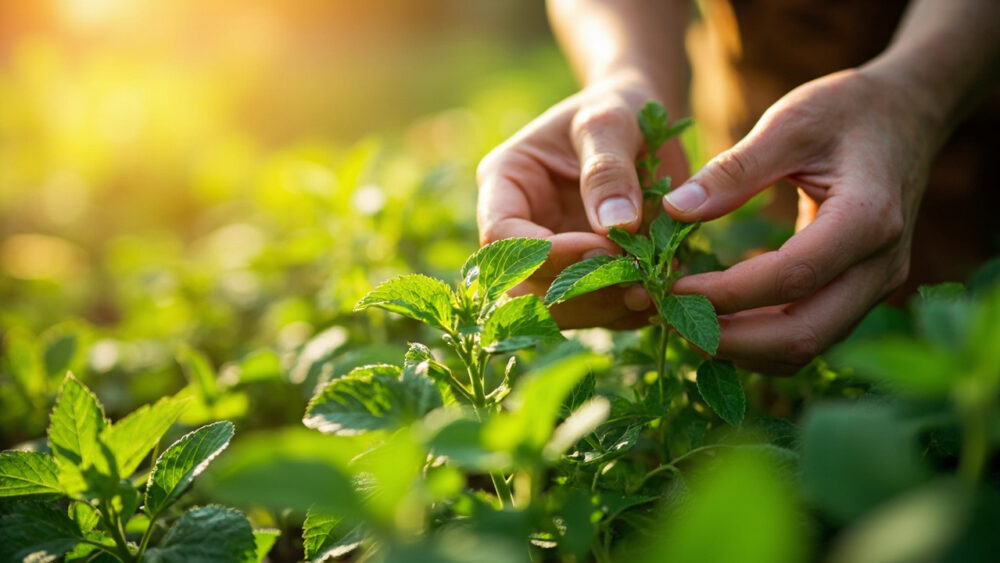
The best time to harvest stevia is right before it flowers, when the leaves are at their sweetest, and the simplest way to do it is to snip whole stems a few inches above the soil rather than picking leaves one at a time. Once you know how to harvest stevia correctly, you can take two or three cuttings off the same plant in a single season. Get the timing wrong and you end up with leaves that taste more bitter than sweet, no matter how carefully you dry them.
Most people ruin their first stevia harvest without realizing it, and it is not because they picked too early. It is because they waited for flowers to show up, thinking that means the plant is “ready,” when flowering actually flips the sweetness switch the wrong direction.
There is also a sign almost everyone misreads on the leaves themselves, and a step in the drying process that decides whether your stevia tastes like sugar or like hay. Stick around for the full breakdown, and save the Stevia at a Glance card at the bottom for next time you are standing in front of the plant wondering if today is the day.
The Real Ready Signs on a Stevia Plant
Stevia is ready to harvest once the plant has bushed out to 10 to 12 inches tall with plenty of full-size leaves, and ideally before it starts budding. You are looking for a plant with dense, established growth, not a few scraggly stems.
Leaf size and color
Mature stevia leaves are a rich medium green, roughly 1 to 2 inches long, with slightly serrated edges. Leaves that still look pale or thin and are under an inch usually have not built up much sweetness yet and are worth leaving alone for another week or two.
The bud stage, not the bloom
Here is the sign most people get backwards. Once stevia sends up tiny white flower buds, sweetness in the leaves starts to drop as the plant redirects energy into seed production. The ideal harvest window is just before those buds open, sometimes even as they are forming, not after the plant is covered in little white flowers.
So the real ready sign is not a flower at all, it is a full, leafy plant that has not bloomed yet.
Timing: Why a Few Weeks Either Way Matters So Much
Stevia is a tender perennial usually grown as an annual outside zones 9 through 11, and in most gardens that means one long harvest window running from midsummer into early fall, roughly 60 to 90 days after transplanting once nights stay reliably above 50°F. You can start light harvesting as soon as the plant is bushy and 8 to 10 inches tall, well before any hint of flowering.
Harvest too early and you are cutting a plant that has not built up enough leaf mass or stored sweetness, so you get a small yield with a milder, more grassy flavor. It is not ruined, just underwhelming, and the plant usually rewards you if you wait.
Harvest too late, after flowering has really taken hold, and the leaves turn noticeably more bitter even though they still look green and healthy. This is the trap: the plant looks fine, sometimes even more impressive, right as the flavor is going downhill. That is the honest answer to the question most people are about to ask, which is whether a flowering stevia plant is still worth harvesting. It is, but expect a flavor drop, and pinch off flower buds as they appear if you want to stretch the sweet window longer.
Cool weather closes the window fast too, since stevia is frost tender and a single hard frost will blacken the leaves overnight.
Once you know the ready signs and the timing trap, the actual cutting technique is where a lot of people accidentally set the plant back.
How to Harvest Stevia Without Setting the Plant Back
Harvest in the morning after the dew has dried, once temperatures have cooled a bit from midday heat, since that is when leaf oils and sweetness are most concentrated. Avoid cutting stevia in full afternoon heat if you can help it.
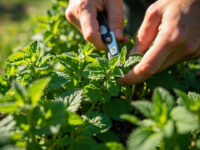
- Use clean, sharp scissors or pruning snips, not your fingers, to avoid bruising or tearing the stems.
- Cut whole stems rather than picking individual leaves. It is faster, less damaging to the plant, and leaves are easier to strip off once dry.
- Leave at least 2 to 4 inches of stem and some lower leaves on the plant so it can regrow. Cutting the plant down to bare soil is the single most common mistake, and it can kill the plant outright or set it back for weeks.
- Take no more than a third to half of the plant at any one cutting if you want a second or third harvest later in the season.
- Best harvest time: just before flowering, once the plant is 10 to 12 inches tall with full, dark green leaves.
- How to cut: snip whole stems with clean scissors, leaving 2 to 4 inches of stem and some lower leaves behind.
- Time of day: mid to late morning, after dew has dried and before peak afternoon heat.
- Warning sign to catch early: tiny white flower buds forming, which signal sweetness is about to drop.
- How much to take: no more than a third to half the plant per cutting, to allow regrowth for a second or third harvest.
- Drying: hang bundles or lay leaves on a screen, out of direct sun, until they crumble, usually 5 to 10 days.
- Storage: whole dried leaves in an airtight jar, out of light, good for 6 to 12 months.
Treat this less like a one-time pull and more like a haircut the plant can recover from, because how you cut determines whether there is a second round.
Right After the Cut: What to Do in the First Hour
Get harvested stems out of direct sun immediately. Stevia leaves wilt and lose potency quickly once cut, so do not let a full harvest sit in a bucket on the porch for hours before you deal with it.
Rinse the stems briefly if they are dusty or you have been spraying anything on nearby plants, then pat or shake them dry. Wet leaves going into a drying setup invite mold, which ruins the batch.
Bundle 4 to 6 stems together with a rubber band or twine and hang them upside down somewhere warm, dark, and airy, or lay leaves on a screen in a single layer. Either way works, but airflow matters more than heat here.
Once the stems are hanging or spread out, the next few days are where a lot of that hard-earned sweetness is won or lost.
Curing and Storing: Where People Lose the Sweetness They Just Grew
Dry stevia out of direct sunlight, since UV breaks down the compounds that make it sweet. A dark closet, a shaded porch, or a paper bag with holes punched in it all work better than a sunny windowsill.
Leaves are fully dry when they crumble easily between your fingers, usually 5 to 10 days depending on humidity. In damp climates, a food dehydrator on its lowest setting, or a warm oven with the door cracked at its lowest temperature, speeds things up and lowers mold risk.
Once dry, strip leaves from the stems and store them whole rather than crushed, since crushing too early exposes more surface area to air and speeds up flavor loss. Keep them in an airtight jar out of light, and they will hold good sweetness for 6 to 12 months.
If you want a concentrated liquid version, steep the dried leaves in warm water for several hours, strain, and refrigerate the liquid, using it within a couple of weeks.
Handled this way, one healthy stevia plant can supply a surprising amount of sweetener from a single season, especially if you take that second cutting.
Stevia at a Glance
Cut before it blooms, leave enough stem behind, and keep the drying leaves out of the sun.
Do those three things and stevia is one of the most forgiving, repeat-harvest herbs you can grow.