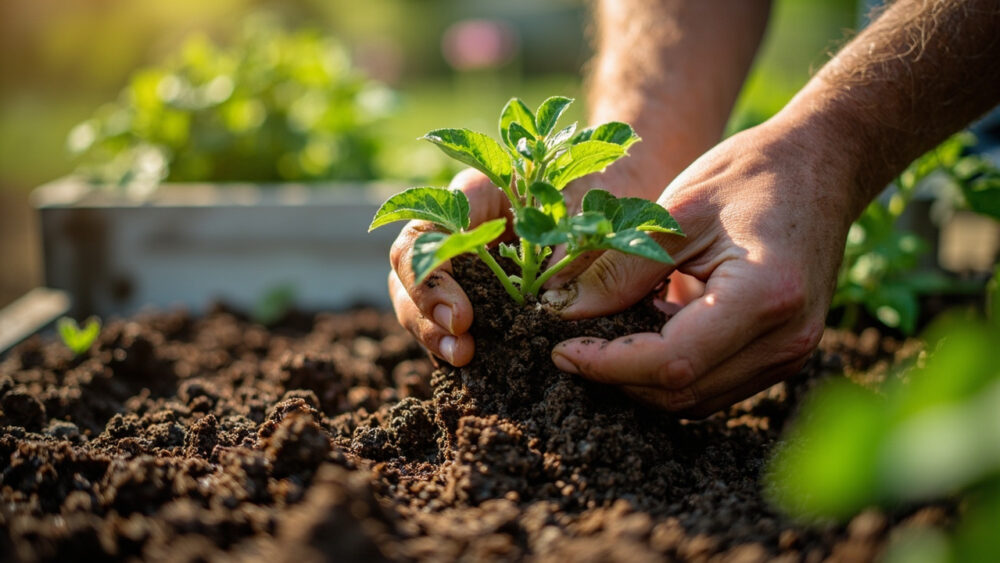
Plant watermelon in North Carolina after your last frost date and once soil temperature holds at 65 F or warmer, which lands roughly mid-April in the coastal plain, late April to early May in the piedmont, and mid to late May in the mountains. That is the real window, and it is narrower than most people think because watermelon does not just dislike cold, it stalls out and sulks for weeks if the soil is not genuinely warm.
Here is what trips up most first-timers: the calendar says it is warm enough, the soil disagrees, and the vine sits there doing nothing while the neighbor’s plant (started two weeks later, in warmer ground) blows right past it. There is also a sign almost everyone misreads on a young watermelon plant, and it is not the leaf color you’d expect.
Stick with this and you will get the exact window for your yard, the prep that makes the difference before you ever put a seed in the ground, and what really happens if you jump the gun by even a week or two. There’s a save-able Watermelon at a Glance card waiting at the bottom with every number in one place.
The Real Planting Window for North Carolina
North Carolina spans three very different growing zones, and watermelon timing shifts with them. The coastal plain (Zone 8, last frost typically early to mid April) can go in the ground mid to late April. The piedmont (Zone 7b, last frost mid to late April) usually waits until late April into the first week or two of May. The mountains (Zone 6b to 7a, last frost early to mid May) are safest waiting until mid to late May.
Those are frost-based windows, but frost is only half the story. Watermelon seed will rot in cold, wet soil before it ever germinates, and transplants set into cold ground just squat there.
The soil number matters as much as the frost date.
Why Soil Temperature Beats the Calendar
If you assumed the last frost date is your green light, that guess is what stalls half the watermelon patches in this state. Frost date tells you when the air stops trying to kill the plant. It says nothing about whether the roots can actually work.
Watermelon wants soil at 65 F or warmer, measured a couple inches down, for at least three consecutive days before you plant. Below 60 F, germination slows dramatically and transplant roots barely grow. A lot of gardeners plant on the calendar date, hit a cool wet spring, and lose two to three weeks of growing time to a plant that just sits there yellowing slightly at the edges.
Buy a cheap soil thermometer or just use a meat thermometer pushed two inches into the bed at mid-morning for a few days running. That five-dollar check saves more watermelon crops than any fertilizer does.
Once you know your soil number, the next question is how to read your own yard instead of a general zone map.
How to Tell Your Actual Window, Not Just Your Zone’s
Zone maps average out entire counties. Your yard has its own microclimate, and it can run a week ahead or behind your official date.
South-facing slopes and raised beds warm up faster, sometimes a full week ahead of flat, low-lying ground. If your planting spot gets full sun from mid-morning on and drains well, you can often push toward the early end of your regional window.
Low spots, heavy clay, and anywhere frost tends to pool on spring mornings should push you toward the later end, no matter what the zone map says. Watch your yard for two seasons and you will know its personality better than any almanac does.
Knowing your window is only useful if you also know what planting outside it actually costs you.
What Happens If You Plant Too Early
Here is the sign everyone misreads: a watermelon seedling planted into cold soil often looks fine on top for a week or two, then develops a dull, slightly purplish or bronze cast on the leaves. Most people blame nutrients and reach for fertilizer.
That color is cold stress, not hunger. Feeding a cold-stressed watermelon does nothing until the soil warms; the roots simply cannot take up what is already there. The real fix is patience, not products.
Direct-seeded watermelon in cold, wet soil often just rots before it sprouts at all, and you will not know you lost the planting until ten days pass with nothing coming up. Transplants set too early survive more often but stay stunted, and a stunted watermelon rarely catches up to a plant started two weeks later in warm soil. It is one of the few vegetables where later-but-warmer consistently beats earlier-but-colder.
Waiting too long carries its own real cost, and that one is about your first frost, not your last.
What Happens If You Plant Too Late
Watermelon needs 70 to 90 days to maturity depending on the variety, and it wants that whole stretch in genuinely hot weather. Count backward from your area’s average first fall frost and make sure you have enough warm season left.
In the coastal plain and piedmont this is rarely the limiting factor if you plant by early June. In the mountains, where the growing season is shorter and nights cool off earlier, pushing a planting into mid-June starts to risk an unripe crop when frost shows up.
The honest answer here is that “too late” for watermelon in most of North Carolina is more forgiving than “too early,” but it is not infinite, and mountain gardeners have the least room to gamble.
Before any of these dates matter, though, the ground itself needs to be ready.
Prep to Finish Before the Window Opens
Watermelon roots run deep and wide, and they hate compacted, poorly drained soil. Work compost into the bed weeks ahead, not the day you plant, so it has time to settle in.
Raised mounds or hills, roughly 12 inches across and a few inches high, warm faster than flat beds and help drainage, which matters even more than usual given how much watermelon dislikes cold, wet roots.
If you are using black plastic mulch to pre-warm soil, lay it down seven to ten days before your target planting date. It is one of the few tricks that genuinely buys you extra time on the early end of the window without fighting cold soil.
Space matters here too: vining types need 3 to 6 feet between plants and 6 to 8 feet between rows, since a single vine can sprawl 10 feet or more. Bush-type varieties can go tighter, closer to 3 to 4 feet.
Plant seeds about 1 inch deep, transplants at the same depth they were growing in the pot, no deeper.
With the bed ready and the window open, the last piece is knowing when your particular corner of the state needs to adjust the general rule.
Region Notes That Actually Change the Date
Coastal plain (Zone 8a to 8b): earliest window in the state, mid to late April, but watch for late-season cold snaps that can still surprise you into early April.
Piedmont (Zone 7b): the broadest band of gardeners in the state falls here, and late April into early May is the sweet spot most years.
Mountains (Zone 6b to 7a): shortest season, latest start, mid to late May, and choose a shorter-season variety if your first fall frost tends to arrive early.
Every one of these numbers assumes average conditions, and a cold, wet spring can push any of them back a week or two, which is exactly why the soil thermometer check matters more than the date on a seed packet.
Here is everything from above condensed onto one card worth saving.
Watermelon at a Glance
- When to plant: after last frost and once soil hits 65 F or warmer for several days, mid to late April on the coast, late April to early May in the piedmont, mid to late May in the mountains.
- Soil temperature check: measure 2 inches deep, mid-morning, for three consecutive days before trusting the reading.
- Spacing: vining types 3 to 6 feet apart with 6 to 8 feet between rows, bush types 3 to 4 feet apart.
- Planting depth: seeds about 1 inch deep, transplants at the same depth as their pot.
- Days to maturity: 70 to 90 days depending on variety, count backward from your average first fall frost.
- Cold stress sign: dull purplish or bronze leaf color means the soil is too cold, not a nutrient problem, fertilizer will not fix it.
- Warming trick: black plastic mulch laid 7 to 10 days before planting pre-warms soil and buys you a little room on the early end.
If you only remember one thing, remember this: the soil temperature matters more than the date on the calendar.
Get that right and everything else about growing watermelon in North Carolina gets a lot easier.