Here is how to grow spinach without it turning bitter or bolting on you: get seed in the ground while soil is still cool, around 40 to 70 F, space plants 3 to 4 inches apart, and pull the plug on the whole crop before long, hot days push it to flower. That timing window is the entire game with this vegetable. Miss it in either direction and you get either poor germination or a bitter, shot-up plant instead of the tender leaves you wanted.
Most people who fail at spinach make the same mistake: they plant it like a summer vegetable, once the weather feels nice and settled. Spinach reads that as a signal to bolt, not to thrive. There is also a sign on the leaves themselves that tells you exactly how many good pickings you have left, and almost nobody checks for it until it is too late.
I will walk through timing, soil, planting depth and spacing, feeding, the pests that actually bother spinach versus the ones that get blamed unfairly, and exactly when to cut. Save-and-screenshot the Spinach at a Glance card at the very bottom once you have the full picture.
When to Plant Spinach
Spinach wants cold, not warmth. Seeds germinate in soil as cool as 40 F, though germination is fastest and most reliable between 50 and 70 F. That means you plant it 4 to 6 weeks before your last expected frost, as soon as the ground can be worked.
In zones 3 to 6, that is early spring, often while there is still frost some mornings. Spinach shrugs that off; a light frost barely slows it down. In zones 7 and warmer, skip spring almost entirely and plant in fall instead, 6 to 8 weeks before your first frost, or grow it through winter under a cold frame.
Once daytime temperatures push consistently above 75 F, new spring plantings will bolt no matter what you do.
Fall and early spring are spinach’s actual season, not summer.
Choosing the Spot and Prepping the Soil
Spinach wants full sun in cool weather but will tolerate light afternoon shade once temperatures climb, which buys you a few extra weeks before bolting. Soil matters more here than for a lot of vegetables because spinach roots are shallow and the plant grows fast, so it needs nutrients close to the surface and ready to use.
Work in an inch or two of compost before planting. Aim for a pH between 6.5 and 7.5; spinach struggles in acidic soil and will look pale and stunted below 6.0 regardless of how much you fertilize.
Loosen the top 6 to 8 inches so roots move freely, and rake the bed smooth. Heavy clay that stays soggy will rot seedlings before they get going, so raised beds or mounded rows help if drainage is a known problem.
Good soil gets you a fast start, but depth and spacing at planting decide how much you actually harvest.
Planting Spinach Step by Step
1. Sow at the right depth
Plant seeds ½ inch deep. Any shallower and they dry out before germinating. Any deeper and cool spring soil will slow emergence to the point some seeds just give up.
2. Space for airflow, not just yield
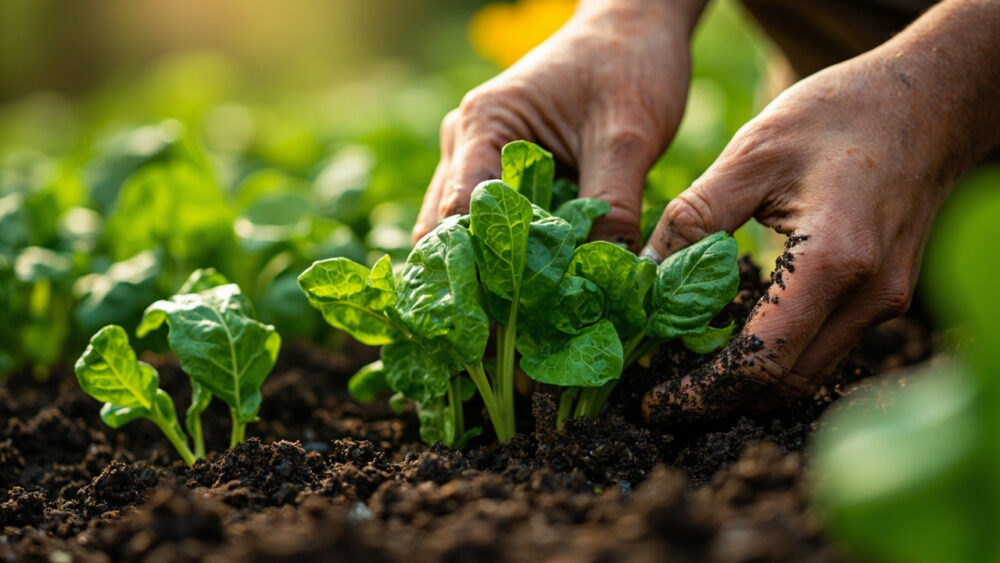
Sow seeds 2 inches apart in rows, then thin to 3 to 4 inches once seedlings have their first true leaves. Rows should sit 12 to 18 inches apart. Crowded spinach bolts faster and is far more prone to downy mildew, so resist the urge to leave every seedling in place.
3. Water in immediately
Give the bed a slow, thorough soak right after sowing. Keep the top inch of soil consistently moist until germination, which takes 7 to 14 days depending on soil temperature.
4. Succession sow for a longer harvest
Sow a new short row every 10 to 14 days through your spring window, then stop about 6 weeks before your soil is expected to hit that 75 F bolt threshold. This staggers your harvest instead of dumping the whole crop on you at once.
Get plants up and spaced right, and the rest of the job is just keeping them fed and hydrated.
Watering and Feeding Through the Season
Spinach has shallow roots and thin leaves, so it dries out fast. Water enough to keep the top 2 inches of soil consistently moist, roughly 1 to 1.5 inches of water per week, more during dry spells.
Inconsistent watering is what actually triggers early bolting in a lot of gardens that people blame on heat alone. A spinach patch that goes bone dry then gets soaked reads that stress as a signal to flower and set seed immediately.
Feed lightly with a nitrogen-leaning fertilizer or a side-dressing of compost about 3 weeks after planting. Spinach grows fast and pulls nitrogen hard from the soil. A mid-season boost keeps leaves dark green instead of pale and thin.
Mulch lightly with straw or shredded leaves to hold soil moisture and keep the ground cooler as the season warms.
Even well-fed spinach has a short list of problems that show up almost every year, and knowing them early saves the crop.
Problems That Actually Strike Spinach
If you assumed bolting is caused only by heat, that is half the story. Inconsistent water and root stress push it just as hard. Once a plant bolts and sends up a central flower stalk, the leaves turn bitter and tough for good. There is no reversing it, so the fix is prevention: consistent moisture, timely harvest, and choosing bolt-resistant varieties in warmer zones.
Downy mildew is the disease to watch for, showing up as yellow patches on top of leaves with a fuzzy gray or purplish coating underneath. It thrives in cool, wet, crowded conditions, which is exactly what a lot of spring spinach beds provide. Improve airflow through proper spacing, avoid overhead watering late in the day, and pull and discard infected leaves promptly. If it takes hold badly, a fungicide labeled for downy mildew on leafy greens is the next step. Follow the product label exactly.
Leaf miners tunnel pale, winding trails through leaves. Row cover from planting onward keeps the adult flies from laying eggs in the first place, which is far easier than treating an infestation after the fact.
Aphids cluster on the undersides of leaves and are usually knocked back with a strong water spray or insecticidal soap.
Manage those few issues and the only decision left is when to actually start cutting.
When and How to Harvest Spinach
Spinach is ready to start harvesting once leaves are 3 to 4 inches long, usually 35 to 45 days after sowing depending on variety and temperature. You do not need to wait for the whole plant to size up.
Here is the sign most people miss: as spinach nears bolting, the newest leaves at the center get narrower and more pointed than the rounder outer leaves. That shape shift is your warning that the clock is almost out, days not weeks.
Harvest by cutting outer leaves first and letting the center keep producing, or cut the whole plant an inch above the soil for a one-time harvest that sometimes regrows a second smaller flush in cool weather. Morning harvest, after dew dries but before the day heats up, gives you the crispest leaves and the best flavor.
Once you see a thick central stem start pushing upward, harvest everything immediately. That plant is bolting and every day after this drops the leaf quality further.
All of that timing, spacing, and troubleshooting boils down to the handful of numbers worth actually keeping.
Spinach at a Glance
- When to plant: 4 to 6 weeks before last frost in spring, or 6 to 8 weeks before first frost for a fall crop, soil temperature 40 to 70 F.
- Planting depth and spacing: ½ inch deep, thinned to 3 to 4 inches apart, rows 12 to 18 inches apart.
- Sun and soil: full sun in cool weather, light shade tolerated as it warms, pH 6.5 to 7.5, rich in compost.
- Watering: about 1 to 1.5 inches per week, kept consistent to prevent early bolting.
- Days to harvest: 35 to 45 days for baby leaves, faster in warm soil, slower in cold.
- Bolt warning sign: new center leaves turning narrow and pointed instead of round.
- Main threats: bolting from heat or uneven watering, downy mildew in crowded wet beds, leaf miners and aphids.
Get the timing and water right and spinach practically grows itself. The only real enemy is heat, and your job is just to stay ahead of it.