Golden pothos care comes down to four things: bright, indirect light, water only when the top inch or two of soil is dry, a pot with drainage, and a spot above 60°F. Get those right and the plant is nearly unkillable. Get one wrong for long enough and you’ll be staring at mushy stems or a plant that hasn’t grown a new leaf in months.
Most golden pothos problems trace back to one habit that feels responsible but isn’t, and I’ll name it in the watering section below because it’s the single mistake that ends more pothos than neglect ever does. There’s also a sign of “thriving” that almost everyone misses because they’re watching for the wrong thing entirely. And if you’re wondering whether those long, bare vines mean the plant is dying, the honest answer surprises most people.
Stick with me through the sections below and you’ll have the full picture. There’s a save-able Golden Pothos at a Glance card at the very bottom with the numbers you’ll actually want to remember, but the reasoning behind those numbers is worth the scroll.
Light, Placement, and Temperature
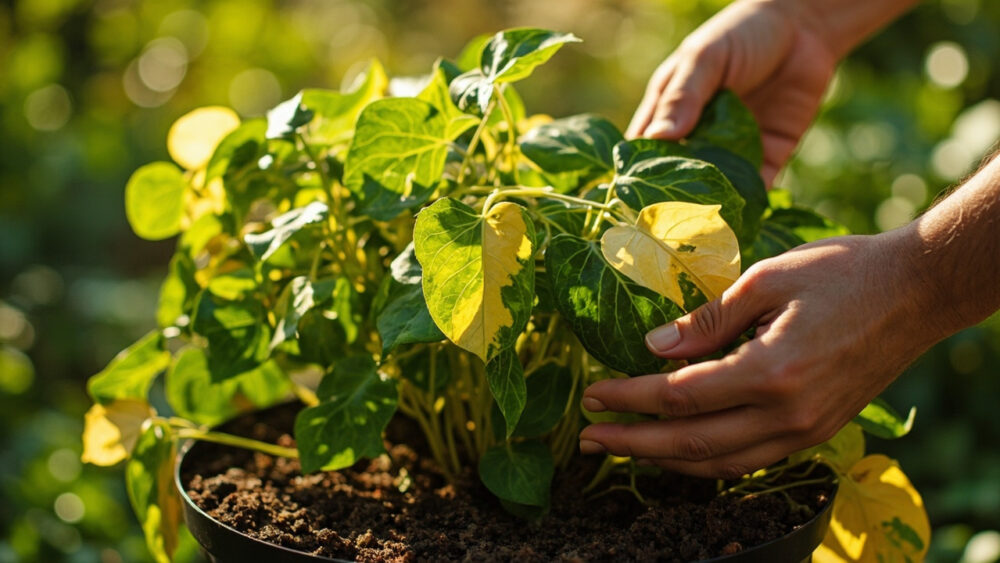
Golden pothos wants bright, indirect light, think a few feet back from an east or west window, or a north window right up close. Direct afternoon sun through unfiltered glass will scorch the leaves, showing up as bleached, papery patches. Too little light and the plant survives but stops producing that classic yellow-and-green marbling, going nearly solid green instead.
That variegation loss is actually the first sign something’s off, long before the plant looks unhealthy.
Temperature-wise, keep it between 65°F and 85°F. Anything below 50°F for an extended stretch causes dark, water-soaked-looking patches and leaf drop that won’t reverse. Keep it away from cold windowsills in winter and away from heating vents, which dry it out fast.
Once placement is sorted, watering is where most people quietly go wrong.
Watering: How Much, How Often, and How to Tell
Here’s the mistake: watering on a schedule. Every-Sunday watering feels responsible, but pothos doesn’t care what day it is, it cares about moisture in the root zone, and a fixed schedule almost always overwaters it in winter and underwaters it in summer.
Check the soil instead. Stick a finger in an inch or two down. If it’s dry at that depth, water thoroughly until it runs from the drainage holes. If it’s still damp, wait a few more days and check again.
Depending on light, pot size, and season, that usually lands somewhere between once a week and once every two to three weeks. Droopy, slightly curled leaves mean thirsty. Yellowing lower leaves plus soil that’s been wet for a while means overwatered, and that one is far more common and far more damaging.
Root rot from soggy soil is the actual killer here, not underwatering.
Soil, Pots, and Feeding
Use a standard, well-draining potting mix, a basic indoor potting soil works fine, and a pot with a drainage hole is non-negotiable. Pothos left sitting in water-logged, drainage-free pots is the number one way people accidentally recreate root rot even while “doing everything right” on watering.
Feed lightly during the growing months, roughly spring through early fall, with a balanced liquid houseplant fertilizer diluted to about half strength, every four to six weeks. Skip feeding in winter when growth slows way down.
Over-fertilizing shows up as brown, crispy leaf tips and edges, easy to mistake for underwatering, so don’t double down on water if you see that pattern.
Feeding is easy to get right, but the routine maintenance tasks are where the plant either gets bushy or gets scraggly.
Pruning, Repotting, and Cleaning: The Routine Tasks
Now, about those long bare vines. If you assumed a leggy, sparse vine means the plant is struggling, that’s the guessable answer, and it’s usually wrong. It almost always just means the plant hasn’t been pinched back.
Prune during active growth by snipping vines back to just below a leaf node, wherever you want more fullness. This forces new shoots and is the actual fix for a leggy pothos, not more water or more light.
Repot every one to two years, or once you see roots circling the drainage hole or the plant drying out within a day or two of watering. Go up one pot size, not several.
Wipe the leaves with a damp cloth every few weeks. Dust blocks light and slows growth more than people expect.
Even with all of that dialed in, pothos still runs into a short, predictable list of problems.
The Problems Most Likely to Strike
- Yellow leaves with soggy soil: overwatering or poor drainage, let it dry out fully and check roots for rot.
- Brown, crispy edges: too much fertilizer, low humidity, or tap water salts, flush the soil and back off feeding.
- Pale or leggy growth: not enough light, move it brighter and prune to encourage bushiness.
- Small brown or yellow bumps on stems: scale insects, treat according to the label on an insecticidal soap or neem product.
- Fine webbing, speckled leaves: spider mites, isolate the plant and treat per the product label, and raise humidity.
Root rot is the one true emergency here, mushy brown roots and a collapsing stem mean cutting away the damage and repotting into fresh, dry soil immediately, or taking healthy cuttings to start over.
One more honest note: golden pothos is toxic to cats and dogs if chewed or swallowed, causing mouth irritation, drooling, and vomiting. If you suspect a pet has eaten some, call your veterinarian rather than waiting to see what happens.
Once you’ve ruled out the problem list, here’s what real health actually looks like.
How to Tell It’s Genuinely Thriving
Most people watch for new leaves and stop there, but that’s not the best signal. The real tell is leaf size increasing over time and new leaves showing crisp, well-defined variegation instead of faint or solid green.
A thriving pothos also pushes visible new growth, a lighter-colored little leaf unfurling at a vine tip, every couple of weeks during the growing season. Vines lengthening steadily and roots filling the pot without circling tightly are good signs too.
If growth has stalled completely for months and there’s no new leaf tip anywhere, it’s not necessarily dying, it may just need more light or a feeding season to kick back in.
Save this next part, it’s the whole plant boiled down to one glance.
Golden Pothos at a Glance
- Light: bright, indirect light is ideal, tolerates low light but loses variegation and slows growth.
- Watering: water when the top one to two inches of soil are dry, roughly every one to three weeks depending on light and season.
- Temperature: keep between 65°F and 85°F, protect from anything below 50°F.
- Soil and pot: well-draining potting mix, pot must have a drainage hole.
- Feeding: balanced liquid fertilizer at half strength every four to six weeks, spring through early fall only.
- Pruning and repotting: prune below a node anytime for fullness, repot every one to two years or when roots circle the pot.
- Pet safety: toxic to cats and dogs if ingested, contact a veterinarian if you suspect a pet has eaten it.
If you only remember one thing, check the soil before you water it, don’t check the calendar.
Everything else about golden pothos care is just details built on top of that habit.