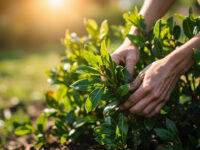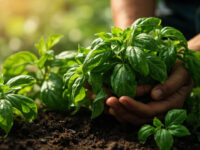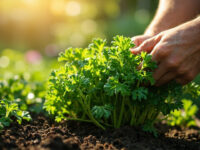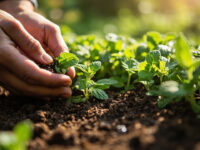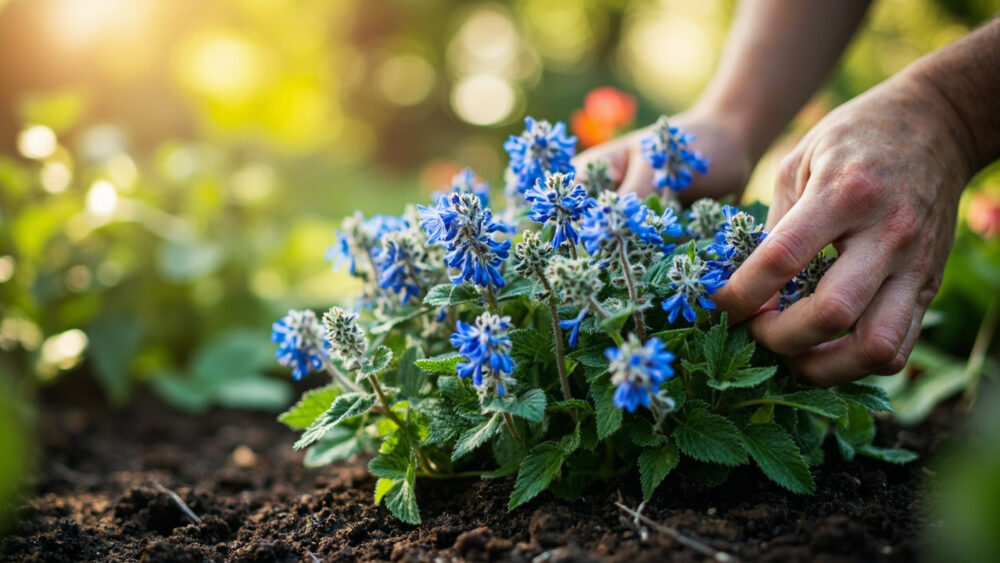
If you want the short version of how to grow boragehere it is: direct sow seeds 1/4 to 1/2 inch deep after your last frost, once soil hits about 50°F, in full sun with average soil, and thin to 12 to 18 inches apart. It grows fast, blooms in six to eight weeks, and after that it mostly takes care of itself.
That part is genuinely easy. The part that trips people up is what happens after the first flowers open, when borage does something almost nobody warns you about and either wins you over completely or makes you regret giving it a whole bed.
Below I will walk through timing, spacing, feeding, the one pest that actually bothers borage, and the harvest window that most people miss because they are looking at the wrong part of the plant. Save-and-screenshot the “Borage at a Glance” card at the bottom before you go dig.
When to Plant Borage
Wait until frost danger has passed and soil has warmed to at least 50°Fwhich usually lines up with your last average frost date or a week or two after. Borage seedlings are tender and a hard frost will take them down fast, so there is no real advantage to rushing it in cold ground.
In most zones you can direct sow anywhere from mid spring through early summer, and borage will still bloom the same season. Gardeners in zones 3 to 6 typically get one solid planting; in zones 7 and warmer you can often get a second sowing in late summer for a fall round of flowers.
Borage does not transplant well once it develops a taproot, so starting it indoors rarely gains you anything.
Once the soil is right, the next question is where to put it, and this is where most people set themselves up for a mess later.
Choosing the Spot and Prepping the Soil
Borage wants full sunat least six hours a day, though it tolerates light afternoon shade in hot climates without much complaint. Soil does not need to be rich. Average, well drained garden soil is plenty, and borage grown in soil that is too fertile tends to flop over under its own weight.
Work in an inch of compost if your soil is heavy clay or pure sand, but skip the extra fertilizer at planting time. This plant is not fussy, and treating it like it is fussy is how people overwater and overfeed their way into problems.
Pick the spot carefully though, because borage self-seeds aggressively and will come back on its own for years if you let flowers go to seed nearby.
That reseeding habit is exactly the mistake that catches most new growers off guard, and it starts right at planting.
Planting Borage Step by Step
- Loosen soil 6 to 8 inches deep since borage grows a taproot and resents compacted ground.
- Sow seeds 1/4 to 1/2 inch deep, covering lightly with soil.
- Space seeds or plan to thin seedlings to 12 to 18 inches apart in all directions.
- Water gently right after sowing to settle the soil around the seed.
- Expect germination in 7 to 14 days at soil temperatures around 60 to 70°F.
- Thin to the strongest seedling per cluster once plants have two true leaves.
If you are planting more than one spot, decide now whether you actually want borage to spread on its own, because in a season or two you may not have a choice.
Watering and Feeding Through the Season
Water borage regularly while seedlings establish, keeping the top inch of soil from drying out completely for the first three to four weeks. Once plants are 8 to 10 inches tall, they develop real drought tolerance thanks to that taproot, and you can ease off to watering only when the top 2 inches of soil feel dry.
Overwatering is the more common failurenot underwatering. Soggy, poorly drained soil leads to root rot and mildew far faster than borage’s occasional wilting on a hot afternoon, which it usually recovers from by evening on its own.
Skip regular fertilizing. A single light feeding with a balanced fertilizer at planting is enough for the whole season; extra nitrogen produces soft, floppy growth and fewer flowers, not more.
Borage rewards you for leaving it alone, which is not something you can say about most herbs.
Problems That Actually Show Up
Borage is genuinely low-trouble, but a few things do turn up. Powdery mildew is the most common, showing as a white, dusty coating on leaves, usually in humid weather or when plants are crowded with poor airflow. Space plants properly from the start and water at the soil line rather than overhead to keep it from getting a foothold. If it takes hold anyway, a fungicide labeled for powdery mildew on edible herbs can help, applied exactly per the label.
Slugs will chew seedling leaves early on, especially in wet spring soil. Aphids occasionally cluster on new growth but rarely do real damage and usually draw in enough ladybugs and hoverflies to sort themselves out, since borage flowers are a favorite of beneficial insects and pollinators.
The bigger issue is not a pest at all. It is volunteer seedlings coming up everywhere next spring if you let flowers fully mature and drop seed, so deadhead spent blooms if you want to control where borage grows.
Once you have got pests and mildew handled, the fun part is figuring out exactly when to start cutting.
When and How to Harvest Borage
Borage typically blooms 6 to 8 weeks after sowing, producing clusters of star shaped blue flowers, occasionally pink or white depending on variety. If you assumed you harvest borage by cutting the whole plant back like an herb such as basil, that guess will leave you with tough, hairy stems and not much to show for it.
The real harvest is the flowers and the young leavespicked individually and often. Pick flowers as soon as they open, since they are at their best in flavor and appearance the first day or two and fade quickly after that. Young, small leaves near the top of the plant are tender and good in salads or teas. Older lower leaves turn coarse and bristly and are better left alone or added to compost.
Harvest flowers every few days once blooming starts, which also delays seed set if you are trying to manage self-seeding. A single plant will keep producing new flowers for six to eight weeks or more if you keep picking, often right up until the first hard frost.
That steady, repeat-pick habit is the whole rhythm of growing borage, and it is why the quick reference card below is worth keeping handy.
Borage at a Glance
- When to plant: direct sow after last frost, once soil is at least 50°F, mid spring through early summer.
- Depth and spacing: sow 1/4 to 1/2 inch deep, thin to 12 to 18 inches apart.
- Light and soil: full sun, average well drained soil, no heavy feeding needed.
- Water: keep evenly moist while seedlings establish, then water only when the top 2 inches dry out.
- Time to bloom: about 6 to 8 weeks from sowing.
- Harvest method: pick open flowers and young top leaves regularly, not a one time cut.
- Watch for: powdery mildew in humid, crowded conditions, and aggressive self-seeding if flowers go to seed.
Get borage into warm soil with room to breathe, then just keep picking flowers as they open.
Do that, and it will feed you, your tea, and every bee in the yard for two months straight.