Lemon balm from seed is one of the easier herbs to pull off if you get one thing right: sow it shallow, barely covering the seed, and keep the soil around 65 to 75°F for germination. Start it indoors 6 to 8 weeks before your last frost, or direct sow after that frost date once soil has warmed. Miss the depth and you’ll wait three weeks for nothing to happen.
Here’s what trips people up. Most gardeners bury lemon balm seed like they would bean seed, half an inch down, and then wonder why the tray sits empty. There’s also a germination sign almost everyone misreads as failure, and a transplant mistake that stunts the whole first month of growth.
I’ll walk you through all of it, start to harvest, and stash the save-able Lemon Balm at a Glance card at the very bottom so you can pull it up again while you’re standing at the seed tray.
When to Start Lemon Balm Seeds
Indoors is the more reliable route. Start seed 6 to 8 weeks before your average last frost date, under lights, so you’re transplanting out sturdy 2 to 3 inch seedlings right around frost-out.
Direct sowing works too, but lemon balm seed germinates slowly and unevenly in cool spring soil. Wait until soil temperature is reliably above 60°F, which is usually two to three weeks after last frost, not the week of it.
If your season is short, indoors wins every time. Cold, wet outdoor soil is where direct-sown lemon balm seed rots before it ever sprouts.
Next up is the depth mistake that stalls more trays than anything else.
Sowing Lemon Balm Seed, Step by Step
Depth and medium
Lemon balm seed is tiny and needs light to germinate. Press it onto the surface of a moist seed-starting mix and barely dust it with a pinch of fine soil or vermiculite, no more than 1/8 inch. Buried deeper than that, a lot of it simply never comes up.
Temperature and light
Keep the tray at 65 to 75°F. A seedling heat mat helps a lot if your house runs cool. Set it under grow lights or on a bright windowsill, since darkness slows this seed down considerably.
Moisture
Mist to keep the surface consistently damp, never soggy. A humidity dome or loosely draped plastic wrap holds moisture until germination, then comes off.
Get the surface right and light right, and the waiting game starts.
Germination: What to Expect and When to Actually Worry
Expect germination in 10 to 21 days. That’s a wide window, and lemon balm earns every day of it. Unlike basil or tomato, it doesn’t pop uniformly at day 7.
Here’s the part that fools people. Around day 10 you’ll often see nothing, then a scattering of hair-thin seedlings, then more arriving over the next week and a half. If you assumed no sprouts by day 10 means a dead tray, that guess costs a lot of gardeners their whole batch, because they toss it right before it was about to come in.
Real trouble looks different: a moldy, sour-smelling surface, or seed that’s still ungerminated past 25 to 28 days at steady warmth. That’s when it’s fair to restart.
Once true leaves show up, the countdown to transplant begins.
Hardening Off and Transplanting
Once seedlings have two or three sets of true leaves and are 2 to 3 inches tall, they’re ready to move outdoors, but not straight from the windowsill.
Harden them off over 7 to 10 days. Set them outside in a shaded, wind-protected spot for an hour or two the first day, and increase both sun exposure and time daily. Skip this and the leaves scorch or the whole seedling wilts flat within a day of transplant, which is the step-everyone-rushes mistake that sets plants back weeks.
Space plants 18 to 24 inches apart. Lemon balm spreads by rhizome and gets bushy fast, easily 18 to 24 inches wide by its second year. Cramped spacing now means fighting for airflow later, and poor airflow is exactly what invites powdery mildew.
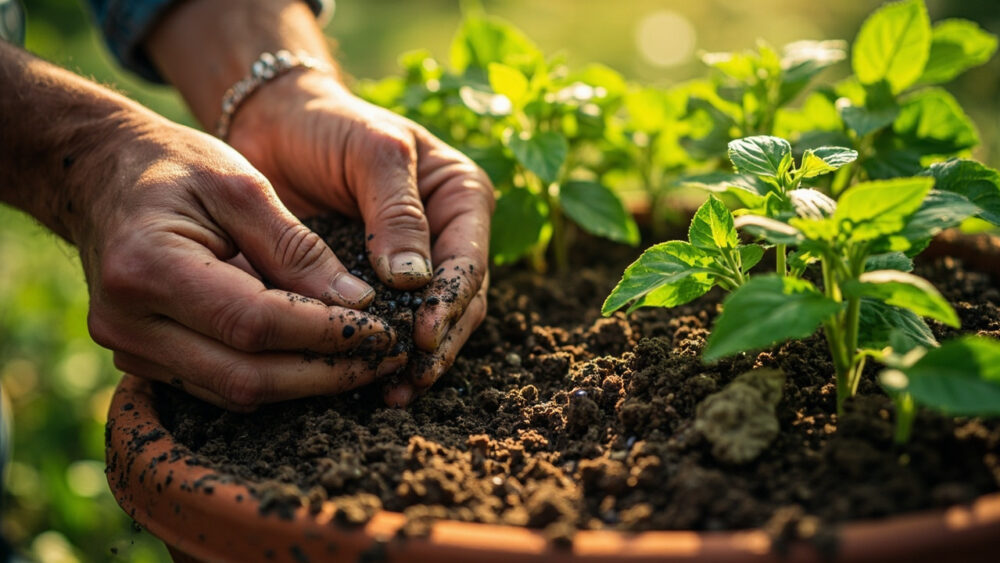
Transplant after your last frost, into well-drained soil, at the same depth the seedling was growing in its cell.
Once it’s in the ground, the real question becomes how much you actually need to do for it.
Caring for Lemon Balm Through the Season
Not much, honestly, and that’s the honest answer to what most people ask next. Lemon balm is a mint-family plant, and it behaves like one: tough, spreading, and mostly self-sufficient once established.
Water to keep soil evenly moist the first few weeks after transplant, then taper off. Established plants tolerate short dry spells fine, though consistent moisture keeps leaves more tender and less bitter.
It grows in full sun to partial shade. In hot climates, afternoon shade actually improves leaf quality and slows bolting.
Watch the spread. Like other mints, lemon balm can take over a bed within a couple of seasons. Many gardeners grow it in a container, or a bottomless pot sunk into the ground, specifically to contain the roots.
Feed lightly if at all. Rich soil and heavy nitrogen push leafy growth but dilute the lemon scent and flavor people grow it for.
Keep it trimmed, and it’ll reward you with the harvest that’s the whole point of growing it.
When Lemon Balm Reaches Harvest and Bloom
You can start snipping leaves once the plant is 6 to 8 inches tall, usually 8 to 10 weeks after sowing. Cut stems back by a third, harvesting in the morning after dew dries, when the essential oils and lemon scent are strongest.
Flavor peaks right before flowering. Once lemon balm sends up small white or pale yellow flower spikes in mid to late summer, leaves turn more bitter and the plant’s energy shifts to seed production.
Pinch off flower buds as they appear if you want to keep harvesting tender leaves all season, since deadheading also stops it from self-seeding aggressively into every corner of the bed.
Cut the whole plant back hard, to about 2 inches, once or twice a season, and it flushes out fresh growth within a couple of weeks.
That’s the full cycle, and here’s the card worth saving before you close this tab.
Lemon Balm at a Glance
- When to plant: start seed indoors 6 to 8 weeks before last frost, or direct sow once soil is reliably above 60°F.
- Seed depth: barely cover, no more than 1/8 inch, since the seed needs light to germinate.
- Germination: 10 to 21 days at 65 to 75°F, uneven and staggered, so don’t judge it before day 21.
- Spacing: 18 to 24 inches apart, since mature plants spread wide and need airflow.
- Light and soil: full sun to partial shade, well-drained soil, moderate fertility.
- First harvest: 8 to 10 weeks from sowing, once the plant reaches 6 to 8 inches tall.
- Best flavor window: before flowering, harvested in the morning after dew dries.
Get the seed depth and the spacing right, and lemon balm basically grows itself from there.
Everything else is just deciding how much lemon-scented mint you’re willing to let take over the bed.