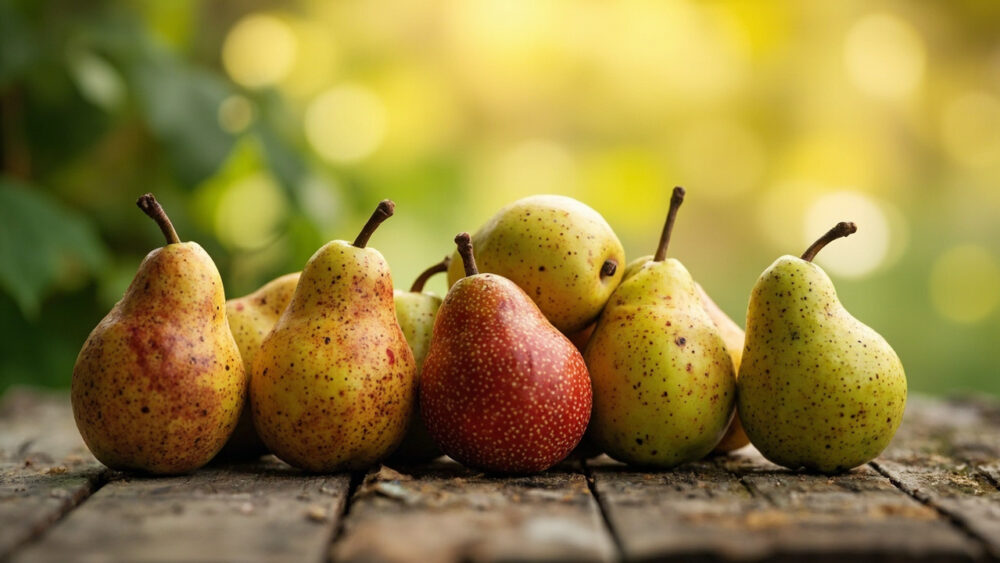
The fastest way to sort out types of pears is by texture, not flavor. European pears like Bartlett and Bosc are picked hard and ripen off the tree, going buttery and soft. Asian pears ripen on the tree and stay crisp like an apple even when fully ripe, and that single difference tells you almost everything about how to grow, pick, and eat each one.
Most people choose a pear tree because they saw a Bartlett at the grocery store, which is honestly the wrong reason. Bartlett bruises easily, needs precise picking timing, and is more disease-prone than several better backyard options. Meanwhile there is a quietly excellent pear that experienced growers plant instead and rarely talk about.
Below you will find 15 types grouped by how they grow and how they are eaten. Number 13 is the one most people get completely wrong at harvest time, picking it either weeks too early or leaving it to turn mealy on the tree. The last few entries plus the actual method for choosing your pear wait at the bottom, so keep scrolling.
Classic European Dessert Pears
These are the soft, juicy, “pear-shaped” pears most people picture, and they all need to be picked underripe and finished indoors.
1. Bartlett
The pear everyone knows is thin-skinned, turns from green to pale yellow as it ripens, and has that classic sweet, slightly musky flavor. It is self-fertile but produces far more with a second pear variety nearby, grows well in zones 5 through 8, and is genuinely more fire blight prone than most trees on this list, so it is not the easiest first tree.
2. Bosc
Recognizable by its long tapered neck and rough cinnamon-brown skin that never turns yellow even when ripe. It holds its shape when baked or poached better than any pear here, stores for months in a cold fridge, and tolerates heat a little better than Bartlett.
3. Anjou (Green and Red)
The pear that shows almost no visible ripening cue is Anjou, which stays green or reddish and firm right up until it is ready, so you have to judge ripeness by gently pressing near the stem instead of by color. Red Anjou is simply a red-skinned sport of the same fruit with identical flavor. Both store exceptionally well, often for two to three months refrigerated.
4. Comice
Considered by a lot of growers the best-tasting pear, Comice is round, squat, and very sweet with a soft, almost custardy flesh once ripe. It bruises easily and does not ship well commercially, which is exactly why home growers who taste one fresh off the tree rarely go back to Bartlett.
5. Seckel
The smallest pear on this list, Seckel is only two to three inches long, but it packs in an intensely sweet, spicy flavor that makes it a favorite for pickling and preserving whole. The tree stays more compact than most European pears and is notably resistant to fire blight, making it one of the easier choices for a first-time grower.
Those are the pears most people already picture, but the ones bred for hard climates and small yards are where things get interesting.
Cold-Hardy and Disease-Resistant Picks
If fire blight or brutal winters have wrecked a pear tree for you before, this group is built to survive both.
6. Kieffer
Nearly indestructible is the honest way to describe Kieffer. It tolerates poor soil, heat, and cold down to zone 4, resists fire blight strongly, and produces heavily, but the flesh is grainy and better suited to canning and preserves than eating fresh off the tree.
7. Moonglow
Bred specifically as a fire blight resistant Bartlett alternative, Moonglow has smooth, sweet, low-grit flesh and ripens a few weeks before Bartlett. It is a reliable pollinator partner for other European pears and a solid pick if blight has been a problem in your area before.
8. Luscious
A cold-climate specialist, Luscious was developed in South Dakota and handles winters down to zone 3, something almost no other dessert pear can claim. The fruit is medium-sized, juicy, and buttery, making it the rare pear that lets truly cold-winter growers have a decent fresh-eating harvest.
9. Potomac
A newer disease-resistant release, Potomac combines strong fire blight resistance with good Bartlett-like flavor and texture. It is less widely available than older varieties but worth seeking out if you have lost trees to blight in the past.
If your climate or your local blight pressure has kept you out of pears entirely, one of those four should change that, and next come the pears that break the soft-and-juicy mold completely.
Asian Pears (Apple-Crisp Texture)
Asian pears are picked ripe off the tree and eaten immediately, which is the opposite habit European pears train into you, so keep that straight or you will pick these too early.
10. Hosui
A russeted, apple-shaped Asian pear with a bronze skin and a very sweet, juicy, crisp bite closer to a snack apple than a traditional pear. It is one of the more cold-tolerant Asian pears, doing fine into zone 5, and ripens in mid to late summer.
11. Chojuro
Flat and round like a small squash, Chojuro has russeted brown-yellow skin and a distinct caramel or butterscotch note in the flavor that sets it apart from other Asian pears. It is reliably productive and a good choice where space is tight, since the tree tends to stay compact.
12. Shinseiki
The mildest, most kid-friendly Asian pear, Shinseiki is pale yellow, round, and crisp with a light, sweet flavor and very little of the tang some Asian pears carry. It ripens early, often before most European pears are even close, and is self-fertile, so a single tree will still fruit.
13. Ya Li
The one that trips up almost everyone at harvest is Ya Li, a bottle-shaped Asian pear with smooth pale green skin. Unlike Bartlett, it will not obviously soften or change color when ready, so growers either pick it hard and bitter or leave it too long and it turns soft and mushy instead of staying crisp; the real cue is a slight give at the stem end and a sweet smell, not color or firmness everywhere else.
Asian pears solve the texture problem entirely, but the last two entries solve a different one: what to plant when space or looks matter as much as fruit.
Ornamental and Multi-Use Pears
These two get planted for reasons beyond eating fresh, and knowing that up front saves you disappointment later.
14. Callery Pear (Ornamental, Not Edible-Focused)
Grown for spring flowers, not fruit, Callery pear produces small, hard, bitter fruit that nobody eats fresh. It is worth naming here only because it is invasive and aggressively self-seeds into wild areas across much of the eastern and midwestern United States, so most extension offices now recommend against planting it at all, ornamental value aside.
15. European Pear, Espalier-Trained
Not a separate fruit but a training method worth knowing, espalier takes any European variety, most often Bartlett, Bosc, or Anjou, and trains it flat against a wall or fence in tiers. It is the best option if you want pears in a narrow side yard or against a sunny fence, though it takes three to four years of careful pruning to establish the shape before it fruits well.
How to Choose the Right One
Match the pear to your yard and your patience before you fall for a flavor description.
- Check your space first: a standard pear tree reaches 15 to 20 feet, a dwarf stays closer to 8 to 10 feet, and espalier or a container dwarf works in a narrow bed or patio.
- Match your climate: zone 3 to 4 growers should look at Luscious or Kieffer, zone 5 to 6 has the widest open field, and hot zone 8 to 9 growers do better with heat-tolerant Bosc or Asian varieties.
- Decide fresh eating versus cooking and canning: Comice and Seckel for fresh eating, Bosc for baking, Kieffer for preserves, any Asian pear for snacking straight off the tree.
- Weigh your disease pressure: if fire blight has hit your area before, choose Moonglow, Seckel, Potomac, or Kieffer over Bartlett.
- Plan for a pollinator partner: most pears need a second variety nearby to fruit well, so pick two that bloom at the same time rather than one tree alone.
- Be honest about your care appetite: espalier and disease-prone Bartlett want an attentive grower, while Kieffer and Luscious forgive a lot of neglect.
Pick based on what your site and your patience can actually support, and the tree will do the rest for years.
Whatever you plant, taste-test a ripe piece of fruit from that variety before committing a whole tree to it if you can, since pear flavor varies more between types than most fruit.